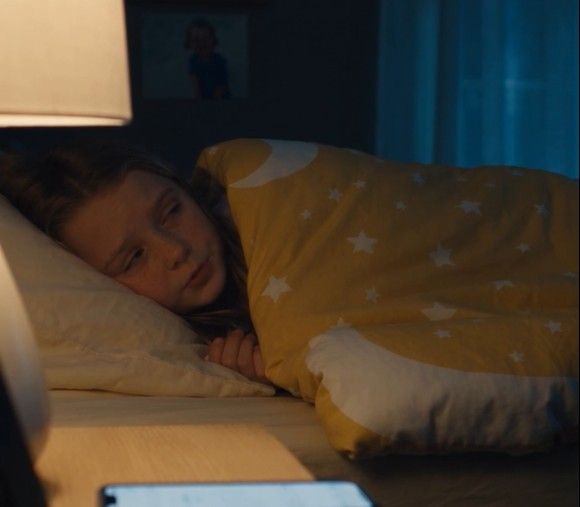
Months passed. Sadie’s health recovered quickly; her confidence took longer. She began calling Harlan from school without first saying sorry. She asked for help with homework. She chose cereal without checking whether it was too expensive. Each ordinary request sounded to Harlan like a door opening.
Carter became part of that repair. He started spending afternoons at Harlan’s house and discovered that caring about Sadie did not require choosing sides. On her ninth birthday, he brought her a small yellow moon keychain because he remembered the blanket she had clutched during the fever.
The custody review did not return everything to the old arrangement. Sadie remained primarily with Harlan while Wesley earned expanded visits through consistent behavior. Maren’s contact stayed structured longer. The adults were required to prove safety through months, not speeches.
Harlan sometimes wondered whether his career had made him too careful with hope. Then he would hear Sadie laughing from the kitchen and remember that caution had kept him focused on what she needed instead of what the family wanted to look like from the outside.
One evening, Wesley brought over a box of family photographs. He had removed none of the old pictures, even the ones where Sadie stood at the edge. Instead, he asked her to choose which new photographs belonged beside them. She picked one of herself and Carter covered in flour after baking cookies.
The gesture did not rewrite the past. That was why Harlan trusted it. Repair was not pretending the hallway photographs had always shown a happy family. It was making room for a different pattern and allowing Sadie to decide whether she believed it.
Near the anniversary of the night she called, Sadie asked Harlan whether he still had Maren’s note. He said yes, sealed with the other case records. She thought for a moment and said she did not want to see it. She already remembered what it had made her feel.
Then she surprised him. She asked whether he still had the yellow moon blanket. Harlan brought it from the linen closet. Sadie spread it across the sofa, climbed beneath it with Carter, and announced that they were watching a movie and eating popcorn in the living room.
Harlan stood in the doorway listening to them argue cheerfully about which film to choose. The same blanket that had once covered a feverish child waiting alone now covered two children who expected an adult to answer when they called.
Later, when Sadie grew sleepy, she handed Harlan his phone from the coffee table. “If I ever need you,” she said, “I know I can call.” There was no apology attached to the sentence.
Harlan kissed the top of her head and switched off the lamp. The house settled around them, warm and occupied. At 1:58 a year earlier, a phone call had exposed how alone Sadie had become. Now the lasting truth was simpler: she no longer had to make herself small to belong.
Harlan kept his attention on Sadie rather than the phone.
The answer did not arrive cleanly. Wesley and Maren tried to redirect the conversation toward tone and timing, but Harlan kept returning to the one fact that could be checked: the saved phone message. Nobody needed a louder argument; they needed an explanation that could survive being stated plainly. Nobody in Harlan’s home could undo the earlier words, yet the next choice still belonged to Harlan.
Harlan noticed the smallest details in Harlan’s home: a chair slightly out of line, a glass untouched, the hum of air moving through the room. Those details kept the moment from becoming abstract. Whatever happened next would happen here, in front of people who had already heard enough to understand the stakes. That distinction kept the discussion tied to Sadie’s safety instead of allowing it to drift into another argument about personality.
When Sadie finally spoke, the intervention was careful rather than dramatic. The point was not to rescue Harlan with a perfect speech. It was to confirm one piece of information that Wesley and Maren had hoped would remain vague, and the confirmation narrowed the space available for denial. For Harlan, the shift was measured less by volume than by the fact that the question finally remained unanswered until someone addressed it honestly.
Wesley and Maren objected immediately. The objection focused on procedure, manners, and the supposed unfairness of being questioned. Harlan listened without interrupting. The longer the explanation continued, the more obvious it became that none of those complaints answered the original issue surrounding the saved phone message. The record surrounding the saved phone message made that clarity possible without requiring anyone to guess at motives.
A few minutes earlier, leaving quietly might have felt easier. Now Harlan understood that retreat would allow the same story to be repeated later without challenge. Staying did not mean creating a spectacle. It meant refusing to surrender the facts simply because someone else was more comfortable speaking with certainty. The significance of that moment was not obvious immediately, but it changed what Harlan was willing to accept next.
The material connected to the saved phone message was examined piece by piece. Dates mattered. Names mattered. The order of events mattered. Harlan resisted the urge to jump ahead because the strength of the truth came from how ordinary and verifiable each part was when placed beside the next. Nobody in Harlan’s home could undo the earlier words, yet the next choice still belonged to Harlan.
A contradiction emerged without anyone needing to accuse Wesley and Maren of lying. One earlier statement could not comfortably exist beside the record now in front of them. Wesley and Maren noticed it too. The confidence that had controlled the beginning of the confrontation became more cautious. That distinction kept the discussion tied to Sadie’s safety instead of allowing it to drift into another argument about personality.
People nearby changed in subtle ways. Someone stopped pretending to check a phone. Another person lowered a hand that had been halfway to a glass. The room was not becoming a mob; it was becoming attentive, and attention was exactly what the earlier humiliation had depended on avoiding. For Harlan, the shift was measured less by volume than by the fact that the question finally remained unanswered until someone addressed it honestly.
For Harlan, the hardest part was not winning an argument. It was recognizing how long the underlying pattern had been allowed to shape daily life. Sadie’s safety had become a shorthand for years of being expected to absorb discomfort so other people could remain comfortable. The record surrounding the saved phone message made that clarity possible without requiring anyone to guess at motives.
Harlan set one boundary in language too simple to reinterpret later. There would be no more decisions made on the assumption that silence meant consent. Any next step would be written down, discussed directly, and measured against what had actually happened rather than what anyone wished had happened. The significance of that moment was not obvious immediately, but it changed what Harlan was willing to accept next.
That boundary unsettled Wesley and Maren more than anger would have. Anger could be dismissed as emotion. A calm limit had to be answered. Wesley and Maren tried another explanation, this time softer, but the new tone did not repair the missing logic. Nobody in Harlan’s home could undo the earlier words, yet the next choice still belonged to Harlan.
Sadie stayed close without taking over. That mattered to Harlan. Support was different from replacement. The choice still belonged to the person who had been placed under pressure, and for once the surrounding people allowed that choice to remain visible. That distinction kept the discussion tied to Sadie’s safety instead of allowing it to drift into another argument about personality.
The next decision was practical. Calls were made, records were preserved, and future conversations were moved out of improvisation. Harlan understood that accountability often began with boring things: dates on calendars, copies in folders, and agreements that could not later be rewritten from memory. For Harlan, the shift was measured less by volume than by the fact that the question finally remained unanswered until someone addressed it honestly.
By the end of the day, Wesley and Maren faced a consequence that had not existed at the start: control of the narrative was gone. Other people now knew enough to ask their own questions. No insult or confident command could put that knowledge back where it had been. The record surrounding the saved phone message made that clarity possible without requiring anyone to guess at motives.
The following days were quieter but not easier. Harlan slept badly, replayed sentences, and occasionally wondered whether resistance had cost too much. Then another small fact would return, reminding Harlan that peace purchased by self-erasure had never been peace. The significance of that moment was not obvious immediately, but it changed what Harlan was willing to accept next.
The next conversation took place with fewer spectators and more structure. Wesley and Maren arrived prepared to explain. Harlan arrived prepared to listen once, ask precise questions, and leave if the discussion became another attempt to reverse blame. Nobody in Harlan’s home could undo the earlier words, yet the next choice still belonged to Harlan.
Eventually an admission came. It was incomplete at first, wrapped in reasons and pressures. Harlan did not attack the reasons; instead, Harlan separated them from responsibility. Circumstances could explain a choice without making the choice harmless. That distinction kept the discussion tied to Sadie’s safety instead of allowing it to drift into another argument about personality.
The consequences reached beyond embarrassment. Relationships changed. Access, trust, and future decisions were no longer automatic. Wesley and Maren discovered that an apology could open a door to repair but could not demand that everyone walk through it immediately. For Harlan, the shift was measured less by volume than by the fact that the question finally remained unanswered until someone addressed it honestly.
Sadie also had something to reckon with: the moments when staying quiet had made the imbalance easier to maintain. That acknowledgment was painful because it removed the comfort of being merely an observer. It also made genuine repair possible. The record surrounding the saved phone message made that clarity possible without requiring anyone to guess at motives.
Once the practical crisis settled, grief arrived. Harlan mourned not only what had happened but the version of the relationship that had been defended for years. Letting go of that imagined version hurt, yet it created room to judge future behavior by reality. The significance of that moment was not obvious immediately, but it changed what Harlan was willing to accept next.
A new routine formed slowly. Mornings became less tense. Messages were answered when convenient rather than immediately. Decisions that once required permission became ordinary choices. The absence of constant pressure felt strange before it began to feel like freedom. Nobody in Harlan’s home could undo the earlier words, yet the next choice still belonged to Harlan.
The first real test of repair came when Wesley and Maren wanted something and heard no. The old pattern would have turned refusal into an accusation. This time there was a pause. The request was withdrawn without punishment, and Harlan noticed the difference without pretending one good moment erased the past. That distinction kept the discussion tied to Sadie’s safety instead of allowing it to drift into another argument about personality.
