“Grandpa Harlan?” Sadie’s voice came through my phone at 1:58 in the morning, weak and dry enough that I was already sitting upright before she finished saying my name. “Sweetheart, where are your parents?” “They went to Florida for Carter’s birthday.” I stared into the darkness of my bedroom.
Sadie was eight years old. “Are you alone?” “Yes.” Then, after a pause, she added, “Mom said I couldn’t come because I ruin things when I’m sick.” My hand tightened around the phone.
Three years earlier, Wesley and Maren had adopted Sadie. I had wanted to believe that meant she had finally found the kind of home every child deserved.
She was gentle to a fault—the kind of little girl who apologized when someone bumped into her and thanked people for things nobody needed to be thanked for. “Did you tell them you weren’t feeling well?” “I tried.” Her voice dropped even lower.
“Mom said I was making a problem again.” Then she said the words that got me out of bed. “They left medicine and a note downstairs.” I grabbed my keys.
For decades, I had worked as a court-appointed family advocate. I had sat across from children who learned to make themselves smaller because the adults around them treated every need like an inconvenience.
Still, hearing my own granddaughter whisper, “I’ll be quiet so I don’t make them mad,” felt different. I kept Sadie on speaker while I drove through the empty streets.
“Stay in bed,” I told her. “Keep talking to me.” When I unlocked Wesley’s front door, the house was dark and unnaturally still.
The thermostat had been set to vacation mode. The kitchen lights were on.
On the counter, beside a bottle of fever medicine, lay a folded note. I recognized Maren’s handwriting immediately.
“Sadie, take your medicine and stop turning sick days into a scene. We are taking Carter to Orlando because he deserves a happy birthday weekend.
Do not call anyone unless it is a real emergency.” I read it twice. Then I saw the thermometer beside the bottle.
I pressed the memory button. 103.7. For a few seconds, I simply stood there.
They had checked her temperature. They knew how sick she was.
And they had left her alone anyway. I slipped the note and thermometer into my pocket.
I did not call Wesley. I did not call Maren.
Anger could come later. Evidence mattered now.
Upstairs, family photographs lined the hallway. Carter smiling at theme parks.
Wesley and Maren posing like devoted parents. Sadie appearing at the edge of picture after picture, always slightly apart from everyone else.
Then I heard her cough. I opened her bedroom door.
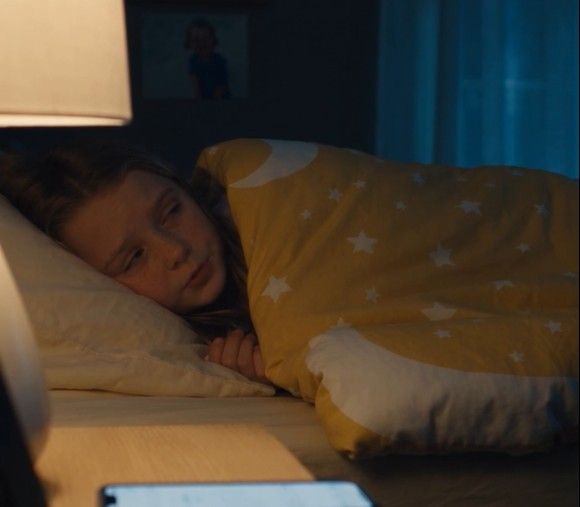
The room was dark except for the faint light from the nightstand. Sadie lay under her yellow moon blanket, her small body curled tightly beneath it.
She looked at me with exhausted eyes. “Grandpa,” she whispered, “I’m sorry I called.” That sentence hurt more than anything downstairs.
“You never apologize for calling me.” I stepped toward the bed. Then I saw the second phone on her nightstand.
It was not the one she had used to call me. A recording app was open on the screen.
And beneath it was a message from Wesley, sent before they left for the airport. I stopped beside her bed, staring at the words he had written while Sadie watched my face.
“Grandpa?” she whispered. I reached for the phone.
Whatever Wesley had told her before leaving, Sadie had saved it. 👇
Sadie watched Harlan lift the second phone, and the fear in her face stopped him from pressing play immediately. He sat on the edge of the bed instead, touched the back of his fingers to her burning forehead, and asked whether she could stand. She shook her head. Whatever Wesley had recorded could wait long enough for Harlan to get her safe.
Harlan called emergency services from the hallway, keeping his voice low so Sadie would not think she had caused another problem. When the dispatcher asked whether an adult was present, he answered yes, then clarified that he had arrived only minutes earlier. The distinction mattered to him. He had spent a career learning that precise facts protected children better than angry conclusions.
At the hospital, the nurse wrote 103.4 on the intake sheet and asked Sadie when she had last eaten. Sadie tried to remember, then whispered that there had been crackers before Wesley and Maren left. Harlan felt anger rise again, but he kept his face calm. Sadie was watching adults for signs that her needs were too expensive.
Only after fluids were running and Sadie had fallen into an exhausted sleep did Harlan open the saved message. Wesley’s text was blunt: she was not to call and spoil Carter’s birthday, and if she felt worse she should take more medicine and sleep. Harlan photographed the screen, the medication instructions, and the timestamp without altering anything.
He also saved the recording Sadie had made. Her small voice could be heard asking whether someone should stay. Maren answered that Sadie always became dramatic when attention moved to Carter. Wesley did not challenge the statement. A suitcase wheel rolled across the floor, a door closed, and the house became quiet.
Harlan did not celebrate finding proof. He felt sick. Evidence meant the child had been right to be frightened. He called the on-call child protection number and gave only what he could document: the fever, the empty house, the note, the messages, the recording, and the physician’s assessment.
Wesley finally called shortly after sunrise. His first question was how Harlan had entered the house. Harlan looked through the glass at Sadie sleeping under a hospital blanket and said that the better question was why an eight-year-old with a dangerous fever had needed to call her grandfather at two in the morning.
The line went silent. Then Wesley began explaining the trip, the prepaid tickets, Carter’s disappointment, and Maren’s belief that Sadie was exaggerating. Harlan let him finish. He had learned long ago that people often revealed more when nobody rescued them from their own explanation.
When Wesley demanded that Harlan bring Sadie home, Harlan refused. A hospital social worker had already arrived, and discharge would require a safe adult plan. For once, Sadie would not be returned to the same room simply because the adults who failed her wanted the inconvenience to disappear.
Maren joined the call and accused Harlan of turning a family mistake into a public accusation. Harlan answered that he had not written the note, set the thermostat, measured 103.7, or sent the message. He was not enlarging the facts. He was refusing to shrink them.
Carter’s birthday trip ended early. Wesley and Maren returned to a meeting rather than a celebration. The social worker asked them separately why Sadie had been excluded and why no adult had stayed. Their answers did not match. Each contradiction made the room quieter.
Sadie was interviewed gently, without Harlan in the room. When she came out, she looked frightened that she had said too much. He opened his arms and told her that telling the truth was not betrayal. She leaned against him without apologizing, which felt like the first small change.
The temporary safety plan placed Sadie with Harlan while the case was reviewed. Wesley objected until the physician explained the medical risk in plain language. Maren cried, but her tears did not erase the written instruction telling a sick child not to call unless the emergency met an adult’s definition.
Over the next weeks, Harlan resisted the temptation to make Sadie rehearse what had happened. He gave her ordinary mornings instead: oatmeal, school drop-offs, clean pajamas, and a lamp left on when nightmares came. Stability was not dramatic, but it was the thing her body seemed to trust most.
Carter visited one Saturday with Wesley. He was ten, confused, and defensive. He had been told the trip was canceled because Sadie got everyone in trouble. Harlan did not attack his parents in front of him. He simply said that no child was responsible for an adult choosing to leave another child sick and alone.
Carter stared at the floor for a long time. Then he admitted he had asked at the airport whether Sadie would be okay. Maren had told him she was sleeping. The admission mattered because it showed that even Carter had sensed the problem before the adults were willing to name it.
The review uncovered a pattern smaller than the hospital incident but impossible to dismiss when placed together: missed school events, unequal punishments, medical complaints minimized, and messages describing Sadie as difficult whenever she needed comfort. None alone explained everything. Together they showed a child learning to disappear.
Wesley’s hardest moment came when the advocate played the recording back to him. Hearing his own footsteps leave the house beneath Sadie’s question stripped away the softer version he had been telling himself. He covered his face and said nothing for nearly a minute.
Harlan did not offer immediate forgiveness. He asked Wesley what he intended to change when remorse stopped feeling urgent. Wesley began individual counseling and parenting work. Maren initially refused, insisting that outsiders were misreading ordinary family stress.
That refusal had consequences. The court maintained Sadie’s placement with Harlan and required supervised contact until Maren participated honestly. Harlan had seen adults call accountability cruelty before. He knew the difference. Consequences were not revenge when their purpose was to make a child safe.
Maren eventually attended. Progress came slowly and without cinematic apologies. She learned to describe what she had done without adding a sentence about Sadie provoking it. The first time she managed that, Sadie did not smile. She only listened, and nobody demanded that she comfort the adult.
Wesley apologized to his daughter in Harlan’s living room. He did not say he had been stressed or caught between people. He said he had known she was sick, had chosen the trip, and had failed to protect her. Sadie asked why Carter deserved a happy birthday more than she deserved someone to stay.
Wesley cried before answering. He said there was no answer that made the choice fair. Harlan watched Sadie absorb that. Children were often given explanations when what they needed was an adult willing to admit there was no acceptable excuse.
