Two seats were reserved for my parents at graduation. Both stayed empty.
I still walked across the stage. I still smiled when they called my name.
I still took the diploma I had earned after years of studying through exhaustion, paying my own bills, and convincing myself that finishing college would finally make my family see me differently. Then my vision blurred.
The auditorium tilted. And in front of three thousand people, my body gave out.
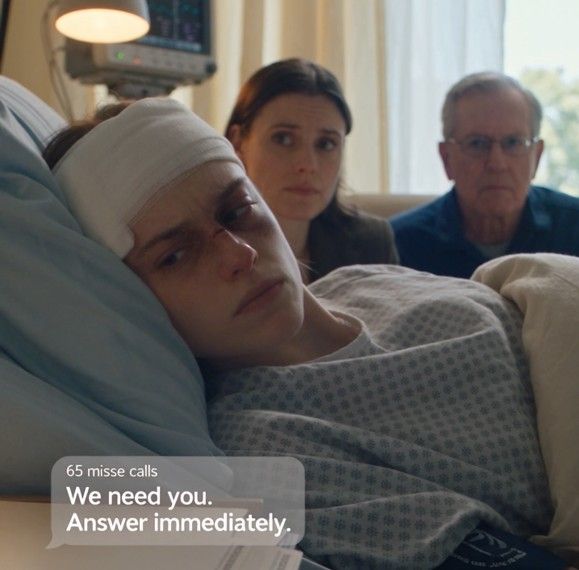
Three days later, I woke in a hospital bed with part of my head bandaged and machines surrounding me. My grandfather sat beside the window.
My best friend Hannah was holding my hand. My parents were nowhere in the room.
Hannah started crying when she realized I was awake. “The doctors found a brain tumor,” she told me.
“They had to operate immediately.” I stared at her, trying to make the words fit together. “Where’s Mom?” Hannah looked at my grandfather.
That hesitation answered before either of them spoke. The hospital had called my parents.
They had not come. I waited anyway.
I told myself there had been some misunderstanding. Maybe their flight was delayed.
Maybe they had not understood how serious the surgery was. Then I saw my sister Lauren’s post.
Paris. She stood between my parents smiling beneath a perfect blue sky.
The caption read: “Finally — Paris Family Trip, No Stress, No Drama.” I stared at those words until my hands began shaking. Everyone in my family knew I was in the hospital.
Everyone knew I had collapsed at graduation. And while surgeons removed a tumor from my brain, my family had apparently decided that their vacation mattered more.
No stress. No drama.
As though I were the problem they had finally escaped. I did not call them.
Recovery gave me enough to survive without begging people to care. I learned how exhausting it was to sit upright after surgery.
I learned how slowly strength returned. And I learned how loud silence becomes when it comes from people you love.
Then my phone lit up. Sixty-five missed calls.
Every one of them was from my father. At the top of the screen was a message.
“We need you. Answer immediately.” I read it twice.
The same man who had not come when doctors opened my skull suddenly needed me urgently. My grandfather had told me something when I was young.
“People reveal who they are when they think you have no power left.” I opened the hospital drawer beside my bed. Inside was the folder Hannah had placed there after surgery along with my medical records.
There was something else inside it. A document.
A name. Something my family did not know I had seen.
Something connected to a truth they had spent years keeping away from me. I rested my hand over the folder and called my father.
He answered immediately. “You finally picked up.” There was no question about my recovery.
No relief that I was alive. Only urgency.
“We need to talk.” I looked toward Hannah and my grandfather. Then I asked the only question that mattered.
“Are you calling because you finally care about me, or because you found out what I have?” Silence. Not confusion.
Silence. Then I heard my father inhale.
When he spoke again, the voice was different from the one I had known my entire life. Careful.
Afraid. And before he could explain why sixty-five calls suddenly mattered more than the daughter he had abandoned during emergency brain surgery, I opened the folder and looked again at the name printed beneath the document. 👇
I kept the folder open while my father waited on the line.
The answer did not arrive cleanly. my father tried to redirect the conversation toward tone and timing, but my grandfather kept returning to the one fact that could be checked: the document. Nobody needed a louder argument; they needed an explanation that could survive being stated plainly. Nobody in the hospital room could undo the earlier words, yet the next choice still belonged to my grandfather.
my grandfather noticed the smallest details in the hospital room: a chair slightly out of line, a glass untouched, the hum of air moving through the room. Those details kept the moment from becoming abstract. Whatever happened next would happen here, in front of people who had already heard enough to understand the stakes. That distinction kept the discussion tied to graduation instead of allowing it to drift into another argument about personality.
When Hannah finally spoke, the intervention was careful rather than dramatic. The point was not to rescue my grandfather with a perfect speech. It was to confirm one piece of information that my father had hoped would remain vague, and the confirmation narrowed the space available for denial. For my grandfather, the shift was measured less by volume than by the fact that the question finally remained unanswered until someone addressed it honestly.
my father objected immediately. The objection focused on procedure, manners, and the supposed unfairness of being questioned. my grandfather listened without interrupting. The longer the explanation continued, the more obvious it became that none of those complaints answered the original issue surrounding the document. The record surrounding the document made that clarity possible without requiring anyone to guess at motives.
A few minutes earlier, leaving quietly might have felt easier. Now my grandfather understood that retreat would allow the same story to be repeated later without challenge. Staying did not mean creating a spectacle. It meant refusing to surrender the facts simply because someone else was more comfortable speaking with certainty. The significance of that moment was not obvious immediately, but it changed what my grandfather was willing to accept next.
The material connected to the document was examined piece by piece. Dates mattered. Names mattered. The order of events mattered. my grandfather resisted the urge to jump ahead because the strength of the truth came from how ordinary and verifiable each part was when placed beside the next. Nobody in the hospital room could undo the earlier words, yet the next choice still belonged to my grandfather.
A contradiction emerged without anyone needing to accuse my father of lying. One earlier statement could not comfortably exist beside the record now in front of them. my father noticed it too. The confidence that had controlled the beginning of the confrontation became more cautious. That distinction kept the discussion tied to graduation instead of allowing it to drift into another argument about personality.
People nearby changed in subtle ways. Someone stopped pretending to check a phone. Another person lowered a hand that had been halfway to a glass. The room was not becoming a mob; it was becoming attentive, and attention was exactly what the earlier humiliation had depended on avoiding. For my grandfather, the shift was measured less by volume than by the fact that the question finally remained unanswered until someone addressed it honestly.
For my grandfather, the hardest part was not winning an argument. It was recognizing how long the underlying pattern had been allowed to shape daily life. graduation had become a shorthand for years of being expected to absorb discomfort so other people could remain comfortable. The record surrounding the document made that clarity possible without requiring anyone to guess at motives.
my grandfather set one boundary in language too simple to reinterpret later. There would be no more decisions made on the assumption that silence meant consent. Any next step would be written down, discussed directly, and measured against what had actually happened rather than what anyone wished had happened. The significance of that moment was not obvious immediately, but it changed what my grandfather was willing to accept next.
That boundary unsettled my father more than anger would have. Anger could be dismissed as emotion. A calm limit had to be answered. my father tried another explanation, this time softer, but the new tone did not repair the missing logic. Nobody in the hospital room could undo the earlier words, yet the next choice still belonged to my grandfather.
Hannah stayed close without taking over. That mattered to my grandfather. Support was different from replacement. The choice still belonged to the person who had been placed under pressure, and for once the surrounding people allowed that choice to remain visible. That distinction kept the discussion tied to graduation instead of allowing it to drift into another argument about personality.
The next decision was practical. Calls were made, records were preserved, and future conversations were moved out of improvisation. my grandfather understood that accountability often began with boring things: dates on calendars, copies in folders, and agreements that could not later be rewritten from memory. For my grandfather, the shift was measured less by volume than by the fact that the question finally remained unanswered until someone addressed it honestly.
By the end of the day, my father faced a consequence that had not existed at the start: control of the narrative was gone. Other people now knew enough to ask their own questions. No insult or confident command could put that knowledge back where it had been. The record surrounding the document made that clarity possible without requiring anyone to guess at motives.
The following days were quieter but not easier. my grandfather slept badly, replayed sentences, and occasionally wondered whether resistance had cost too much. Then another small fact would return, reminding my grandfather that peace purchased by self-erasure had never been peace. The significance of that moment was not obvious immediately, but it changed what my grandfather was willing to accept next.
