My black funeral dress landed in the wet grass less than twenty-four hours after I buried my husband. The shoes I had saved months to buy slid toward the sprinklers.
My wedding album hit the lawn face-down, its white pages opening in the mud while Terrence’s family watched from the front steps of the mansion and acted as if they were correcting a mistake instead of deepening a fresh grief. “Now get out of our house!” Beverly Washington’s voice carried across the perfect lawn.
She wore widow’s black and family pearls, grief arranged carefully across her face like part of the performance. Above her, the house Terrence grew up in stood silent and polished, every window reflecting the kind of money people assume creates decency.
It doesn’t. Howard Washington, my father-in-law, remained in the doorway saying nothing.
My sister-in-law Crystal stood beside him with her phone raised, recording every second as if my humiliation were evidence of justice. Andre, Terrence’s brother, stared at the ground with the practiced discomfort of a man who wanted to feel innocent without stopping anything.
They all believed the same story about me. That I had married Terrence Washington for his money.
Not because I loved him. Not because I worked double shifts while finishing nursing school.
Not because I sat beside his bed through the worst of his illness and learned the shape of his pain by heart. In their minds, I was the broke outsider who had attached herself to a wealthy man and waited for payment.
What they never understood was that Terrence knew exactly how they saw me. A week before he died, he had taken my face in both hands in our bedroom and whispered, “Baby, I changed every document.
Every paper. You’re protected now.
No matter what happens, they can’t touch you.” I had laughed then, thinking the morphine and fear were making him dramatic. Now I remembered the look in his eyes and wished I had understood why he sounded less protective than frightened.
After the funeral, I found the envelope he had hidden in our locked office drawer. My name was written across it in his handwriting.
Inside were a key, a legal folder, and a note with one sentence: When they show you who they are, open this. I didn’t open it immediately.
I wanted to see what his family would do when they thought I had nothing. They did exactly what Terrence expected.
The next morning, Beverly changed the locks. She told security I was no longer family.
She told relatives I had manipulated Terrence until his final breath. By evening, she had arranged a family dinner to celebrate “protecting the Washington legacy,” and at the center of the table she placed a folder she said proved I had no claim to anything.
Everyone looked at me waiting for panic. I folded my hands and asked, “Are you sure that’s the only folder?” Beverly smiled then.
It was a slow, satisfied smile, the kind a person gives when cruelty has finally become public enough to feel like victory. That was when I knew Terrence had been right not only about their greed, but about their certainty.
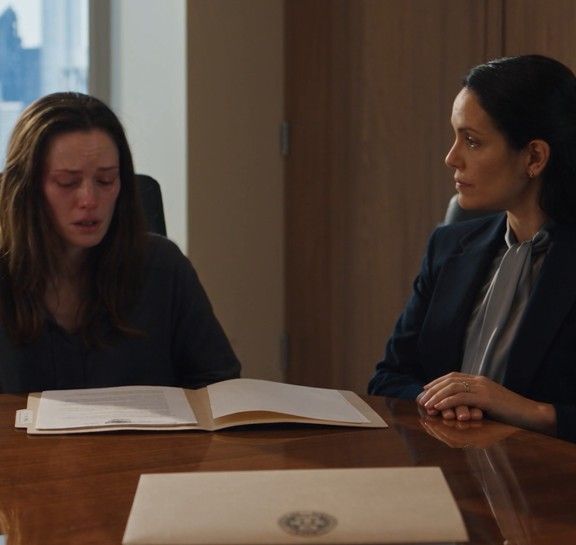
The next morning I went to the law firm listed on the envelope. The attorney, a woman who had clearly been expecting me, looked at me for a long moment before setting a second folder on the table.
“Terrence wanted you to have this only after they revealed themselves,” she said. My hands stayed steady when I touched the cover, though my heart was pounding hard enough to hurt.
Inside was proof that the family had been fighting over the wrong fortune. The shock was not only the inheritance.
It was what Terrence had legally transferred before he died. I was still reading when the office door opened and Beverly walked in wearing the same confidence she had worn on the lawn, as if she had come to witness the final collapse of a woman she believed had nothing.
The attorney reached for the last file, unlocked it, looked directly at Beverly, and said, “Mrs. Washington, you should have read the trust before you threw her out.” 👇
The attorney slid the trust toward Beverly but did not release it. The room held the same polished quiet as the Washington mansion, yet Beverly no longer controlled the setting. I sat with Terrence’s key in my palm and watched her confidence narrow into concentration as she read the first page.
For several seconds, the weight of did not release it the room held the same polished stayed in the room. Beverly did not try to make the moment cleaner than it was. There were practical questions to answer, but there was also damage that could not be handled like paperwork. Terrence listened, watched, and responded to what was actually happening rather than the version everyone had relied on before. That distinction mattered because trust could no longer be requested as a favor; it had to be rebuilt through visible choices.
The next step was deliberately small. Beverly focused on what could be verified, what could be repaired, and what still required time. No one was allowed to turn a confession into instant forgiveness or a good intention into proof of change. The people in the room had to live with the consequences already set in motion. For once, progress did not depend on the loudest person winning. It depended on whether tomorrow’s behavior matched today’s words, and whether the person who had been hurt was finally free to decide what happened next.
Terrence had transferred ownership of the mansion and several family-held assets into a trust before his death. The beneficiary was not Beverly, Howard, Crystal, or Andre. The trust protected my right to remain in the home and placed management authority with an independent fiduciary, preventing relatives from changing locks or disposing of property.
A little later, the weight of several family-held assets into a trust before his death the stayed in the room. Terrence did not try to make the moment cleaner than it was. There were practical questions to answer, but there was also damage that could not be handled like paperwork. Crystal listened, watched, and responded to what was actually happening rather than the version everyone had relied on before. That distinction mattered because trust could no longer be requested as a favor; it had to be rebuilt through visible choices.
The next step was deliberately small. Terrence focused on what could be verified, what could be repaired, and what still required time. No one was allowed to turn a confession into instant forgiveness or a good intention into proof of change. The people in the room had to live with the consequences already set in motion. For once, progress did not depend on the loudest person winning. It depended on whether tomorrow’s behavior matched today’s words, and whether the person who had been hurt was finally free to decide what happened next.
The larger shock was that Terrence had not inherited the fortune everyone assumed he possessed. Much of the wealth tied to his name came from businesses he had built separately during our marriage. He had documented my unpaid support during his illness and my financial contributions while completing nursing school.
Before anyone moved, the weight of inherited the fortune everyone assumed he possessed much of the stayed in the room. Crystal did not try to make the moment cleaner than it was. There were practical questions to answer, but there was also damage that could not be handled like paperwork. Andre listened, watched, and responded to what was actually happening rather than the version everyone had relied on before. That distinction mattered because trust could no longer be requested as a favor; it had to be rebuilt through visible choices.
The next step was deliberately small. Crystal focused on what could be verified, what could be repaired, and what still required time. No one was allowed to turn a confession into instant forgiveness or a good intention into proof of change. The people in the room had to live with the consequences already set in motion. For once, progress did not depend on the loudest person winning. It depended on whether tomorrow’s behavior matched today’s words, and whether the person who had been hurt was finally free to decide what happened next.
Beverly accused me of manipulating him. The attorney answered with dates, medical-capacity evaluations, witness signatures, and recordings Terrence had voluntarily made while fully competent. He had anticipated exactly that accusation and constructed the estate plan so no one could dismiss his choices as the product of medication or pressure.
That afternoon, the weight of answered with dates medical-capacity evaluations witness signatures and recordings terrence stayed in the room. Andre did not try to make the moment cleaner than it was. There were practical questions to answer, but there was also damage that could not be handled like paperwork. Beverly listened, watched, and responded to what was actually happening rather than the version everyone had relied on before. That distinction mattered because trust could no longer be requested as a favor; it had to be rebuilt through visible choices.
The next step was deliberately small. Andre focused on what could be verified, what could be repaired, and what still required time. No one was allowed to turn a confession into instant forgiveness or a good intention into proof of change. The people in the room had to live with the consequences already set in motion. For once, progress did not depend on the loudest person winning. It depended on whether tomorrow’s behavior matched today’s words, and whether the person who had been hurt was finally free to decide what happened next.
I did not smile. Less than a day earlier my wedding album had been face-down in mud. Winning control of a house could not make that image disappear. I asked the attorney what happened next. She said the family would receive formal notice and that the lock change had already violated the trust’s occupancy provisions.
By the time the room settled, the weight of earlier my wedding album had been face-down in mud winning stayed in the room. Beverly did not try to make the moment cleaner than it was. There were practical questions to answer, but there was also damage that could not be handled like paperwork. Terrence listened, watched, and responded to what was actually happening rather than the version everyone had relied on before. That distinction mattered because trust could no longer be requested as a favor; it had to be rebuilt through visible choices.
The next step was deliberately small. Beverly focused on what could be verified, what could be repaired, and what still required time. No one was allowed to turn a confession into instant forgiveness or a good intention into proof of change. The people in the room had to live with the consequences already set in motion. For once, progress did not depend on the loudest person winning. It depended on whether tomorrow’s behavior matched today’s words, and whether the person who had been hurt was finally free to decide what happened next.
Beverly demanded a private conversation. I refused. If she had something to say, she could say it with counsel present. Her anger shifted toward Howard, then Crystal, then finally Terrence himself. Watching blame move around the room showed me how little grief had to do with the fight they had created.
The next decision came quietly, the weight of she had something to say she could say it with stayed in the room. Terrence did not try to make the moment cleaner than it was. There were practical questions to answer, but there was also damage that could not be handled like paperwork. Crystal listened, watched, and responded to what was actually happening rather than the version everyone had relied on before. That distinction mattered because trust could no longer be requested as a favor; it had to be rebuilt through visible choices.
The next step was deliberately small. Terrence focused on what could be verified, what could be repaired, and what still required time. No one was allowed to turn a confession into instant forgiveness or a good intention into proof of change. The people in the room had to live with the consequences already set in motion. For once, progress did not depend on the loudest person winning. It depended on whether tomorrow’s behavior matched today’s words, and whether the person who had been hurt was finally free to decide what happened next.
The attorney opened the last file. Terrence had established separate educational trusts for nieces and nephews, a care fund for Howard, and a modest lifetime allowance for Beverly. No one had been abandoned. What he had removed was their ability to control everything by threatening whoever they considered an outsider.
Nothing about the moment felt simple, the weight of established separate educational trusts for nieces and nephews a care stayed in the room. Crystal did not try to make the moment cleaner than it was. There were practical questions to answer, but there was also damage that could not be handled like paperwork. Andre listened, watched, and responded to what was actually happening rather than the version everyone had relied on before. That distinction mattered because trust could no longer be requested as a favor; it had to be rebuilt through visible choices.
The next step was deliberately small. Crystal focused on what could be verified, what could be repaired, and what still required time. No one was allowed to turn a confession into instant forgiveness or a good intention into proof of change. The people in the room had to live with the consequences already set in motion. For once, progress did not depend on the loudest person winning. It depended on whether tomorrow’s behavior matched today’s words, and whether the person who had been hurt was finally free to decide what happened next.
Crystal lowered her phone for the first time. Andre asked whether the family business was included. It was, but voting rights had been placed with professional management for a fixed period. Terrence had written that grief should not become an excuse for relatives to dismantle work that employed hundreds of people.
What followed was less dramatic but more important, the weight of andre asked whether the family business was included it was stayed in the room. Andre did not try to make the moment cleaner than it was. There were practical questions to answer, but there was also damage that could not be handled like paperwork. Beverly listened, watched, and responded to what was actually happening rather than the version everyone had relied on before. That distinction mattered because trust could no longer be requested as a favor; it had to be rebuilt through visible choices.
The next step was deliberately small. Andre focused on what could be verified, what could be repaired, and what still required time. No one was allowed to turn a confession into instant forgiveness or a good intention into proof of change. The people in the room had to live with the consequences already set in motion. For once, progress did not depend on the loudest person winning. It depended on whether tomorrow’s behavior matched today’s words, and whether the person who had been hurt was finally free to decide what happened next.
The consequences were immediate. Security restored my access to the mansion, and the family received instructions to return property removed from my rooms. Beverly could not evict me. Crystal could not turn private humiliation into leverage. Andre could not pressure me to sign away interests I had not yet understood.
In the days that followed, the weight of to the mansion and the family received instructions to return stayed in the room. Beverly did not try to make the moment cleaner than it was. There were practical questions to answer, but there was also damage that could not be handled like paperwork. Terrence listened, watched, and responded to what was actually happening rather than the version everyone had relied on before. That distinction mattered because trust could no longer be requested as a favor; it had to be rebuilt through visible choices.
The next step was deliberately small. Beverly focused on what could be verified, what could be repaired, and what still required time. No one was allowed to turn a confession into instant forgiveness or a good intention into proof of change. The people in the room had to live with the consequences already set in motion. For once, progress did not depend on the loudest person winning. It depended on whether tomorrow’s behavior matched today’s words, and whether the person who had been hurt was finally free to decide what happened next.
