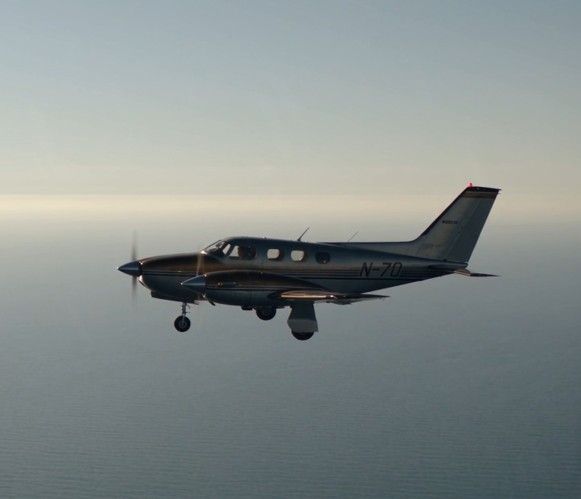
“Because I was trying to understand why I was being ordered away from a route civilian control had cleared. And because when the second fighter moved in, I knew I had seconds to identify whether this was a navigation error, an exercise issue, or something more complicated.”
He nodded.
“Would you make the same choice again?”
That answer took longer.
“No. I’d turn first and ask questions second.”
It was uncomfortable to admit. My training had kept me composed, but experience could become arrogance if I used it to assume I understood a situation better than the people tasked with defending the airspace. The pilots had information I did not. I had information they did not. Neither side had the whole picture.
That was the real failure.
The review team included that conclusion in its recommendations. Unexpected civilian aircraft inside a restricted exercise area were to be treated as both a security concern and a possible deconfliction failure until evidence resolved the difference. Civilian crews, meanwhile, would receive clearer instructions to comply first when intercepted and challenge the routing through safer channels afterward.
I appreciated the symmetry.
Nobody got to leave the room believing only the other side had lessons to learn.
The lead pilot sent a short note through official channels after the review closed. It contained no classified details and no dramatic apology. He simply wrote that his flight had changed one briefing item because of the incident: when an unexpected track appeared, they now discussed not only what the aircraft might be doing wrong, but what information the aircraft might never have received.
I read that line several times.
Then I put the note in my logbook.
My own change was smaller. Before every flight, I began writing one question at the bottom of my planning sheet: What am I assuming somebody else checked?
It looked almost childish beside fuel calculations and weather notes.
It caught things.
A missing update. A frequency copied from an old page. A route change I had mentally accepted without verifying. Nothing dramatic. Exactly the point.
For years, special operations had trained me to search for hidden danger. Civilian aviation was teaching me a quieter discipline: most safe days are built from ordinary checks performed before anyone knows they mattered.
That lesson followed me into the classroom too. My students knew me only as Sarah, the instructor who insisted on disciplined checklists and hated casual assumptions. I never told them why a temporary flight restriction on a screen could make my stomach tighten. I did not need to.
One afternoon a young student complained that checking the same notice twice felt pointless.
“Most safety work feels pointless on the day it succeeds,” I told him.
He rolled his eyes, then checked again.
I smiled because five years earlier I would have delivered the same lesson as a command. Now I knew how much more useful it was as a habit someone chose for himself.
The repetition changed me as much as it changed them. Each ordinary lesson pulled my old instincts into a life where they could protect people without consuming me. I stopped treating the past like contraband and started treating it like experience: valuable, limited, and no longer in command.
The access question took longer.
I was called back to the coastal base twice.
On the second visit, the gray-haired man handed me the red folder.
“Open it.”
Inside was a copy of the contingency order created after my extraction five years earlier.
My name appeared nowhere on the first page.
Echo Actual did.
I read the section describing emergency authentication.
Then I read it again.
“This wasn’t an oversight.”
“No.”
I looked up.
“You told me the identity would be shut down.”
“Operational access was. Emergency recognition was not.”
“Why?”
He folded his hands.
“Because the people who designed your new life argued about one thing. Some wanted a clean severance. Others believed that if you ever used the old call sign again, it would only be because something had gone catastrophically wrong.”
My throat tightened.
“Who won?”
“You did, apparently.”
I did not understand.
He tapped the bottom of the page.
There was a signature.
Mine.
Not Sarah the flight instructor.
Mine from before the crash.
