That felt familiar too.
They took my phone, my flight bag, and the encrypted transceiver panel after photographing it in place. They asked the same questions in different orders.
When did I first see the fighters?
What frequency did I use?
Who installed the secure equipment?
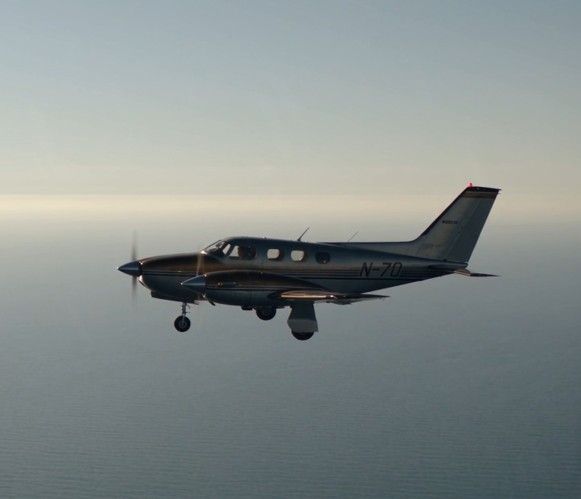
Why was an aircraft registered to a civilian flight instructor carrying a system capable of reaching a carrier strike group’s tactical command network?
I answered carefully.
“I installed it.”
The investigator across from me stared.
“Using what authorization?”
“The authorization that existed when I was still alive.”
That answer irritated him.
It irritated me too.
A second officer entered carrying a thin red folder. He placed it on the table but did not open it.
“The authentication you used is still valid.”
“Apparently.”
“It should not be.”
“Then we have two problems.”
He looked at me.
“Two?”
“A valid civilian flight plan crossed a military exclusion zone without warning, and a dead operator still has access to Strike Command.”
No one in the room liked hearing both sentences together.
That was why I said them.
The next several hours were less dramatic and more dangerous to my life as Sarah than the F-22s had been.
The truth of my disappearance came back piece by piece.
Five years earlier, the helicopter crash had killed two people and left the rest of us scattered across a mountainside under conditions that turned a rescue into a classified extraction. I survived. So did information I carried that could have endangered people still operating in the region.
Declaring me dead had been part protection, part containment.
The public story closed quickly. A legal identity remained available to me under controlled documentation. The operational identity Echo Actual was supposed to disappear behind access walls so deep that even most military systems would treat it as history.
I had accepted that because I wanted out.
What I had never fully accepted was the feeling that the country I served had erased the person I had been and expected me to be grateful for the safety of becoming smaller.
The man with gray hair knew that.
He had been part of the final transition team.
“Why did you keep the transceiver?” he asked when the others left the room.
I looked at the red folder.
“Because you told me never to depend on one system.”
He winced.
“I did say that.”
“A lot.”
“I was annoying.”
“You were relentless.”
“And yet you kept the radio.”
I leaned back.
“I kept a door.”
He understood immediately.
For years I had told myself the concealed panel was practical. A backup. A relic I never intended to use.
It was more than that.
It was proof that if the civilian life failed around me, Echo Actual still existed somewhere I could reach.
That realization made me angrier than the intercept.
“Who left the authentication active?”
He looked toward the closed door.
