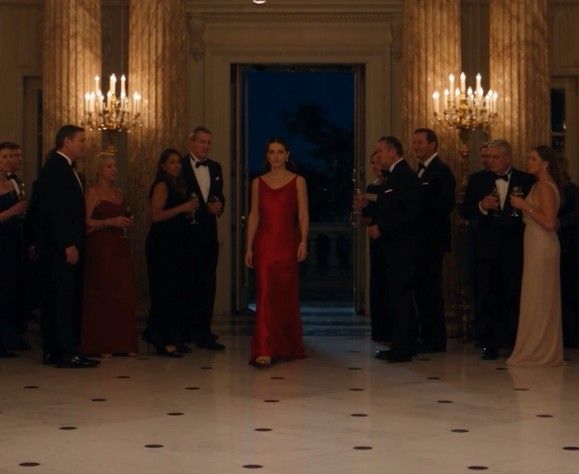
“I came here to make you hurt,” I said. “I don’t like that choice. It doesn’t make your letter true.”
“Then we’re both guilty of something.”
“We are both responsible for our choices. They aren’t interchangeable.”
He rubbed his forehead. For years, that gesture had pulled me toward him. I used to make tea, lower my voice, and wait until his distress became manageable enough for mine to enter the room.
Tonight I asked a practical question.
“Where will you sleep?”
He looked up. “What?”
“I won’t share a bedroom with you again. I will speak to an attorney tomorrow. For tonight, you can use the guest room, or you can stay elsewhere.”
“You can’t decide our marriage in a library.”
“I decided I couldn’t live like this three months ago. I have spent the time since then trying to find a less frightening answer.”
His eyes went toward the door. He was still thinking about the guests. That knowledge did not make me triumphant. It made me tired.
I left the library and found the housekeeper in the corridor. I asked her to call a licensed car service. Then I thanked her for the work she had done that evening. Her face softened as though she had been waiting for an ordinary kindness all night.
The banker approached while I waited near the coat room. He looked uncomfortable.
“I hope I didn’t cause trouble,” he said.
“You didn’t cause what is happening in my marriage.”
He nodded, relieved too soon.
“But I should have moved your hand when I wanted it moved. Please don’t assume silence means permission.”
His face reddened. He apologized. I accepted the apology and wished him a good evening. There was no need to turn him into a villain to make my own choice clear.
In the car, I watched the house recede behind iron gates. My husband called twice. I sent a brief message saying I was safe, that I would not discuss anything further that night, and that practical arrangements could wait until morning.
I went to a small hotel with a staffed lobby. At the desk, the clerk asked whether I wanted breakfast included. The question was so ordinary that I almost cried.
“Yes,” I said. “Please.”
Upstairs, I unfastened the dress carefully. I had chosen it like a weapon. Without my body inside it, it was simply silk, soft and beautifully made. I laid it across the chair instead of throwing it onto the floor.
I slept badly. At dawn, I wrote down what had happened in the library while the words were fresh. I separated what I had seen from what Julian had said and what I still did not know.
That distinction mattered later. It kept anger from turning suspicion into fact.
The attorney I met that afternoon was a woman with a quiet office and a habit of waiting for full answers. She explained that leaving the house for one night did not settle ownership, finances, or the marriage. We would examine records before making decisions.
She asked what outcome I wanted.
“Peace,” I said.
“That is a good aim. We will need to turn it into specific requests.”
For the first time, I understood peace as work rather than a reward someone might give me. We discussed temporary living arrangements, copies of financial statements, access to personal belongings, and a way to communicate without nightly arguments.
I returned home with a friend two days later. My husband had moved into the guest room. He had also placed a large arrangement of white roses on the dining table.
There was a card beneath them.
Let’s begin again.
I put the card beside the vase. It did not mention the women, the threats, or the sentence in his letter. Beginning again was an attractive phrase for someone who wanted the record erased.
He appeared in the doorway.
“I thought you would like them.”
“I used to.”
My friend waited in the hall while I collected clothes and documents. We checked drawers calmly. I took my passport, family photographs, and the little box of earrings my mother had left me.
My husband asked whether we could have ten minutes alone. I agreed, with the door open and my friend nearby. I wanted to hear him clearly enough that later I would not fill the silence with imaginary apologies.
He admitted the affairs. He admitted writing the letter. Then he said he had been frightened of losing everything.
“What did you think I was frightened of?”
