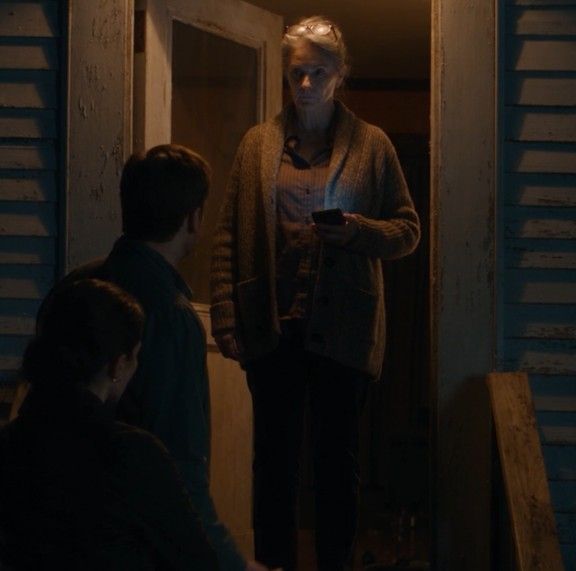
Emily’s face went white.
Margaret looked at Emily’s keys, hanging on the hook by the door. There, among the car keys and the house keys, was a brass key that did not belong to any lock in this house.
“You’ve had my garage key.”
Emily said nothing.
“Where is the cabin key now?”
“Karen has it.”
“Call her.”
Emily’s lips pressed together. She didn’t move.
“Call her and tell her to leave the key at my house before morning. Or I will file a police report for unauthorized use of my property.”
“You wouldn’t.”
“Try me.”
The silence that followed was the loudest sound Margaret had ever heard. She could feel the history of every concession she had made, every boundary she had swallowed to keep the peace, every holiday she had spent biting her tongue while Emily rearranged her life like a renovation project — gutting what was valuable and covering it with something that looked better in photographs.
Emily took out her phone. Her fingers moved across the screen. She typed a message, her jaw set, her eyes hard and wet.
“Sent,” she said.
“Show me.”
Emily turned the screen toward her. The message read: *Return the key to Margaret’s house tonight. Leave it in the mailbox. Don’t ask questions.*
Margaret nodded.
She looked at Mark one more time. He looked exhausted. He looked like a man who had just woken up from a long, comfortable sleep and found the house on fire.
“I love you,” she said. “But I am done pretending.”
She left.
The drive home was quiet. No phone calls. No messages. The mountains were dark silhouettes against a sky full of stars, and the road unwound before her like a thread being pulled from something that had been wound too tight for too long.
When she reached her house, the garage door was already open. Emily’s key was gone from her ring — she checked. In the mailbox, on top of the bills and catalogs, sat the brass cabin key. She picked it up and held it in her palm. Small. Heavy with everything it had unlocked that should have stayed closed.
She went inside, poured herself a glass of water, and sat at the kitchen table.
The house was silent. Not the hostile silence of an empty house, but the clean silence of a house that belonged to its owner and no one else. She thought about Robert. About the way he used to sit across from her at this table, reading the paper, his glasses sliding down his nose, looking up when she entered the room as though she were the most interesting thing in it.
She missed him. She would always miss him. But tonight the missing felt different — not like a wound, but like a landscape. Wide and deep and hers to carry.
The next morning, she drove back to the cabin.
The house was clean.
Someone had scrubbed the kitchen. The pizza boxes were gone. The wineglasses had been washed and returned to the cabinet. The rug had been vacuumed. Even the guest towel — the one that had been crumpled on the floor — had been laundered and folded neatly over the bathroom rack.
Karen and Paul’s suitcases were gone. Their shoes were gone. The faint smell of their cologne lingered in the curtains, but that would fade with the open windows.
On the kitchen counter, she found a note in Paul’s handwriting:
