“For a few minutes.”
Ruby whispered, “It was longer.”
Kelsey swung toward her. “Ruby, stop lying.”
Her father stepped between them. “Do not speak to her.”
That sentence felt almost impossible to Ruby. Kelsey had controlled every room by deciding who was allowed to speak, cry, drink, sit, or move. Now an adult was telling Kelsey that she no longer controlled the conversation.
He called Ruby’s mother first. His voice broke when he explained why Ruby had been locked in the laundry room. Then he called the police. He did not try to turn the notebook into a dramatic conclusion; he read exactly what was on the page and described the latch.
Kelsey left before the officers arrived. Ruby’s father did not stop her. He locked the front door after she was gone and photographed the notebook, the latch, and every page that contained Ruby’s or Sam’s name.
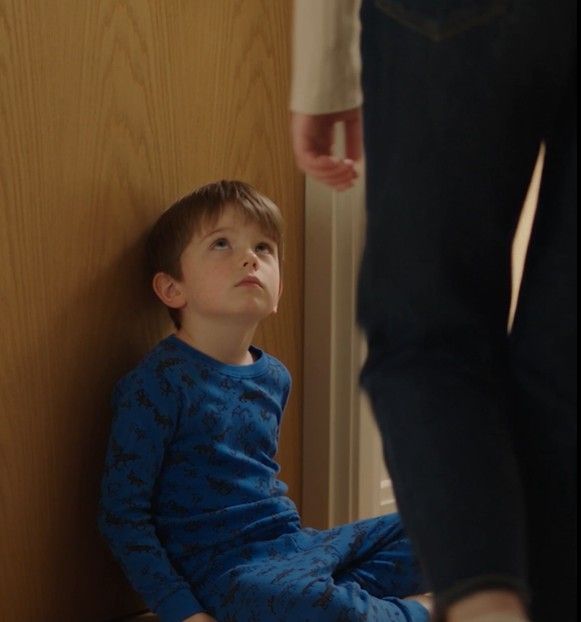
Then he sat on the kitchen floor because Ruby would not come farther into the house.
“I am sorry,” he said.
Ruby stared at him. “For what?”
“For thinking being unusually well-behaved meant you were happy.”
She looked down. “Kelsey said if I told, you would think I was bad.”
Her father’s eyes filled. “I believe you.”
Ruby tested the words. “Even if I cried?”
“Especially if you cried.”
“Even if I yelled?”
“You are allowed to yell when somebody locks you in a dark room.”
Sam nodded fiercely. “Ruby yelled big.”
For the first time that night, Ruby almost smiled.
Their mother arrived before the police. She dropped her bag by the door and knelt so quickly she nearly slipped. Ruby did not run to her. That hurt her mother, but she stayed where she was.
“Can I hug you?” she asked.
Ruby nodded.
The hug came slowly. No one grabbed. No one called her dramatic.
When officers arrived, Ruby and Sam were taken into another room with their mother while their father explained. The notebook mattered immediately because it contained names of other children and dates extending back months. Some pages listed ordinary tasks—homework, dinner, bedtime. Other pages listed consequences Kelsey had never described to parents: dark room, silent chair, no-water hour, stand facing wall, remove blanket.
The page marked tomorrow was not a mysterious future operation. It was worse in a quieter way. It showed that Kelsey had already planned how to punish Ruby if she spoke about that night. The locked room had not been an impulsive mistake. She had intended to reinforce the secrecy.
Ruby’s father gave officers the contact information he knew for two families in the notebook. Investigators handled the rest. He and Ruby’s mother were told not to call every parent themselves and compare stories, because each child needed a chance to describe experiences without hearing other accounts first.
That instruction was difficult. Both parents wanted to warn everyone immediately. But they understood.
The next morning, Ruby woke before sunrise and stood outside the laundry room. Her father had removed the external latch during the night. The screw holes remained in the wood.
“Is it broken?” she asked.
“The door works. The lock does not.”
