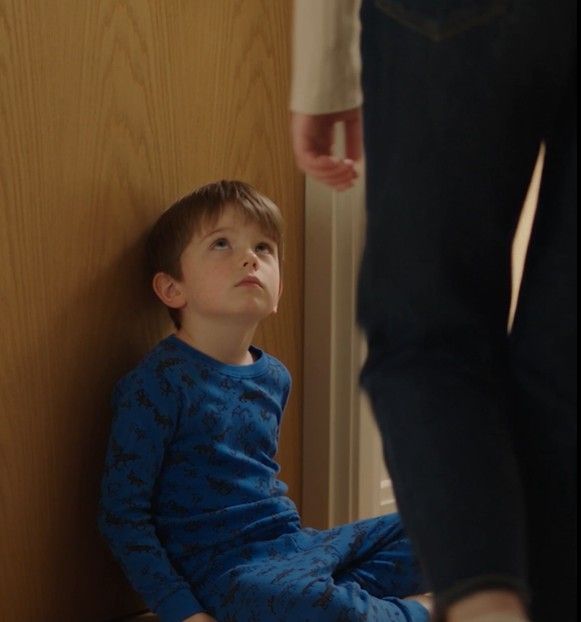
“Can she put it back?”
“Kelsey is not coming back into this house.”
Ruby stared at the holes. “Ever?”
“Ever.”
That was the first permanent promise her father made. The second was more careful: he could not promise what investigators or a court would do, but he could promise who entered their home and cared for his children.
The family spent the next several days answering questions and changing routines. Ruby’s mother took leave from work. Their father canceled every plan that required a sitter. Sam followed Ruby from room to room, convinced that being close could prevent doors from closing.
A child interviewer met with each sibling separately. Ruby expected to be tested. Kelsey had always asked questions as traps, repeating them until Ruby changed an answer and then calling her a liar. The interviewer did the opposite. She told Ruby she could say “I do not know,” “I do not remember,” or “I do not want to answer right now.”
Ruby asked, “What if I say it wrong?”
“Your job is not to say it perfectly. Your job is to tell me what you remember.”
Ruby remembered more than she wanted.
She described silent chair: sitting without speaking while Kelsey set a timer. She described no-water hour: Kelsey taking cups away after Ruby complained about chores, though water was eventually returned. She described dark room. She described the look Kelsey used when parents were present, a look that turned ordinary sentences into warnings only Ruby understood.
Sam’s account was simpler. “Kelsey locks Ruby. Ruby cries. Kelsey says bad listening. I sit by door.”
Then he told the interviewer where he found the notebook: Kelsey’s bag had been open on the upstairs chair after she dragged him toward bed. He recognized Ruby’s name on a page because he knew the first letter. He took it because “Ruby needed Dad to see.”
When their parents heard that later, both cried. Sam seemed confused by the attention.
“I just got book,” he said.
Ruby hugged him. “I know.”
Other families began receiving calls. Several children described similar punishments. One eight-year-old had been forced to sit alone in a bathroom with the light off. Another said Kelsey rationed drinks as punishment. Two parents had noticed sudden behavior changes but believed Kelsey’s explanation that their children were testing limits. One family had already stopped using her after their son begged them not to leave him, but they had not known what he was afraid of.
The notebook became a map, not proof of every line by itself. Investigators compared dates with babysitting schedules, text messages, and parent accounts. The pattern grew stronger because Kelsey had recorded it herself.
She was eventually charged with offenses related to child endangerment and unlawful confinement. The exact case took months, and Ruby’s parents refused to make her follow every development. Kelsey was prohibited from providing childcare while the case was pending and later entered a plea that included permanent restrictions preventing her from working as a childcare provider.
For Ruby, that mattered more than the legal language. Kelsey would not be welcomed into another home as the smiling, helpful sitter nobody knew to question.
Still, consequences for Kelsey did not automatically make Ruby feel safe.
The first time a babysitter was mentioned months later, Ruby threw up. Her parents canceled dinner plans and never told her she had ruined the night. They found a family therapist instead.
The therapist did not begin by asking Ruby to trust new adults. She began with doors.
They made a list of doors Ruby could lock from the inside, doors adults could open in emergencies, and doors that should never be used to trap a child. They practiced what Ruby could do if she felt unsafe: call a parent, go to a neighbor, speak to a teacher, tell another adult even if the first one did not believe her.
Then the therapist asked Ruby to invent a rule for grown-ups.
Ruby thought carefully. “If a kid is scared of your rule, they are allowed to tell someone else about it.”
Her father wrote it down.
At home, the family changed the way they talked about behavior. Instead of saying Ruby had been “so good lately,” they asked whether she felt okay. Instead of praising silence, they praised honesty. When Sam yelled about vegetables, their father found himself strangely relieved. A loud child was not necessarily a disobedient child. Sometimes he was simply a four-year-old who hated peas.
The laundry room remained difficult. For weeks Ruby refused to enter. Nobody forced her. Her parents carried laundry in and out. Then one Saturday, her mother set a basket near the hallway and said, “I am going to start a load. Want to help or stay here?”
Ruby stayed.
