Just my own home, finally returned to me.
Over the next spring, I began inviting people back into the house in ways that once would have felt impossible. My former accountant came for dinner and brought the same cheap red wine he used to bring before Elena convinced me he was disloyal. My old financial planner sat at the kitchen table and helped me simplify accounts that had become deliberately complicated. We talked about baseball, taxes, grandchildren, and all the ordinary subjects that secrecy had quietly pushed out of my life.
Elena joined us only once.
She arrived carrying a pie from the bakery I liked and stopped awkwardly inside the doorway.
My accountant looked at her for a long moment.
“I owe you an apology,” she said.
“Yes,” he answered.
There was no dramatic embrace. No instant absolution. She apologized anyway.
That night taught me more about repair than any courtroom had. Consequences were not the opposite of mercy. Sometimes they were what made honest mercy possible.
I also stopped preserving the house as a museum to the life I thought I had lost. Elena’s coat finally came down from the hook near the kitchen. I washed it, folded it, and returned it to her in a plain cardboard box.
She held it against herself and smiled sadly.
“You kept this eight months.”
“I thought it belonged to a dead woman.”
“And now?”
“Now it belongs to you.”
She nodded, understanding what I meant. The coat was no longer a shrine, and she was no longer a ghost.
Months later, when my therapist asked whether I considered myself a widower, a husband, or a divorced man, I laughed for the first time at the absurdity of needing a label. Legally, Elena and I remained married while we worked through the consequences of everything that had happened. Emotionally, we were learning each other from the beginning with no promise about where that would lead.
That uncertainty no longer frightened me.
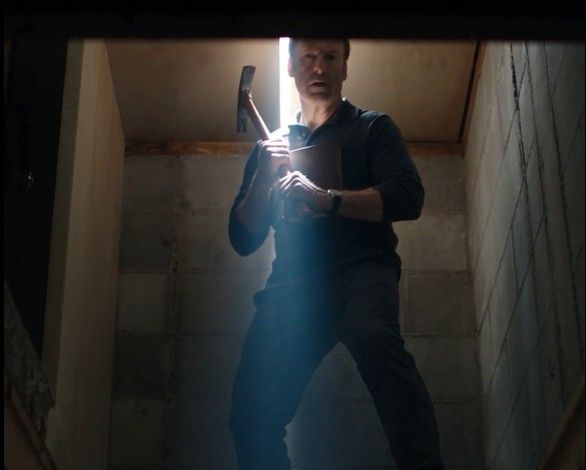
One evening, Elena came by while I was sanding a small wooden picture frame in the basement. She did not descend the stairs until I invited her.
“What’s that for?” she asked.
I lifted the frame. Inside was a new photograph taken at a community garden fundraiser several weeks earlier. Elena stood at one end, me at the other, with friends between us. No staged smiles. No hidden plan. Just people who had survived a terrible truth and were learning how to occupy the same world honestly.
“I thought the wall could use something current,” I said.
She looked toward the place where the false panel had once concealed the chained box.
Then she looked back at me.
“That seems fair.”
I hung the photograph beside the workbench. The old confession letter remained in the unlocked walnut box below it, available if I ever needed to remember exactly what had happened.
But I did not need to open it that night.
Elena sat on the bottom stair while I brushed sawdust from the bench. Above us, the house settled with a familiar creak. For years, hidden plans had been built in that basement. Now the only thing taking shape there was wood beneath my own hands.
I switched off the light as we went upstairs, leaving the door open behind us.
