“It was small,” she answered. “Most of the moments that finally shame us are.”
I believed her.
Believing her did not mean forgiving her all at once.
The money was eventually unwound. Most of the offshore assets were traceable to funds removed from our marital estate. After taxes, penalties, and restitution, what remained returned to accounts under independent management. I hired a new financial team. I changed doctors. I reopened relationships with the accountant and adviser Elena had pushed away years earlier.
Each reconnection was awkward.
Each one gave me back a piece of my own judgment.
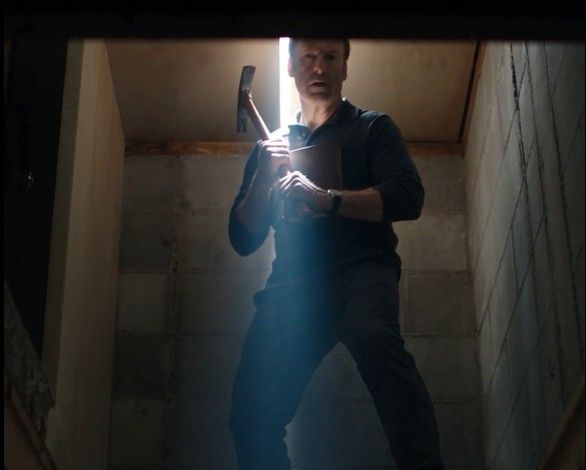
The basement changed too.
I tore out the false wall.
For weeks, I could not decide what to do with the space. Every time I went downstairs, I smelled lavender even when none was there.
Then I found something behind the last strip of framing.
Not money.
Not evidence.
A narrow envelope taped to the back of a stud.
It was addressed to me in Elena’s handwriting and dated three days before her collapse.
If I fail to tell you myself, it began, please know that the worst thing I ever did was convince myself fear gave me permission to control the person I loved.
The letter did not excuse her.
It did something more useful.
It matched the final journal entries exactly. She had been trying to confess before she disappeared.
Near the end she wrote: You may never forgive me. If you do not, I will understand. But I want you to have your life back, even if I am not in it.
I sat on the basement floor for a long time holding that page.
That was the positive truth hidden behind all the manipulation: before Noah accelerated the plan, before the staged death, before the conservatorship petition, Elena had already begun choosing against the person she had become.
Too late to prevent damage.
Not too late to matter.
A year after the case ended, I converted the basement into a woodworking room. I had never built anything more ambitious than a crooked bookshelf, but the work steadied me. I replaced the harsh bulb over the stairs with warm lighting. I painted the concrete walls. I installed shelves where the chained fireproof box had stood.
Elena came by once while I was finishing a workbench.
She stopped at the bottom of the stairs.
“It looks different.”
“It is different.”
She nodded.
We had reached a kind of peace by then. Not the marriage we had. Not strangers either. She was still under probation supervision, still repairing relationships one apology at a time. I no longer checked the window expecting her to vanish.
Noah wrote to me from prison.
For months, I did not open the letters.
Eventually I read one. He blamed Elena, Victor, pressure, money, childhood expectations, everyone except himself. I put it away unanswered.
The next letter was different. No excuses. Just a sentence: I thought owning everything would make me impossible to abandon.
I still did not know what to do with that.
So I did nothing quickly.
That became another lesson.
I did not owe anyone immediate forgiveness just because they finally told the truth.
On the second anniversary of the day I believed Elena died, I went to the cemetery alone. The marker with her name had been legally removed months earlier, leaving a clean rectangle in the grass. For a long time, the empty space bothered me.
That morning, it did not.
I placed no flowers.
There was no one buried there.
Instead, I drove home and went downstairs.
On the new workbench sat a small wooden box I had spent weeks making from walnut. The joints were imperfect, but solid. Inside it I placed Elena’s confession letter, the final copied pages of the journal, and one photograph of us from before fear and money had rearranged our family.
I did not lock the box.
That detail mattered.
Later that afternoon, sunlight came through the basement window and landed across the open lid. I stood there with sawdust on my hands, listening to the ordinary sounds of the house above me.
No hidden footsteps.
No deadbolt.
No voice from the dark.
