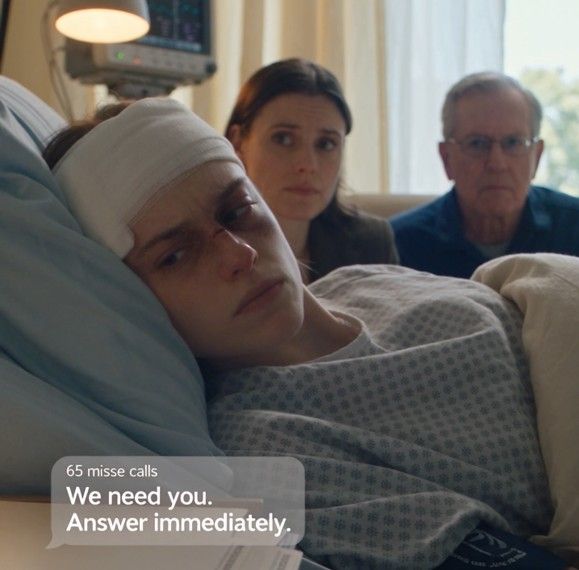
The next conversation took place with fewer spectators and more structure. my father arrived prepared to explain. my grandfather arrived prepared to listen once, ask precise questions, and leave if the discussion became another attempt to reverse blame. Nobody in the hospital room could undo the earlier words, yet the next choice still belonged to my grandfather.
Eventually an admission came. It was incomplete at first, wrapped in reasons and pressures. my grandfather did not attack the reasons; instead, my grandfather separated them from responsibility. Circumstances could explain a choice without making the choice harmless. That distinction kept the discussion tied to graduation instead of allowing it to drift into another argument about personality.
The consequences reached beyond embarrassment. Relationships changed. Access, trust, and future decisions were no longer automatic. my father discovered that an apology could open a door to repair but could not demand that everyone walk through it immediately. For my grandfather, the shift was measured less by volume than by the fact that the question finally remained unanswered until someone addressed it honestly.
Hannah also had something to reckon with: the moments when staying quiet had made the imbalance easier to maintain. That acknowledgment was painful because it removed the comfort of being merely an observer. It also made genuine repair possible. The record surrounding the document made that clarity possible without requiring anyone to guess at motives.
Once the practical crisis settled, grief arrived. my grandfather mourned not only what had happened but the version of the relationship that had been defended for years. Letting go of that imagined version hurt, yet it created room to judge future behavior by reality. The significance of that moment was not obvious immediately, but it changed what my grandfather was willing to accept next.
A new routine formed slowly. Mornings became less tense. Messages were answered when convenient rather than immediately. Decisions that once required permission became ordinary choices. The absence of constant pressure felt strange before it began to feel like freedom. Nobody in the hospital room could undo the earlier words, yet the next choice still belonged to my grandfather.
The first real test of repair came when my father wanted something and heard no. The old pattern would have turned refusal into an accusation. This time there was a pause. The request was withdrawn without punishment, and my grandfather noticed the difference without pretending one good moment erased the past. That distinction kept the discussion tied to graduation instead of allowing it to drift into another argument about personality.
The fuller truth about graduation was eventually shared with the people who genuinely needed to know. It was not announced for revenge. Details were kept specific, and speculation was left out. That restraint gave the account more weight than exaggeration ever could. For my grandfather, the shift was measured less by volume than by the fact that the question finally remained unanswered until someone addressed it honestly.
What my father lost was not everything, but something central: the ability to control others through an uncontested version of events. Future choices now carried visible consequences, and the people around my father were less willing to confuse confidence with correctness. The record surrounding the document made that clarity possible without requiring anyone to guess at motives.
my grandfather began making plans that had nothing to do with the conflict. That was an important measure of recovery. A life cannot remain organized forever around the person who caused the wound; eventually attention has to return to work, friendship, food, sleep, music, and ordinary anticipation. The significance of that moment was not obvious immediately, but it changed what my grandfather was willing to accept next.
One afternoon, Hannah and my grandfather talked without mentioning the dispute for nearly an hour. They laughed about something trivial. The laughter felt almost disloyal at first, then necessary. Healing was not a courtroom where pain had to remain in evidence every minute. Nobody in the hospital room could undo the earlier words, yet the next choice still belonged to my grandfather.
When another apology came, it was better because it named behavior instead of demanding forgiveness. my grandfather accepted the words as information, not as a contract. Trust would be decided by repetition of better actions over time. That distinction kept the discussion tied to graduation instead of allowing it to drift into another argument about personality.
The object connected to the document remained nearby, but its meaning changed. At first it had represented threat and uncertainty. Later it became a reminder that facts could be held calmly, examined carefully, and used to protect a boundary without turning a person cruel. For my grandfather, the shift was measured less by volume than by the fact that the question finally remained unanswered until someone addressed it honestly.
A supporting relationship also shifted. Someone who had once avoided conflict chose to speak before being asked. The gesture was imperfect and late, but it mattered because it was voluntary. my grandfather did not reward it with instant absolution; gratitude and caution were allowed to coexist. The record surrounding the document made that clarity possible without requiring anyone to guess at motives.
Months later, a necessary gathering brought several of them into the same space again. The atmosphere was different. Nobody could rely on the old hierarchy without noticing that it no longer worked. my grandfather entered without rehearsing an apology for taking up space. The significance of that moment was not obvious immediately, but it changed what my grandfather was willing to accept next.
The strongest proof of change was almost boring. A boundary was stated, heard, and respected. No slammed door followed. No whispered campaign began afterward. my grandfather went home surprised by how peaceful an ordinary exchange could feel when nobody was trying to win ownership of another person’s reality. Nobody in the hospital room could undo the earlier words, yet the next choice still belonged to my grandfather.
Then a detail from the beginning returned in an unexpected way. It had once seemed attached only to humiliation, fear, or loss. Someone had preserved it for a different reason, and that reason revealed that the worst day had also contained the first unnoticed act of care. That distinction kept the discussion tied to graduation instead of allowing it to drift into another argument about personality.
The discovery did not cancel what happened. Instead, it recontextualized one small memory. my grandfather realized that while the conflict had exposed painful truths, it had also made one loyal relationship visible in a way that could no longer be overlooked. For my grandfather, the shift was measured less by volume than by the fact that the question finally remained unanswered until someone addressed it honestly.
That realization loosened something that arguments had never reached. my grandfather stopped needing the past to become fair before the future could become good. The distinction was quiet but enormous: justice had established boundaries; affection was teaching the body how to rest inside them. The record surrounding the document made that clarity possible without requiring anyone to guess at motives.
By the next season, the hospital room no longer existed in memory only as the site of confrontation. New conversations had happened there. Different choices had been made. The room had accumulated evidence that life could continue without pretending the old wound had never occurred. The significance of that moment was not obvious immediately, but it changed what my grandfather was willing to accept next.
At the end of one ordinary evening, my grandfather touched the object associated with the document and then set it down. There was nothing left to prove in that moment. The people who mattered knew what had happened, the necessary consequences had taken hold, and tomorrow no longer felt like another hearing. Nobody in the hospital room could undo the earlier words, yet the next choice still belonged to my grandfather.
Light moved softly across the room as my grandfather turned toward the person who had stayed. No grand speech followed. A hand was offered, a chair was pulled closer, and the remaining distance disappeared by choice rather than pressure. For the first time, peace did not require silence. That distinction kept the discussion tied to graduation instead of allowing it to drift into another argument about personality.
The work of rebuilding continued in small decisions rather than declarations. my grandfather learned to notice tension without obeying it, and to leave conversations that tried to turn old guilt into new permission. Each choice strengthened a life that no longer depended on being understood by everyone. For my grandfather, the shift was measured less by volume than by the fact that the question finally remained unanswered until someone addressed it honestly.
Nothing about the ending was perfect, which made it trustworthy. Some relationships became closer, others more limited, and a few never returned to what they had been. my grandfather accepted that difference. Closure was not restoration of the old arrangement; it was freedom from needing the old arrangement back. The record surrounding the document made that clarity possible without requiring anyone to guess at motives.
What remained was simple: graduation had once been used to define my grandfather from the outside. It no longer could. The final word belonged not to the accusation, the threat, or the empty seat, but to the life my grandfather chose after answering it with facts and staying present long enough to be heard. The significance of that moment was not obvious immediately, but it changed what my grandfather was willing to accept next.
The 1th small change arrived without ceremony. my grandfather encountered a situation that once would have triggered an automatic retreat, but this time paused long enough to separate discomfort from danger. That pause mattered because graduation had trained everyone to expect the old response. my grandfather chose a measured answer, kept the facts connected to the document, and allowed the resulting silence to belong to the people who had created it. Nothing spectacular followed; the value was precisely that no one could turn the moment into another performance. The boundary held, and ordinary life resumed on terms that felt increasingly self-directed.
The 2th small change arrived without ceremony. my grandfather encountered a situation that once would have triggered an automatic retreat, but this time paused long enough to separate discomfort from danger. That pause mattered because graduation had trained everyone to expect the old response. my grandfather chose a measured answer, kept the facts connected to the document, and allowed the resulting silence to belong to the people who had created it. Nothing spectacular followed; the value was precisely that no one could turn the moment into another performance. The boundary held, and ordinary life resumed on terms that felt increasingly self-directed.
The 3th small change arrived without ceremony. my grandfather encountered a situation that once would have triggered an automatic retreat, but this time paused long enough to separate discomfort from danger. That pause mattered because graduation had trained everyone to expect the old response. my grandfather chose a measured answer, kept the facts connected to the document, and allowed the resulting silence to belong to the people who had created it. Nothing spectacular followed; the value was precisely that no one could turn the moment into another performance. The boundary held, and ordinary life resumed on terms that felt increasingly self-directed.
The 4th small change arrived without ceremony. my grandfather encountered a situation that once would have triggered an automatic retreat, but this time paused long enough to separate discomfort from danger. That pause mattered because graduation had trained everyone to expect the old response. my grandfather chose a measured answer, kept the facts connected to the document, and allowed the resulting silence to belong to the people who had created it. Nothing spectacular followed; the value was precisely that no one could turn the moment into another performance. The boundary held, and ordinary life resumed on terms that felt increasingly self-directed.
The 5th small change arrived without ceremony. my grandfather encountered a situation that once would have triggered an automatic retreat, but this time paused long enough to separate discomfort from danger. That pause mattered because graduation had trained everyone to expect the old response. my grandfather chose a measured answer, kept the facts connected to the document, and allowed the resulting silence to belong to the people who had created it. Nothing spectacular followed; the value was precisely that no one could turn the moment into another performance. The boundary held, and ordinary life resumed on terms that felt increasingly self-directed.
