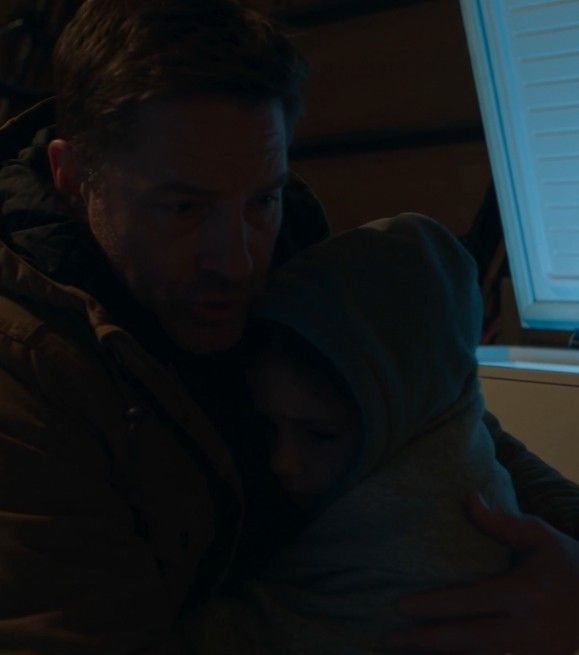
The more difficult question was Taylor.
Child protective services opened a separate assessment of whether she had failed to protect Lily. The family court issued an emergency order placing Lily with me while the investigation continued. Taylor received supervised visits.
She looked devastated when the judge announced it.
Part of me thought she deserved that devastation.
Another part remembered that Evelyn had controlled Taylor long before I ever met either of them.
That did not erase responsibility.
It complicated it.
Our marriage had been full of moments I now saw differently. Evelyn criticizing Taylor’s clothes. Evelyn making decisions about our vacations. Evelyn arriving uninvited and staying for days. Taylor panicking whenever she disappointed her mother.
I had called it enmeshment once during an argument.
Taylor accused me of hating her family.
Then the divorce began.
Now I wondered how much of it had been shaped by a woman whose definition of love required obedience.
Taylor’s therapist eventually used the word coercive control.
Again, explanation.
Not erasure.
Taylor still had one job above all others: protect Lily.
She had failed.
The court gave her a path to repair that failure. Parenting classes. Individual therapy. No unsupervised contact between Lily and Evelyn under any circumstance. Full cooperation with child services. A gradual plan for increased visitation only if Lily’s therapist and the court agreed.
Taylor followed every requirement.
Not perfectly.
Honestly.
The first supervised visit lasted twenty minutes. Lily sat on the opposite side of a playroom table and colored without looking up.
Taylor did not ask for a hug.
That mattered.
“I’m sorry I didn’t listen,” she said.
Lily kept coloring.
“I should have believed you.”
No answer.
“I’m going to work very hard to be safer.”
Lily finally looked at her.
“Grandma says sorry too?”
Taylor began crying.
“I don’t know what Grandma says.”
“Are you mad at her?”
“Yes.”
Lily considered that.
Then she returned to the purple crayon.
Healing started there.
Evelyn denied the most serious allegations for months. She claimed the freezer was a “cool-down space” and insisted the lid had never been fully closed until Lily accidentally pulled it down herself.
The physical evidence undermined that version. So did Lily’s consistent disclosures to multiple professionals who asked open, nonleading questions.
Then prosecutors obtained a series of text messages between Evelyn and Taylor.
They were not a dramatic confession.
They were worse in a quieter way.
Evelyn had repeatedly complained that Lily needed “consequences she can feel.” In one message after Lily came home crying, Taylor wrote: She says the garage gets too cold.
Evelyn responded: Then she’ll remember next time.
Taylor had forgotten the exchange.
I believed that.
I also believed forgetting it was part of the problem.
Confronted with the messages, Taylor stopped defending her past assumptions completely.
“I minimized it,” she told the court. “I was afraid of what it would mean if my mother was dangerous, so I kept choosing interpretations that required me to do nothing.”
