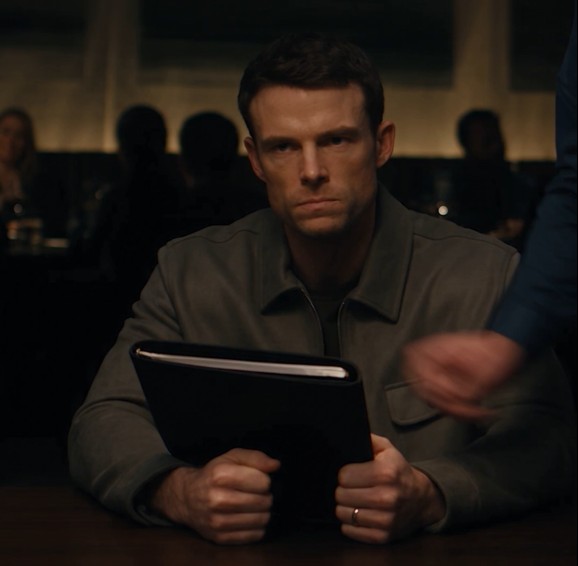
“I am learning how to make decisions slowly,” she said.
Marcus smiled. “You made soup without asking Dad whether he liked it?”
“I did.”
“What did you decide?”
“That I liked it.”
We laughed, and the sound startled all three of us.
It did not erase anything. It did not make the past harmless. But it gave the future a place to begin.
One evening, while cleaning the office, I found a loose panel behind the bottom drawer of my desk. I had never noticed it before. Inside was a small envelope, yellowed at the edges, addressed in handwriting I recognized immediately.
Mine.
The date on the envelope was from eleven years earlier, three weeks before I bought the penthouse.
I opened it carefully.
The letter was addressed to Marcus.
I had forgotten writing it.
I had been twenty-six, exhausted, and working two jobs while saving for the down payment. Marcus had just failed out of a training program and had stopped returning my calls. I had written that I was angry, frightened, and tired of being treated as though my strength meant I needed nothing.
But beneath the anger, I had written something else.
I wrote that I was buying the penthouse because I wanted one place in the world where neither of us had to ask permission to belong.
I had planned to give him the letter when I invited him to stay with me after his divorce. Then Dad had called, Marcus had moved in with friends, and the envelope had vanished into the drawer.
At the bottom of the letter, I had written:
If you ever think I am choosing a building over you, read this again. The building is only walls. You are my brother. I want you to have a place here, but I need you to come through the door as yourself, not as someone’s responsibility.
I sat on the floor for a long time.
The hidden letter changed nothing about what Dad had done. It did not excuse Marcus’s choices or make the forged contract less frightening. But it revealed something I had forgotten about myself.
I had never wanted the penthouse to be a weapon.
I had wanted it to be a home.
The next day, I asked Marcus to come over. When he arrived, I handed him the envelope.
He read the letter standing in the entryway. By the final line, his face had crumpled.
“You wrote this before I even knew about the apartment,” he said.
“Yes.”
“You were going to let me live here?”
“I was going to offer you a room. There’s a difference.”
He nodded slowly.
“Because you wanted me here,” he said, “but not because you owed me.”
“Exactly.”
He folded the letter with both hands.
“Why didn’t you tell me?”
“I forgot it existed.”
He looked around the entryway, at the sunlight falling across the wood floor, at the framed photographs I had chosen myself.
“Dad knew about this?”
“I don’t know.”
Marcus’s eyes moved back to mine.
“What if he did?”
The thought arrived quietly, then opened into something larger.
Dad had always known how to turn private hopes into obligations. He had known which truths to reveal and which to bury. Maybe he had found the letter years ago. Maybe he had seen the invitation I had drafted and decided that my kindness could be converted into ownership.
But there was no evidence.
Only the letter, the timing, and the strange fact that it had survived every move, every renovation, and every year of silence.
Marcus touched the envelope.
“Maybe you forgot it because you weren’t ready to hear what you actually wanted.”
“And what did I want?”
“For us to choose each other freely.”
The answer moved through me like a key turning in a lock.
That weekend, we rearranged the second bedroom together. Marcus did not move in. He kept his apartment, his job, and his life. We turned the room into a place either of us could use when we needed it, with a desk by the window and a narrow bookshelf between the closet and the door.
There were no boxes marked Marcus.
There were no conditions.
There was only a spare key, given after he asked for it and after I said yes without fear.
Mom came over the following Sunday. She stood in the doorway for a moment, looking at the room.
“Your father wanted to sell this place,” she said.
“I know.”
“He said it would solve everything.”
“It would have created something new.”
She nodded.
Then she placed a small wooden box on the desk.
