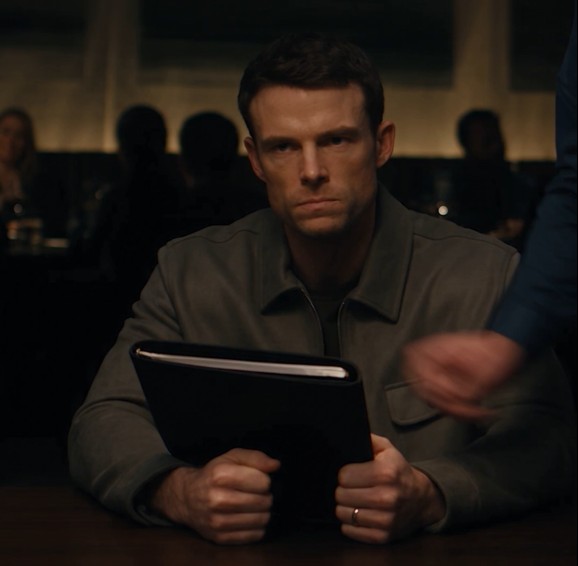
“I can help you find a lawyer,” I said. “I cannot give you the penthouse. I cannot cover Dad’s debts. I cannot pretend this did not happen.”
Mom nodded.
“I understand.”
“I need distance.”
“I understand that too.”
Marcus looked at me. “I’m going to keep my apartment.”
“You should.”
“I’ll pay back what you sent me last year.”
“You don’t have to do that tonight.”
“I do,” he said. “Not because you asked. Because I need to know what belongs to me.”
I studied him. His shoulders were still bent, but there was something new in his posture. Not confidence. Responsibility.
“You can pay me slowly,” I said. “And you can stop calling it a debt between us.”
He nodded.
We left the restaurant separately. Mom went with the investigator to give her statement. Marcus stood beneath the awning while rain filled the street with silver noise.
Before he walked away, he said, “I never wanted your home.”
“I know.”
“I wanted proof that I mattered.”
“You mattered before the apartment.”
“I know that now.”
He stepped into the rain without an umbrella.
I watched him disappear among the headlights.
The legal process took months.
Dad’s company records revealed more hidden debts than anyone expected. The attorney who prepared the contract admitted Dad had told him I had authorized the sale and provided a scanned signature. The bank found transfers dating back years. Some had been labeled as loans to relatives who had never received them. Others had disappeared into accounts connected to old business partners.
Dad’s attorney tried to argue that he had acted out of desperation rather than criminal intent. The evidence did not care about his desperation.
The contract was canceled. The deposit was frozen, then returned to the account after the court confirmed the fraud. Dad lost control of the company. The remaining assets were sold to repay creditors. The family house went next.
The downfall was not a single punishment. It was the slow removal of every place where Dad had hidden behind authority. His name disappeared from the office door. People who had once lowered their voices around him stopped taking his calls. Relatives who had accused me of cruelty sent messages asking whether they could help, and I answered only when I was ready.
Some apologized.
Some did not.
I stopped needing all of them to understand.
Mom moved into a small apartment across town. She kept only what belonged to her. For the first time in my life, she chose furniture because she liked it rather than because Dad had approved it.
Marcus stayed in his apartment. He found a second job, began therapy, and stopped allowing our parents to manage his finances. He returned the money he owed me over fourteen months, always with a brief message attached.
Rent, February.
Medical bill, March.
The last transfer had no explanation. It was simply the final amount, sent on a bright morning in early spring.
I called him.
“You could have kept it,” I said.
“I know.”
“Why did you send it?”
“Because I wanted the balance between us to be love, not fear.”
I sat by my penthouse window, looking over the city.
“You can come over this weekend,” I said.
He was quiet.
“For dinner?” he asked.
“For dinner.”
He exhaled. “I’ll bring dessert.”
The first dinner was awkward. Marcus arrived twenty minutes early and stood outside the door holding a pie as if it were evidence. He asked where to put his coat. He asked whether he should remove his shoes. He asked whether I wanted him to leave after eating.
I told him to sit down.
We talked about ordinary things for nearly an hour before either of us mentioned Dad. That ordinary conversation felt more difficult than the confrontation in the restaurant. We had to learn each other without the family roles that had shaped every exchange.
Marcus told me he had started working with a counselor who specialized in coercive family systems.
I told him I had started sleeping through the night.
He smiled faintly. “That’s a big deal.”
“It is.”
“What was the worst part for you?”
I thought about the question.
“Believing that if I protected myself, I was hurting everyone else.”
He looked at the pie between us.
“The worst part for me was realizing I had used your guilt because it worked.”
Neither of us tried to make the other feel better.
That was how trust began again.
Mom joined us a month later. She brought a bowl of soup and a stack of papers proving that she had opened an account in her own name. She had hired an attorney and was cooperating fully with the investigation.
