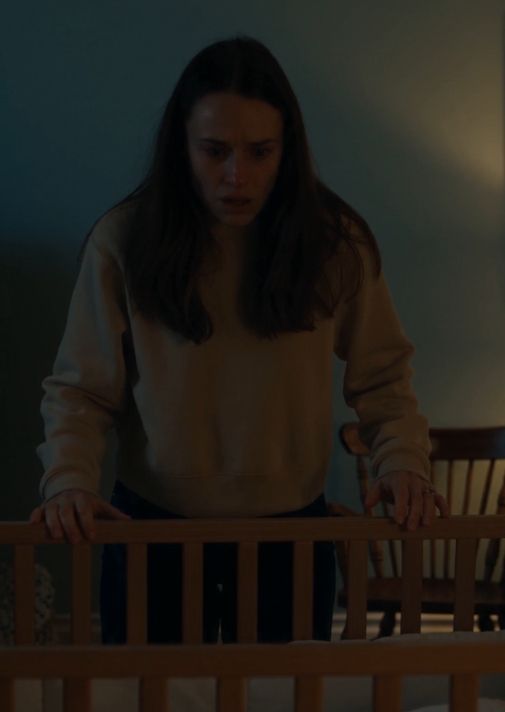
For one second nobody moved.
The door behind them opened.
Hal came in first, the night guard, his radio dead at his belt, his face the color of wet paper, and behind him Nadia in her server’s black with her jaw set, and Tomás from the dish pit still holding a towel, and Marisol last, without her apron, as if she had stopped working for the night on purpose so that nothing could be asked of her.
“He told me you were being audited,” Hal said to Rusk, and his voice cracked on the word audited. “He told me a lot of things. He had the only key to the room where the cameras are kept and he told me it was so the owner could watch the dining room without being seen, and I believed that, because believing it meant I never had to open the door.”
“He’s lying,” Rusk said, calm. “All of you. Go back downstairs and finish your shifts.”
Nobody went back downstairs.
Nadia reached into her apron and took out a folded sheaf of papers she had been carrying against her ribs all night. “Two years of deliveries that never arrived,” she said. “I photocopied them in the office at two in the morning and I kept them in the walk-in behind the butter because I didn’t know where else things were safe. I stopped asking questions after you called my mother in here and made her thank you.”
Tomás did not come further into the room. He simply turned his back to the doorframe and stood in it, a large, quiet man with a towel over his shoulder, and everyone in the room understood exactly what he was saying without him saying anything.
Rusk looked at each of them in turn, and the thing that happened to his face was not fear, not yet. It was the specific bewilderment of a man who has just discovered that the room has been rearranged while he was standing in it.
The intercom above the desk clicked.
A voice came out of it that none of them had ever heard. It was low and a little rough, and it did not sound like the man in the stories. It sounded like somebody who had been listening for a long time and had finally run out of reasons to stay quiet.
“Dominic.”
Rusk’s eyes went to the small black lens mounted in the corner above the monitors, and Lena watched fifteen years fall off the front of his face in under a second.
“I’ve been on this floor for eleven years,” the voice said. “I have never made a call. Not once. Not to anyone in this building.”
Nobody breathed. Ellie’s thin keen softened into a hiccup and stopped.
Rusk moved first. He swept the desk — the ledger, the phone, the banded stacks still in reach — into his arms and went for the service stair, and Hal, who had let him walk past nine hundred times, stepped into his path so fast that the two men collided at the shoulder and the money went up into the air again, blooming, drifting down over all of them like the slowest snow any of them had ever seen.
The elevator at the far end of the hall dinged and its doors opened, and the man who came out of it was ordinary. Unshaven, coatless, mid-thirties, with paint on one cuff and the look of somebody who had not slept in two days. He was holding nothing. He had no security, no entourage, no name anyone in that room had ever said out loud.
Rusk stopped. Not because he was ordered to stop. He stopped because the monster he had been impersonating for fifteen years was standing in front of him and was a person, an actual person, and the lie could not fit around him anymore.
That hesitation cost him everything. Hal’s hand found his collar. Tomás did not move out of the doorway. Nadia picked the ledger up off the carpet and held it against her chest with both arms, and did not hand it to anyone.
Afterward no one spoke for a long time. The elevator light hummed. The money lay where it had fallen. Somewhere below, the dining room was emptying, chairs scraping, a bus tray rattling, the ordinary sound of a restaurant finishing a Tuesday.
Lena got down on the carpet. She got down on her knees the way you do when the thing holding you up has finished, and she pulled the carrier toward her with both hands and lifted Ellie out, and the baby’s arms came up around her neck before she had finished lifting, that greedy full-body grip that babies do when they have decided where they belong.
She pressed her face into the soft hair behind Ellie’s ear and breathed, and the shaking started then, deep in her shoulders, the kind that does not stop because you tell it to, and she let it come because there was nowhere left to hold it.
The man by the elevator did not come closer. He stood where he was with his hands open at his sides, and he waited to be looked at.
When Lena finally raised her head, he said her name. Just her name. Not Miss Carter, not ma’am, not the way anyone in this building had ever said it.
“Lena.”
“You,” she said. “All this time it was you.”
“Yes.”
“And you watched.”
“For ten months,” he said. “Every night. On a screen, from behind a door, like a coward.” His voice did not break, but something behind it did. “I have written nine hundred letters to you and sent none of them. I have watched you carry plates past the stairwell that goes to this floor. I know what you order when you’re too tired to eat and what time you call the sitter and how you fold the blanket so the corners don’t drag. And you did not know I was alive.”
Lena looked at him for a long moment with Ellie’s damp cheek against her collarbone.
