Daniel continued. The restaurant had filed several claims that year for inventory losses caused by failed vendors and refrigeration problems. Kent had certified the reports. The amounts were far larger than Claire’s bakery credits.
“I am coming in tomorrow,” Daniel said. “Do not communicate with Kent about this again. Send me everything.”
Lucy called an hour later. She had been removed from the schedule. Kent had texted that her conduct was under review.
Claire asked, “Do you have the message?”
“Yes.”
“Save it. Do not argue with him.”
Lucy sounded angry. “I should have said something months ago.”
“Why did you take the pictures?”
There was a pause. “Because I knew something was wrong, but every time I asked he said I did not understand management. I started photographing deliveries after he made us serve a tray he had already claimed was unusable.”
“Then you did say something. You gathered facts when he told you not to trust yourself.”
Owen listened. The sentence felt as though it belonged to him too.
Daniel arrived the next morning with the restaurant group’s finance manager. Kent was told not to report for work until the internal review was complete. He appeared anyway.
Owen saw him through the bakery window crossing the sidewalk fast. His stomach tightened.
Claire locked the front door and called Daniel.
Kent knocked. “Claire!”
She did not open.
“We need to talk.”
“We already did.”
“You are ruining my career over paperwork you do not understand.”
Owen stepped away from the window. Claire noticed and lowered the blind.
“My son is here. Leave.”
Kent looked as if he might argue. Then Daniel appeared from the restaurant with another man. Kent turned toward them. The conversation moved across the street, away from Owen.
Claire did not let him watch.
“Why not?” Owen asked.
“Because adults handling consequences is not entertainment you owe your fear to.”
She handed him a piping bag and asked whether he wanted to finish the cupcakes for the library order. His hands shook for the first few minutes. Then frosting required concentration, and the shaking stopped.
The review lasted three weeks. It found that Kent had been claiming vendor failures, receiving credits from small suppliers, and then submitting larger loss reports to the restaurant group. Some claims supported reimbursement from a business-insurance policy. Others created internal write-offs that disguised inventory and cash discrepancies. The forged vendor signatures made it appear that suppliers had acknowledged responsibility.
Claire was not the only one. A produce vendor recognized his signature on two forms he had never seen. A local dairy had issued repeated credits for products employees confirmed were served. A florist had been blamed for an event delivery that arrived exactly as ordered.
Kent had chosen small vendors because he expected them to protect the account rather than challenge him.
That was why Owen’s humiliation mattered. Making vendors—and even a child helping one—look careless strengthened the story Kent needed.
Daniel fired him. The restaurant group referred the financial findings to law enforcement and its insurer. Months later Kent pleaded guilty to fraud-related charges and was ordered to pay restitution. Claire did not follow every hearing. She had spent enough time letting his choices occupy her business.
Lucy’s removal from the schedule was reversed immediately. Daniel offered her reinstatement and back pay for the shifts she lost. She accepted only after he agreed to a written policy protecting employees who reported suspected fraud or safety problems.
“I am not going back just to be the brave waitress,” she told Claire. “I want it to be harder for the next person to get punished for speaking.”
Claire smiled. “Good.”
The restaurant also repaid credits that had been wrongfully taken from the bakery and corrected its vendor records. For Claire, the money helped. The apology mattered differently. Daniel came next door in person and spoke to Owen.
“What happened to you in my restaurant was unacceptable,” he said. “You were helping your mother. You made a small mistake, and an adult used it to embarrass you. I am sorry.”
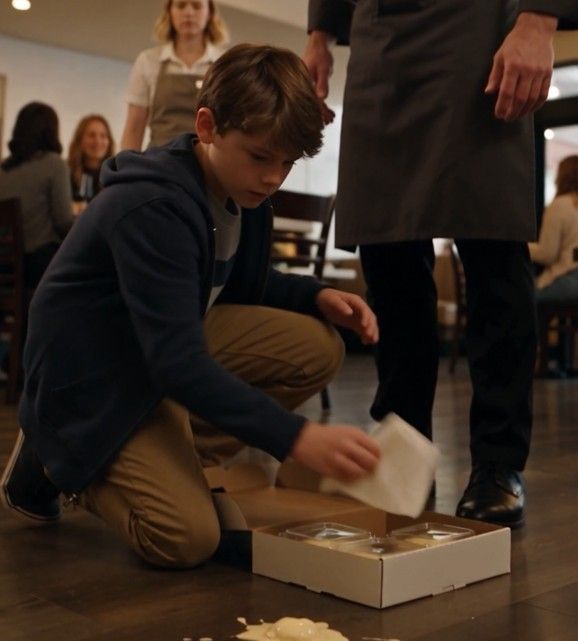
Owen looked at his shoes. “I did spill it.”
Daniel nodded. “People spill things. We clean them up. We do not turn them into a reason to treat someone badly.”
Owen glanced at Claire. She did not answer for him.
“Okay,” he said.
The investigation also forced Claire to confront how often she had ignored her own instincts because the restaurant account mattered to the bakery. Kent had complained about portions that other customers praised, claimed deliveries were late when Owen had watched the clock, and once insisted a tray had arrived warm even though Claire had packed it in insulated carriers herself. Each time, she had apologized first and questioned herself second.
Her accountant spread the records across the bakery table. “You were protecting revenue,” he said.
“I was protecting a customer who was stealing from me.”
“You did not know that.”
“I knew he made me feel like every complaint was an emergency.”
That distinction changed the way Claire ran the business. She created a simple delivery log. Drivers recorded departure and arrival times. Customers signed after inspecting orders. Claims for damage had to identify the specific item. Claire worried the procedure would feel distrustful. Most customers barely noticed. The only person who had benefited from vagueness was the person exploiting it.
Owen helped design the form because he knew exactly which questions he wished had been answered on the day of the spill. Was the container actually damaged? Was the food returned? Who accepted it? He suggested one line Claire had not considered: If a problem occurs, who was present?
“Witnesses,” Claire said.
Owen shrugged. “Or just people. Lucy was just a person until she said something.”
Claire added the line.
