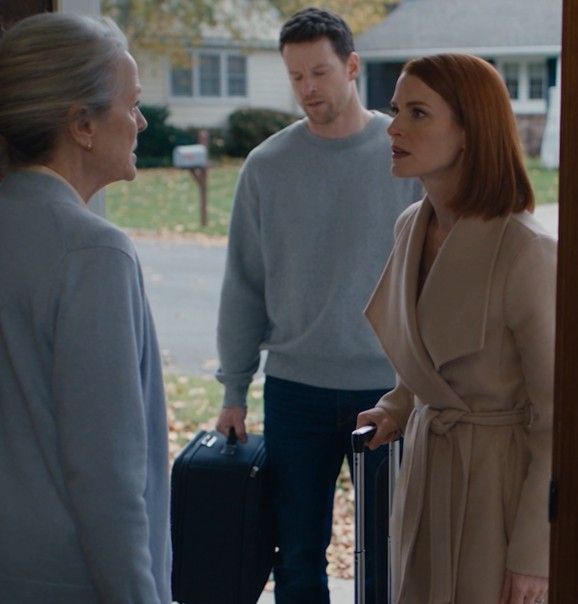
I looked at her. “But my house is space to use.”
She did not answer. Michael asked why she had told him they were broke. She said he would panic if he saw how badly the investment had gone, and that she had been protecting what they still had.
“By making Mom think we had nothing?”
“She has room.”
Leah asked them to pause. She explained that the reserve, the venture, and any plans for a property were distinct matters. They could obtain advice and decide how to fund their living costs. None of it gave them a claim to my rooms.
Amanda turned toward me. “You would really let your son waste his savings on a hotel?”
“He can choose a less expensive place. He can work. He can understand the account. What he cannot do is make your plan my duty.”
She accused Leah of turning me against family. I stood. The meeting had answered the mystery it needed to answer. I did not have to remain until Amanda found an accusation that hurt enough to make me surrender.
“There is another matter,” I said. “You hit me.”
Her face changed. “I lost my temper.”
“Yes.”
“You kept pushing.”
“A suitcase is not permission to strike its owner.”
Michael moved his chair away from hers. It was a small scrape across the carpet, but I heard it clearly. Amanda stared at the new space between them.
He told her he would stay elsewhere while he reviewed the finances and thought about their marriage. She called him ungrateful. He did not return to the chair beside her. Leah ended the meeting before anger could become another incident.
In the following weeks, Michael met a financial adviser and a lawyer. He learned how to access records, set notifications, and ask questions before signing. He stopped calling the whole sale price a loss because the numbers no longer supported it.
The venture entered a formal restructuring process. Recovery was uncertain, and any payment would take time. He joined the existing claims process with advice rather than trusting promises from people who said they could get it all back quickly.
He rented a modest furnished room while arrangements with Amanda were discussed. The cost offended his pride more than it endangered him. He told me that distinction one evening, and I heard a man beginning to separate fear from fact.
I did not fund the room. I met him for coffee once a week if he asked in advance. We spoke about work, sleep, and the things he had never wanted to admit he did not understand.
He apologized for letting Amanda say the family had carried me. “I knew it was false.”
“Then why was I the only one saying so?”
“I was afraid she would turn on me.”
“She turned on me instead.”
He looked at his hands. “I know.”
I did not keep repeating the words to punish him. I needed him to understand that silence had a destination. He could not call it peace simply because the pain landed elsewhere.
My cheek healed. The incident did not fade as fast. I began checking the porch through the curtain when a car slowed outside. Linda noticed and invited me to walk with her in the afternoons.
At first we talked about Amanda. Later we talked about gardens and a local choir Linda wanted to join. One day I realized I had reached home without naming my daughter-in-law once. It felt like finding an unused room inside myself.
Leah helped me review my own papers and account access. Nothing had been transferred or signed away. Still, I updated contact details, made clear emergency arrangements, and kept important documents where I could reach them.
The house did not need to become a fortress. It needed rules that I trusted myself to enforce. Visitors would ask. Money would be discussed with records. A raised hand would end access rather than begin negotiation.
The complaint concerning the slap moved through its own process. I provided the photographs, medical record, and Linda’s account. Amanda received advice and later gave a formal admission as part of the resolution.
The outcome included terms she had to follow and distance she had to respect. It did not turn her into a prisoner overnight or erase the harm. What mattered to me was that the incident had not been reduced to a private misunderstanding.
She sent an apology through the permitted channel. It was careful, perhaps shaped by advice, but it named her action without claiming I had forced it. I accepted the words as a record. I did not offer a visit in return.
Michael and Amanda separated. Their funds and obligations were addressed through their lawyers, using verified accounts and written agreements. He did not empty the reserve in anger, and she could not treat it as solely hers because she had kept the password.
Their marriage had held more than the financial lie, he told me. There had been months of decisions he had let her make because asking was uncomfortable. She had learned to answer discomfort with certainty. Neither habit had made them safe.
I told him I was glad he was seeking help. I did not become his counselor or listen to every detail of their arguments. My home had already been asked to carry too much. My attention needed limits too.
He began therapy and continued it after the first hard truths. I saw change in ordinary acts. He asked before visiting. He answered a question directly even when the answer made him look foolish. He stopped making Amanda the whole explanation for his part.
One Saturday, he brought groceries after I had a cold. He set the bags on the porch and rang once. I opened the door, and he waited.
“May I bring these in?”
I nodded. The kindness was simple. The question made it different from all the times someone had entered while telling me how lucky I was to have family nearby.
In the kitchen, he noticed the empty chair by the window. “You could have let us stay one night,” he said, then caught himself.
