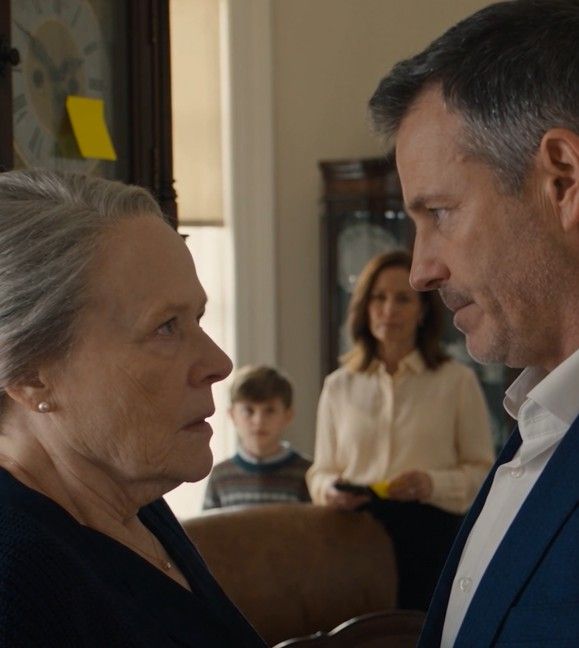
“Mom,” she said. “Can I come to the lake house this weekend?”
I looked at her.
“Is it because you want to see me, or because you want to see the property?”
She flinched. Then she straightened, and something shifted in her face — not pride, not defensiveness, but the first fragile appearance of honesty.
“Because I want to see you. And because I think I need to sit in a room with you without anyone talking about money. I don’t know if I remember how to do that. But I want to try.”
I studied her for a long moment. She didn’t look away.
“Saturday,” I said. “Bring your daughter. We’ll eat outside if the weather holds.”
Catherine nodded.
Daniel watched the exchange. Then, quietly, without looking up from the table: “Can I come too?”
I looked at my son. His eyes were still red. His tie was still crooked. His hands were still flat on the table, gripping the edges as though the chair might try to throw him off.
“Yes,” I said. “You can come too.”
He exhaled — a long, shaking breath, the kind that carries out something that’s been lodged in the chest for years.
The lawyer gathered her papers. The meeting was over. People rose, gathered coats, moved toward the door with the slow, stunned momentum of survivors leaving a wreckage.
At the threshold, Catherine turned back.
“Mom?”
“Yes.”
“I’m sorry I sent you to the mudroom.”
I looked at her standing there in the doorway, silhouetted against the bright hallway light, and I saw her at seven years old again, standing in the kitchen doorway with flour on her nose, asking if she could help me cook.
“You didn’t send me to the mudroom, Catherine. You just didn’t notice I was already there.”
She held my gaze for three full seconds. Then she turned and walked out.
Daniel lingered. He stood beside my chair, one hand on the backrest, not touching me, but close enough that I could feel the warmth of him.
“Dad was right,” he said. “About everything.”
“He usually was. You just weren’t listening.”
He nodded. Swallowed. Put his hand briefly on my shoulder — a touch so light it was almost imaginary — and then followed his sister out.
I sat in that glass-walled office for another ten minutes after they left. The lawyer brought me tea without asking. Earl Grey, the way Richard used to make it, too strong, with too much honey.
I drank it slowly.
The wall clock ticked.
Outside, the city moved on — cars passing, people hurrying, the ordinary machinery of a Tuesday afternoon that didn’t know or care that a woman in a leather chair had just gotten her life back.
I took out Richard’s letter and read it one more time. I knew every word. I’d memorized it years ago, in the hospital room, when his voice was just a rasp and his hand was just bones inside skin, and he’d made me promise — swear to him — that I would wait. That I would not defend myself when they came for the money. That I would let them show me who they were before I showed them who he’d written me down as.
“You let them be ugly first, Ellie,” he’d said. “Not because they are ugly. But because they need to see it. They need to feel the shape of what they’ve become. And they’ll never change if you rescue them from the truth before they’ve had to live in it.”
