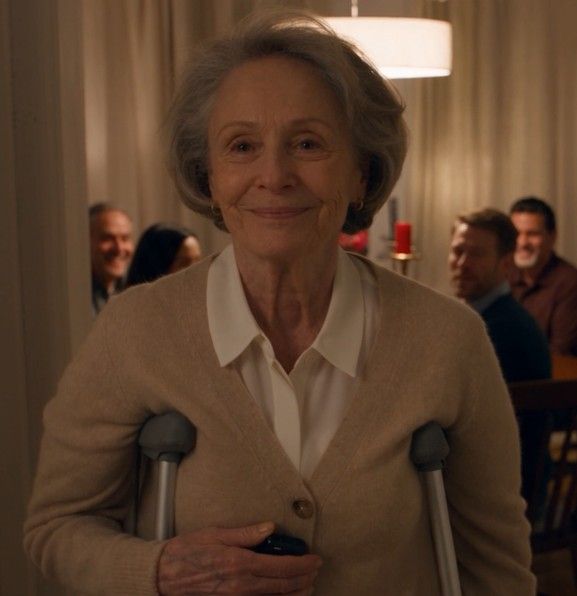
In August, the forensic accountant finished his work. Every dollar was traced. Two hundred and thirty thousand dollars had been taken from Sophia’s accounts. Another thirty-seven thousand had been charged to credit cards in her name. The life insurance policy was voided. The courts ordered restitution, and because Jeffrey had pled guilty and cooperated, a portion of the funds were recovered from accounts that had been frozen. Not all of it. Not even most of it. But enough.
Sophia used the recovered money to establish a small fund through a local nonprofit — one that provided free legal services to elderly victims of financial exploitation. She named it after Richard. The Richard Reynolds Fund for Dignity in Aging. Diane served on the board. Carol organized the first fundraiser, which was held in the bakery on the corner and raised more money than anyone expected because the neighborhood showed up the way neighborhoods do when one of their own has been hurt — not with grand gestures but with twenty-dollar bills and homemade casseroles and the quiet, fierce solidarity of people who have known the same streets and the same winters and the same slow, stubborn hope.
On the night of the fundraiser, Sophia stood at the back of the bakery and watched the room fill with people. The overhead lights were warm. The display cases held Richard’s recipes — the sourdough, the cinnamon rolls, the black forest cake. Carol was behind the counter pouring coffee. Diane was talking to a city councilwoman near the window. A teenager Sophia didn’t recognize was carrying a tray of cookies with the careful concentration of someone who has been given an important job and means to do it perfectly.
A woman Sophia had never met approached her. She was maybe seventy, small and neat, with white hair and reading glasses pushed up on her forehead.
“Mrs. Reynolds?”
“Yes.”
“My name is Helen Park. My granddaughter told me about your fund. My son took sixty thousand dollars from me over three years. I didn’t report it. I couldn’t.” Helen’s voice was steady but her hands, clasped in front of her, were not. “I just wanted to say — what you did — coming forward — that was the bravest thing I’ve ever heard about.”
Sophia took Helen’s hands. They were cold and papery and trembling slightly. She held them until the trembling stopped.
“It’s not too late,” Sophia said. “It’s never too late. Do you want to meet my lawyer?”
Helen Park nodded. And Sophia led her to Diane, and the room continued to fill, and the bread continued to cool on the racks, and the night continued the way nights do when something small and real has been set in motion — not with fireworks but with the quiet accumulation of people choosing, one by one, to show up.
On Christmas morning, a year after everything, Sophia woke in her Brooklyn apartment to the sound of a street musician playing “Silent Night” somewhere below her window. The air was cold and clean. She could see her breath in the morning light that came through the kitchen curtains.
She made coffee. She set the table for one — and then stopped, looked at the second chair, and pulled it back. She set a place for Richard too, out of habit, out of love, out of the stubborn refusal to let go of the rituals that had made her life feel like a life.
She ate a cinnamon roll at the kitchen table. She read three pages of the novel she’d been working through for a month. She listened to the street musician finish his song and start another.
At ten o’clock, the doorbell rang.
She opened it. Carol stood on the porch holding a tray of cookies. Behind her, Diane was climbing the stairs with a bottle of champagne and a sheepish smile.
“We decided you shouldn’t be alone today,” Carol said.
“You decided wrong,” Sophia said. “I was going to be perfectly fine alone.”
“We know,” Diane said. “That’s why we brought champagne.”
Sophia stepped aside and let them in. Carol set the cookies on the kitchen counter. Diane found glasses. They stood in the small kitchen while the morning light poured through the window and the street musician played something soft and unfamiliar below, and Sophia poured the champagne and thought about her husband’s voice recorder sitting in an evidence box in a courthouse storage room and how the last thing it had ever recorded was the truth, and how the truth, once recorded, could not be unrecorded, could not be unsaid, could not be buried or explained away or smoothed over with a charming smile and a hand on the shoulder and a whispered promise that everything was fine.
She raised her glass. Carol and Diane raised theirs.
“To Richard,” Sophia said.
“To Richard,” they echoed.
They drank. The champagne was cold and bright. Outside, the street musician played on. The bakery on the corner opened its doors, and the smell of fresh bread drifted up the block, and Sophia stood in her kitchen with people who loved her — not for her money, not for her house, not for the speed at which she might die, but for the way she laughed and the way she baked and the way she had stood up in her own dining room on Christmas night with a voice recorder in her pocket and said, without raising her voice, without shedding a tear, without flinching: enough.
She set down her glass. She looked out the window at the street where she had lived for forty years, where her son had learned to ride a bicycle, where Richard had carried her across the threshold on their wedding night because the door was too narrow and he was laughing too hard to find the key.
The snow was falling. Light, unhurried, each flake drifting down with the patient certainty of something that knows exactly where it’s going. It settled on the fire escapes and the parked cars and the shoulders of the street musician, who tucked his trumpet case under his arm and walked away, his footsteps muffled and rhythmic on the fresh white ground.
Sophia placed her hand flat against the cold window. The glass was smooth under her palm. Beyond it, the city was quiet in the way it only gets on Christmas morning — a brief, sacred pause in the noise, as if the whole world is holding its breath and choosing, for one more moment, to be still.
She thought of Richard. She thought of Jeffrey in his cell, reading their father’s journals. She thought of the fund and Helen Park and the teenager with the tray of cookies. She thought of the voice recorder and the truth and the long, terrible, necessary road that had brought her back to this kitchen, this table, this window, this city, this life.
And then she let out a breath she felt like she’d been holding for three years, and it fogged the glass in a small white cloud that hung there for a moment before dissolving into nothing, and she smiled — not the smile she’d worn on Christmas night to trick her family, not the performance of happiness that had masked a plan, but a real smile, quiet and private and entirely her own, the kind of smile that doesn’t need anyone watching to be true.
She turned from the window and walked back to the table where Carol was stealing a cookie and Diane was refilling her glass, and she sat down in the chair beside the empty place she’d set for Richard, and she was home.
