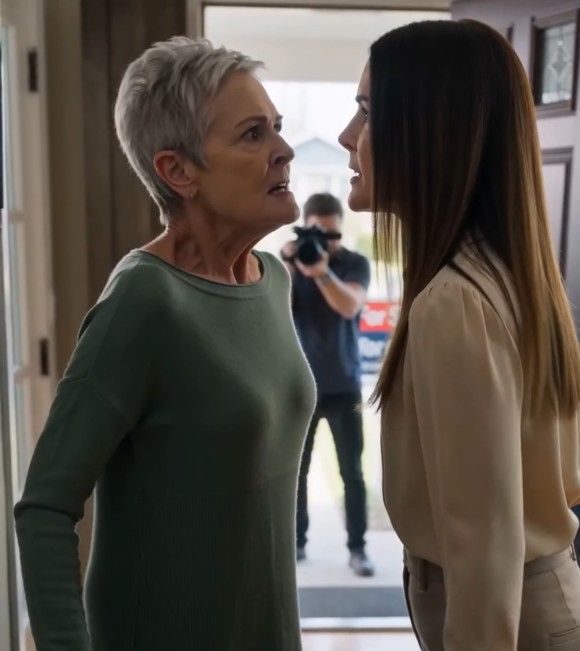
He rubbed the heel of his hand over his mouth. Their plan had shifted repeatedly. At first they wanted to move in with me. Then Ashley objected to sharing a home. An advertisement for an investor program made him imagine cash that would somehow solve both housing and medical worries.
“We thought you could sell, buy something smaller, and help us with the difference,” he said. “We didn’t even agree what we’d do next. We just kept saying this place would make it possible.”
Ashley lowered her eyes. “I started calling it our plan. Like you’d already said yes.”
“You called it my duty,” I said.
She flinched, then nodded. “I did.”
David admitted that he had completed the online application after she went to bed. He copied the signature from an old birthday card because the form would not proceed without the signed declaration. He entered the medical explanation himself. Ashley knew about the evaluation, but not the false signature until that morning.
I opened the folder and turned the page toward him. “Look at it.”
He did. This time he offered no explanation.
“You were willing to let me believe she did this,” I said.
“Until you said you’d help. Then I couldn’t listen to you comforting me for something I was still hiding.”
“You could have told me before I found it.”
“Yes.”
The word was quiet and insufficient. It was also the first thing he had said without trying to reduce the damage. I let it stand in the room.
Ashley reached for the torn reminder. “I shouldn’t have touched this.”
I moved it away from her. “No. You shouldn’t.”
Her eyes filled, but I did not hurry to rescue her from the feeling. For years I had mistaken ending an uncomfortable conversation for making peace. The silence that followed was uncomfortable, and nobody died from it.
I told them I would not sell, move out, sign a loan, guarantee a debt, or authorize anyone to speak for me. I would meet my attorney and decide how to report and document the false signature. David was to provide a written account of what he had submitted and forward every message concerning my address.
“Are you calling the police?” he asked.
“I am getting advice and making an accurate record. I won’t promise silence to make you comfortable.”
He nodded, swallowing hard.
I asked for my spare key. Ashley searched her handbag and placed hers beside his. For a moment I thought of all the childhood afternoons when I had told David he would always have a place here. I had meant welcome. I had never meant unrestricted access to my life.
“We’ll knock,” he said.
“And wait for an answer.”
Before they left, Ashley asked whether I would come to one appointment. I told her to send the date, and that I would decide after checking my calendar. Her expression changed at the small condition. She thanked me without asking for more.
That night I cried into a dish towel so hard that my ribs hurt. There was no audience, no grand speech, no satisfaction in being right. I missed my husband. I missed the uncomplicated version of my son I had carried in my mind longer than it had existed.
In the morning, the attorney read every page. He explained that an application was not a deed and that the documents I had shown him did not transfer ownership. He also explained why copying a signature was serious even when a transaction failed. The lack of a completed sale did not make the act harmless.
With his help, I sent a formal denial of authorization and a demand that the records be retained. We reviewed my actual estate documents and the people who could act for me if I became unable to do so. I chose a trusted relative as the alternate contact instead of leaving everything resting on assumptions about David.
I also made a report concerning the unauthorized signature. The officer took copies, gave me a reference number, and explained that review would take time. Nobody arrived at my son’s door that afternoon. There was no sudden courtroom victory. There was simply a record I could point to if anyone tried to rewrite what happened.
The company’s written response arrived a week later. It confirmed that the application was closed without a completed transaction and that the visit should not have proceeded without direct verification from me. The compliance manager supplied the messages David had authorized her to release. They matched his account, including the date he had admitted copying my signature.
David sent his own account before I requested it again. He listed the forms, the information he used, and the people he contacted. At the bottom he wrote, “I did this. Mom did not agree.” I read that sentence several times, then filed it with the rest.
