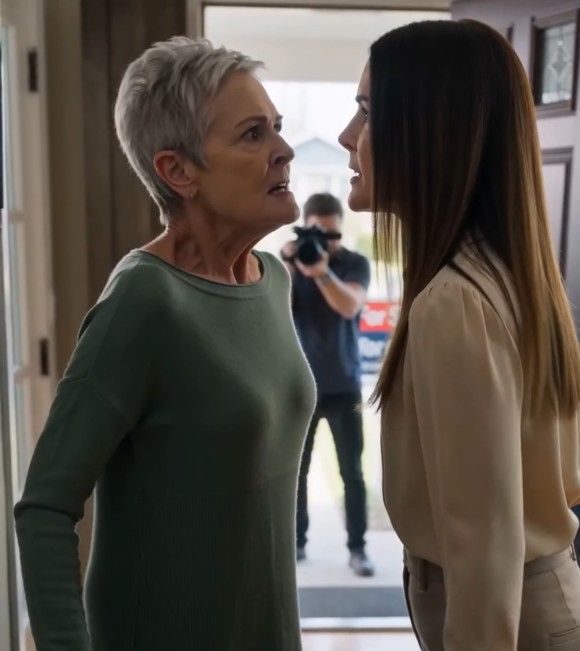
The refrigerator clicked off, leaving his breathing alone in my kitchen.
“Mine,” David said.
I pressed my palm flat against the table. The grain beneath my fingers was familiar; I had sanded it with his father one winter when David was small. Nothing in the room had moved, yet I felt the strange unsteadiness of missing a stair.
“You wrote my signature?”
“On the application. They said it was preliminary. I thought if we had a number, something real to work with, you’d understand.”
“That isn’t an answer to what I asked.”
“Yes.”
I closed my eyes. I could still remember teaching him to write his name, his fist tight around a pencil, his impatience when the letters wouldn’t stand straight. He had learned my handwriting well enough to turn it against me.
He began explaining, sentences tumbling into one another. No option had been purchased. No investor had paid anything. He hadn’t believed an inquiry would matter. Every explanation ended somewhere near the same claim: he hadn’t thought it would go this far.
“But you wanted it to go somewhere,” I said.
He stopped talking.
I told him to come that afternoon with Ashley, if she was willing. Until then, he was to contact nobody about my property. I would make my own calls. When he asked whether I still wanted to hear about her health, I answered carefully.
“I care what happens to her. That doesn’t make your signature mine.”
After we disconnected, I saved the email and printed the attachment. My hands shook badly enough that the first pages landed crooked. I set them in a folder rather than trying to smooth them into order. There would be time to cry after I knew what needed doing.
The consultant transferred me to a compliance manager. I told her plainly that I had not submitted the application, had authorized no agent, and did not consent to an evaluation or sale. She asked me to confirm those statements in writing, through the company’s published contact address.
“Has anyone acquired any interest in my home?” I asked.
“Not through this application,” she said. “There is no executed option or purchase agreement in our file. We should never have treated that declaration as your confirmed intention.”
I asked her to preserve the submission and correspondence, cancel further contact about a transaction, and send written confirmation. She promised to investigate how the appointment had been arranged. Her apology helped less than the clear answers, but I appreciated both.
Then I called the attorney who had handled my husband’s estate. His assistant offered an appointment the next morning and advised me to bring the documents and any messages. I did not ask her to promise that nothing bad could happen. I wanted someone qualified to explain what already had.
At two, David and Ashley came through the front gate together. He knocked, though he still had a key. She held a paper bag containing the sweater I had left at their apartment. I had expected another brochure, and the small ordinary object almost undid me.
“We’re not here to move anything,” she said.
“Sit down.”
I placed three glasses of water on the table and left the folder closed. Ashley kept her coat on. David stared at the tax reminder, which I had pieced together beside my chair, its torn edges meeting imperfectly beneath a strip of clear tape.
“Tell me what is true,” I said. “Start with the hospital.”
Ashley looked at David before answering. “They found a problem with my heart. I need more appointments. They’re watching the pregnancy closely. We still don’t know everything.”
She described the long waits, the specialist across town, the way an ordinary flight of stairs had begun to frighten her. I listened without pretending to understand the medicine. When I asked what practical help would matter, she said transport to appointments and someone to sit with her when David worked.
Those were things I could consider. A house sale had never been a treatment plan.
“Then why did you tell me there was no money trouble?” I asked David.
His face reddened. They had been using credit for ordinary expenses while he missed work to attend appointments. The bills were manageable if they changed their spending and sought help early, he said, but they had stopped opening some envelopes. Fear had made everything feel larger.
“And my house?”
