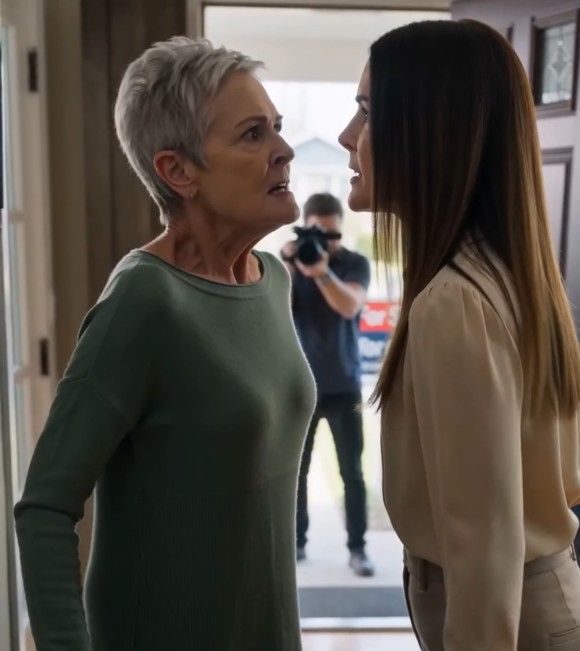
For the next month, most of our contact concerned practical arrangements. Ashley sent appointment times, and I drove her twice. David took her when he could. We sat in waiting rooms where the television played too loudly and nobody knew what had happened in my kitchen.
On the second visit she told me she had been afraid that needing care would make her a burden. She had responded by demanding something enormous, something she could name and control. I understood the fear. I told her understanding it did not excuse tearing up my mail or trying to decide where I should live.
“I know,” she said. “I’m trying to learn the difference.”
She didn’t reach for my hand. I was grateful she let me choose whether to offer it.
The hospital connected them with someone who helped review insurance questions, payment options, and available support. None of it erased their obligations, but the numbers became numbers again instead of a monster they could defeat only by taking my home. David brought me a budget once, then hesitated on the doorstep.
“I’m not asking you to pay it,” he said. “I wanted you to see we have one.”
I looked because he had asked, not because I owed him supervision. They were staying in their apartment, canceling purchases, arranging time off more carefully. Ashley’s sister had offered occasional rides. The nursery fit in a corner of their bedroom. A small room could hold a great deal when nobody insisted it had to hold an illusion.
My own recovery was less tidy. For weeks, a knock tightened my shoulders. I checked the lock twice before bed. I resented the work of reassuring myself in a house that had been my refuge before anyone made it a bargaining chip.
I told a longtime friend what had happened, expecting her to ask why I hadn’t stopped it sooner. Instead she arrived with soup and helped me replace the broken kitchen blind I had ignored all winter. We talked about ordinary things while the drill whined. I needed that more than another conversation about boundaries.
I began going out on Thursdays again, returning to a small sewing group I had abandoned after my husband died. The first week, I almost canceled because Ashley had an appointment the following day and I felt I should keep the whole week available. Then I heard the absurdity of the thought and put on my coat.
David asked to meet me alone six weeks after his confession. We sat at my kitchen table, and he brought no folder. He told me the officer reviewing the report had contacted him and that he had answered the questions. I did not ask him to repeat the conversation. The process belonged to the people handling it, not to a private bargain between us.
“I keep thinking about Dad,” he said.
I stiffened. “Don’t tell me what he would have wanted me to do.”
“I wasn’t going to.” He looked at the tabletop. “I keep thinking he taught me how to ask for help, and I decided asking was too humiliating.”
That was closer to the truth than any excuse about a preliminary form. We talked for almost an hour. He listened when I described seeing my own name beneath a decision I hadn’t made. I told him I had felt erased, as though being his mother had canceled the rest of me.
He cried then. I let him. Eventually I cried too, but neither of us treated that as a settlement.
“Can you trust me again?” he asked.
“I can watch what you do next.”
It was the most honest kindness I had left to offer. He accepted it without asking when the watching would end.
As the months passed, his actions became smaller and more reliable. He asked before stopping by. If I said I was busy, he did not demand an explanation. He stopped telling Ashley I would do things before speaking to me. When a medical bill confused them, he called the billing office rather than arriving with it in his hand.
Ashley apologized again after the baby was born. This time she named what she had done without attaching her diagnosis to the apology. She had treated my home as an object and me as an obstacle. She was sorry for frightening me, and she understood that being a grandmother did not make me responsible for financing their household.
Their daughter was healthy enough to come home with them after the doctors completed the checks they wanted. Ashley continued her own care, with a plan her clinicians adjusted as needed. I visited their apartment carrying food in containers I did not need returned immediately. The little crib stood beside their bed, exactly where they had said it would.
David offered me the comfortable chair and asked whether I wanted to hold the baby. I did. Her small warm weight settled against me, and for a moment the world narrowed to the faint clicking sound she made in her sleep.
Nobody mentioned houses. Nobody handed me a bill. When I said I was tired, David carried my bag to the door and thanked me for coming.
The report concerning the signature took months to reach its recorded outcome. A written notice eventually said that no charges would be filed on the evidence then available. My attorney explained the notice and reminded me that it did not validate the signature or authorize any transaction. I kept it with the company’s confirmation that the application was closed. The property issue was settled; rebuilding our family would take longer.
By early autumn, I could hear a knock without feeling my stomach fall. I had no spare keys to collect and no unexplained documents to chase. The folder stayed in a locked drawer. I knew where it was; I no longer needed to read it every night.
There was one more conversation I needed before I could put the matter fully away. I asked David and Ashley to come without the baby so none of us could hide behind feeding times or a smile from the crib. I told them I loved them, and that love had survived, but it would no longer do the work of consent.
Ashley set her hands flat on her knees. “If you ever decide to move, we’ll wait for you to tell us.”
“And you won’t hear a decision as an invitation to manage it,” I said.
David nodded. “We’ll ask what you need.”
