I had confused knowing someone with being able to predict every choice they would make. I had also confused loyalty with defending the first explanation that kept a room peaceful. Neither mistake meant I had wanted Mom hurt. Both meant I needed to learn.
The next time a relative called her stubborn, I asked what she had refused. The relative said she would not let anyone pack away the navy dress because seeing it brought back the dinner. I asked whether Mom had said it brought back the dinner.
She had not. I called her and asked.
“It brings back your father,” she said. “It always has.”
That answer stayed with me. We had been trying to make her life easier by removing the things that troubled us. She was the one who had to live among them, and she deserved to name what they meant.
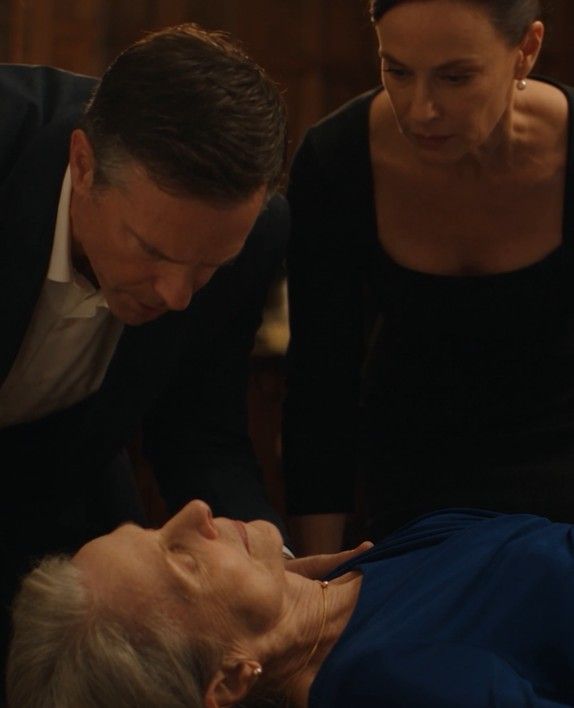
I washed the dress according to its label and hung it where she asked. The bruises on her shoulder were fading. The old meaning of the blue cloth had survived what Evelyn did beside it.
One afternoon Evelyn sent me a photograph of a paid card statement. She wrote that she was making progress and hoped I would be proud. I answered that paying the debt was good. I did not offer affection as a reward, or ask Mom to congratulate her.
At my next counseling session, I admitted how cruel that restraint felt. The counselor asked whether I believed every sensible action needed a prize from the people harmed by earlier choices. I did not. I had simply learned to feel responsible for everyone’s disappointment.
Mom heard me describe it and smiled. “Then leave one disappointment on the table tonight. You need not carry all of them home.”
We ate dinner after that, just the two of us. I cleared the dishes while she told me about a book she hated and planned to finish anyway. Her ordinary complaints were a gift. I listened without trying to improve or explain a single one. They showed me a life wide enough to hold more than the wrong that had been done to her.
Late in summer, I moved into an apartment near my work. Mom helped choose curtains. She refused to stay the first night, though I offered the spare room. “I have a home,” she said. “You need to learn yours.”
My marriage ended the next spring through a settled divorce. Evelyn continued counseling and repayment. I hoped she would change, but I stopped treating my hope as a reason someone else must remain exposed to her.
Mom kept wearing her necklace. At first I asked whether she wanted it locked away. She touched the pendant and shook her head. “Then she would still decide what I can wear.”
On her next birthday, she invited a smaller group to lunch. Ruth brought flowers. I brought a cake that leaned slightly to one side. Mom praised it as though crooked icing were a family talent worth preserving.
There was no rug beneath the table. That was her choice. There was also no solemn speech about survival. We ate, argued over an old photograph, and let her finish the baseball story she had begun the night she fell.
After the guests left, she opened the pendant for me again. I asked if I might see Dad’s note. She took out the curled paper and smoothed it with a care that made the room grow quiet.
The words were faded but clear: For the woman who kept us fed when pearls were all we had left.
Mom watched my face. “Your father sold the rest of my mother’s strand during a bad year. This was the one pearl I asked him to keep.”
“You never told me.”
“You were a child. We wanted your childhood to feel ordinary.”
I remembered birthday cakes, school shoes, and the navy dress in old photographs. I had thought there had always been enough. There had been enough because two people had quietly chosen me over things they could sell.
Dad had made the pendant years later, after they had recovered. The paper was a thank-you, not a valuation. The receipt Evelyn found had recorded replacement cover for a box of jewelry, but the necklace had never been an investment.
“He put the note beside the pearl because he said value should have a witness,” Mom told me.
I looked at the small bead. Evelyn had seen a way out of debt. I had seen an object Mom loved. Neither of us had known it carried the cost of a childhood kept warm.
Mom folded the paper and placed it back inside. Then she pressed the pendant into my palm without unclasping the chain.
“Now you know. That does not make it yours yet.”
I laughed through sudden tears. “I know.”
She closed my fingers around it for one moment, then took it back. The chain settled against her throat, exactly where she wanted it. Outside, the last guests were calling goodbye from the drive.
I opened the door for her. She stepped into the sun without my hand at her elbow. I stayed beside her, close enough to help if she asked, far enough to let her walk on her own.
