I stopped walking. A box of books hung in my hands. “What?”
“I spent thirty years building a life that looked powerful from the outside and felt like a coffin from the inside. You showed me there was a different way to live. I want to try it.”
“You don’t even know where I live.”
“Over a laundromat on Dorchester Avenue. The window rattles when the big machines run.”
I stared at him. “You know my address?”
“I’ve known your address since the night you called me from it.”
“That’s—”
“Terrifying? Probably. But I’ve done terrifying things for worse reasons. This one, at least, is for something good.”
He found an apartment three blocks from mine. A small place, by his standards—a two-bedroom with hardwood floors and a kitchen big enough to actually cook in. He hired no staff. He bought groceries. He burned things and started over. He called me when the smoke alarm went off and I came over and opened windows and we ate burnt pasta and laughed until our stomachs hurt.
It was the most normal thing either of us had ever done.
Marcus left Pharaoh too. He used the testimony as a bridge—walked out of one life and into another. He started working with a nonprofit that helped people testify against powerful abusers. He was good at it. He understood the specific courage it took to speak when your voice was shaking.
“You changed things,” he told me once. “You know that, right?”
“I just went upstairs.”
“You went upstairs. And everything that came after—Reed, the case, Whitford—none of it happens if you don’t climb those stairs.”
I thought about that. I thought about the guard’s warning. *Don’t go upstairs.* I thought about every rule I’d learned, every survival mechanism, every invisible wall I’d built. And I thought about the moment I’d made the choice—not because I was brave, but because I recognized the sound. The quiet sound. The sound that means someone has stopped believing anyone is coming.
That sound was the only language I’d ever been fluent in.
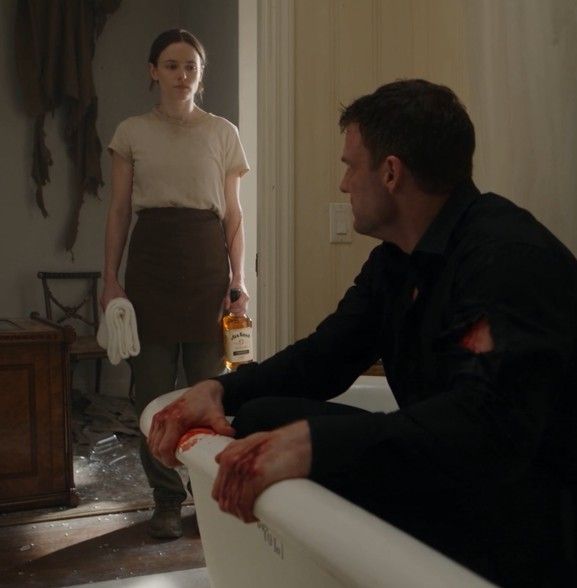
I didn’t save Reed Ashford that night. That would be too simple, and the truth is never simple. What I did was stay. What I did was hold a towel while someone else’s blood soaked through it and not look away. What I did was say *I know that sound* and mean it.
And in staying, I saved myself.
Because the walls I’d built—the invisibility, the silence, the careful practice of never being seen—they weren’t protecting me. They were suffocating me. And the night I walked into that bathroom, I didn’t just find a man who needed help. I found the door I’d been looking for my whole life without knowing it.
A door that didn’t lead to escape. A door that led to connection.
Reed and I never became what the world would call normal. He was still the most intense person in any room. I still preferred the corners. Some nights, the old walls surged back—his and mine—and we’d sit in his kitchen in silence, two people who’d learned to build fortresses from the inside, trying to remember how to live without them.
But we kept trying. That was the thing. We kept showing up.
Sunday dinners. Phone calls about nothing. A text at two in the morning when the nightmares came. A key left under the mat. A place set at the table without being asked.
Small things. Human things.
The things that build a life.
A year after the bathtub, I was standing in Reed’s kitchen, washing dishes. The window above the sink looked out onto a street where autumn had painted everything gold. Reed was behind me, reading at the table, his feet up on a chair he would have fired an employee for using that way eighteen months ago.
My phone buzzed. A text from Marcus: a photo of his daughter’s first day of school, backpack too big for her shoulders, grin too big for her face. Below it: *She’s going to change the world.*
I smiled. Set the phone down.
Reed turned a page. The fire was low. The apartment smelled like rosemary and lemon—the same as it had the first night, and I understood now that he’d cooked that meal on purpose, that it was his mother’s recipe, that he’d shared it with me the way she used to share it with him.
He hadn’t told me that then. He’d told me six months later, haltingly, over a third Sunday dinner, his voice cracking on her name for the first time since I’d known him.
