“That chicken recipe,” he’d said. “My mother made it every Sunday. It was the only thing that made the house feel like a home.”
And now he made it for us. For the family he’d chosen because the one he’d been given had been taken.
I dried my hands. Turned around.
He looked up from his book. In the warm kitchen light, with his reading glasses perched on his nose and his hair falling across his forehead, he looked like someone’s father. Like someone’s safe place. Like the kind of man who would open a door at two in the morning and not ask why.
“What?” he said.
“Nothing.”
“You’re staring.”
“I’m looking. There’s a difference.”
He considered that. The corner of his mouth moved—the full smile, the one that had taken a year to earn. “Is there?”
I sat down across from him. He reached for his wine. I reached for mine. Our glasses touched—quietly, the way you toast to things that don’t need announcement.
Outside, the autumn wind moved through the gold leaves, and somewhere across the city, someone was having the worst night of their life. Someone was curled up in a space too small, breathing too quietly, convinced that no one was coming.
But the door was open now.
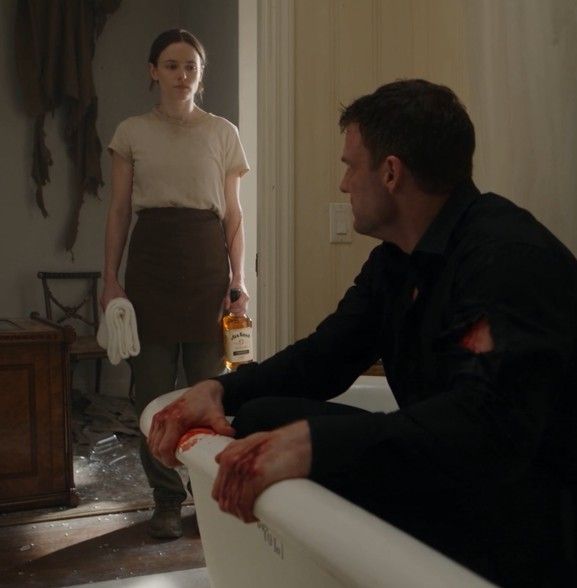
It had been open since the night a twenty-three-year-old kitchen worker picked up a bottle of whiskey and two clean towels and climbed the stairs he’d been warned never to climb, and chose to stay.
That’s the thing about the sound of someone drowning in silence.
Once you know it, you can’t unhear it.
And once you can’t unhear it, you have a choice: build a higher wall, or walk through the door.
We walked through the door.
We’re still walking.
