“A locked door means what it does, Daniel. It does not care what you hoped I would understand.”
He cried then. I did not rush to comfort him. His tears did not frighten me; they reminded me how quickly I used to set down my hurt to make his easier.
“I am sorry,” he said. “I should have said no.”
“You should have said no before the suitcase. You should have opened the door after it. There were many moments.”
He nodded. I told him love would remain, but living together would end. I would not make safety depend on whether he was tired, embarrassed, or worried about disappointing his wife.
Vanessa resisted the proposal. She said their spending gave them a share in the house. Ms. Grant reviewed the records rather than dismissing them. Some were routine household costs, some were improvements I had agreed to, and some had been paid from my account.
We reached an agreement over documented expenses with advice. It did not transfer ownership. It also did not pretend they had never bought paint or repaired a broken tap. Fairness had room for exact figures and firm boundaries.
They agreed to leave in sixty days. The agreement covered access, keys, utilities, belongings, and a final walkthrough. If they failed to follow it, the lawyer would use the appropriate process. I did not have to stand on the porch and argue each point.
Helen refused rent for the spare room but let me pay for groceries. We developed a routine: tea in the morning, a walk when weather allowed, and one television program neither admitted liking. I found myself laughing before I remembered to feel guilty.
Martin returned with the last estate papers. My aunt had left me a modest cash gift, enough for the legal fees and repairs, along with a box of letters. He explained the account and receipts line by line.
“She would be angry,” I said.
“She would want you warm,” he replied.
My aunt had known the weight of helping family without giving them every choice. She had urged me to make clear arrangements years earlier. I had thought putting terms on paper would make love feel small. Now I saw how much bitterness an unwritten promise could hold.
During the waiting weeks, I made plans for the house. I did not plan a mansion or a triumphal return. I planned to bring my sewing machine out, put a chair near the upstairs window, and have room for my own winter coats.
I also began counseling through a local service. The first session left me more tired than the lawyer’s meeting. I had to tell the story without using the years I had loved Daniel as proof that his recent behavior could not be real.
The counselor asked what I feared most. “That I will lose my son.”
“Have you been able to keep him by giving him everything?”
I thought of his eyes turned away under the porch light. I had kept his address near mine. I had not kept his respect.
That thought was painful, but it opened something. I could choose a relationship with limits, or no relationship for a time, without pretending those were the same as choosing not to love him.
Daniel began calling once a week after asking permission. Some calls went badly. He slipped into complaints about deposits and moving costs. I ended one when he said I owed them help after creating the problem.
The next day he apologized without mentioning Vanessa. He said he had found a counselor and begun looking at what he called his habit of surrendering the difficult answer to someone else. I told him words would need time beside actions.
He did not ask me to pay for the counselor. That was small, but I noticed. He also sent the agreed documents on time and arranged movers with his own money. I noticed that too.
Before the move was complete, I met Daniel at the house to choose which old family things he wanted to take. I had expected that visit to be harder than it was. We stood beside a box of school papers while the washing machine hummed behind us.
He picked up a drawing of three people under a yellow sun. His father was in it, though he had left before the drawing was made. “You kept this?” he asked.
“You wanted him there.”
He looked at the small figure labeled Mom. It stood at the edge of the paper, half outside the line he had drawn around the home. He gave a sad laugh. “I never left you enough space.”
“You were a child then.”
“And later?”
“Later you had a choice.”
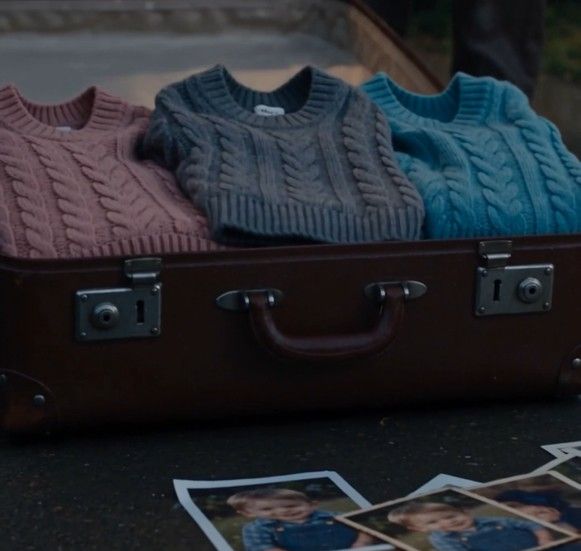
He folded the paper along its old crease. I let him take it, along with the red boots from the photograph and a few books. Keeping every proof of his childhood had begun to feel like keeping a case I would need to argue. I did not need evidence that I had loved him.
He asked about the sewing machine. I said it would go near the upstairs window. He offered to carry it there before the movers came. I accepted. He asked which side of the table I preferred, and I pointed without explaining why.
When it was in place, sunlight touched the metal wheel. I had sewn curtains on that machine, altered school trousers, and earned extra money while Daniel slept. For years it had stayed in darkness so their home could look uncluttered.
I sat before it and rested my hands on the table. He waited by the door. “It looks right there,” he said.
“It is where I wanted it.”
He nodded and left me alone in the room. The gift was not that he had carried a heavy object. It was that, for once, he had stopped trying to decide what I ought to want.
On the final day, Ms. Grant’s assistant joined the walkthrough. The rooms looked stripped and dull without their things. Marks on the wall showed where Vanessa had hung shelves. The agreed repairs were noted. No one demanded a settlement in the hall.
Daniel handed me two sets of keys. “All of them,” he said.
I asked about copies. He signed the confirmation my lawyer had prepared. After they left, I arranged to have the locks changed with advice and a receipt, a small practical act that made the front door feel like mine again.
Vanessa did not apologize. She said goodbye as though I had failed an examination. I let her go without chasing a kinder last sentence. Closure did not require her to agree that I deserved a home.
The first night back, Helen stayed for supper and Martin brought the letter box. We ate soup from mismatched bowls. I sat where I wanted, and nobody told me how much space my elbows took.
