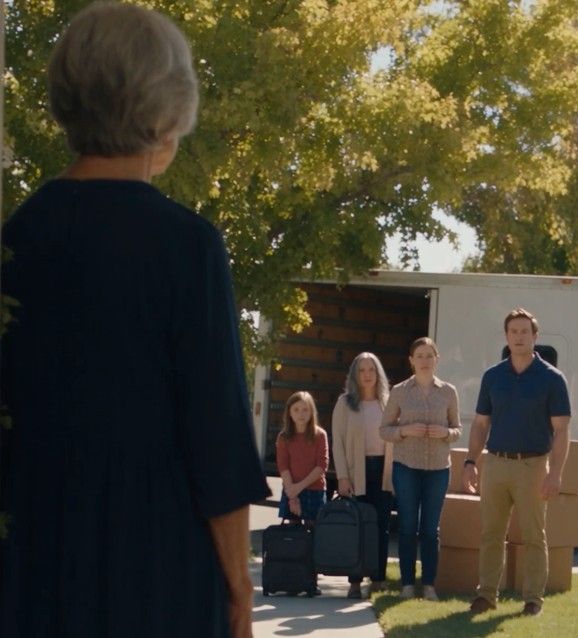
I waited. I had spent years accepting apologies that were only requests for the discomfort to end. I wanted to know what he intended to do differently.
“What will you say to Martha’s family?”
“The truth. That you never agreed and I tried to force the move.”
“What about the apartment?”
“I’ll call the landlord and ask if there’s a way to extend the move-out date. I gave notice, but they haven’t rented it yet. I don’t know if they’ll say yes.”
“And if they say no?”
“We’ll find a place we can afford. We might have to move farther out. I’ll take another shift.”
“You will need a budget that does not include my house or my money.”
He nodded. “I know.”
I slid the folder toward him. “You can read the letter from my attorney explaining the plan. You cannot keep the original. It belongs in my safe.”
He read it carefully. It said the trust was revocable during my lifetime and that I retained the right to occupy, manage, sell, or change the disposition of the property. It did not punish him or give anyone else control. The house could not be treated as his asset, used as collateral, or claimed as an inheritance before my death. He put the paper down with care.
“I don’t like seeing all that written down,” he said.
“I don’t like needing it. But my peace cannot depend on you liking my boundaries.”
He looked at me then, as if he finally understood that the sentence was not a threat. It was a condition of being close to me.
The landlord did not agree to reinstate the old lease. The apartment had already been shown to another family. Ethan and Martha found a two-bedroom rental across town, smaller than the place they had left and farther from the children’s school. They paid for a month at the hotel while they waited for the unit to be ready. Ethan sold one of his motorcycles and took extra work on weekends. Martha returned to a part-time job she had left after their youngest was born.
The children were the ones who suffered most from the disruption. I visited them at the hotel twice and helped with homework at a library table. I did not let Ethan use those visits to re-open the question of moving in. When he asked whether I might reconsider after a few months, I answered, “No. You may visit. You may ask for a specific kind of help. You may not plan my home for me.”
The first few weeks were awkward. Martha resented that I would not solve their housing problem. I understood the resentment, but I knew that if I gave the house over to stop the argument, I would be teaching them the same lesson again: that enough pressure could turn my no into a yes.
Sharon helped me make a list of what support I could genuinely offer. I could watch the children one afternoon a month if we agreed ahead of time. I could share a meal. I could help them compare rental listings, but I would not pay their deposit. The list sounded cold when I first wrote it. Later it felt kind, because it gave everyone a clear answer they could trust.
In March, Ethan came by to repair a loose gutter. He had called first. He brought his own ladder and asked where I wanted him to start. We worked for an hour, mostly in silence, passing tools back and forth. When he asked if he could use the bathroom, he waited for me to answer instead of walking in as if he owned the place.
That small courtesy moved me more than his apology had. I saw that respect was not a grand speech. It was a series of ordinary moments in which he remembered I had a choice.
Martha came with him the next time. She brought soup and asked if she could leave it in my freezer. I said yes. She did not announce that she would stay for dinner or rearrange my kitchen. She asked where the containers belonged.
We spoke about the morning of the truck. She admitted she had believed his version because it was easier than asking me herself. She said she was sorry for taking my silence as consent. I told her I was sorry I had allowed so many unspoken expectations to build up. We did not pretend that our apologies were equal in weight, but we both owned our part.
The children settled into their new school route. Their youngest still asked sometimes whether I would sell the house. I told her that I had not decided. She asked if she could inherit the sewing room. I laughed and showed her how to thread the old machine instead. We made a crooked pillowcase together, and she carried it home proudly.
At the next family dinner, I hosted six people, not ten, and I asked each adult to bring one dish. Kevin tried to take the trash out before I had finished cooking. I let him. Martha set the table only after asking where I wanted the plates. The children hung their coats on the hook by the door.
When Ethan stood in the kitchen afterward, he said, “I used to think helping you meant fixing things for you.”
“What does it mean now?”
“Finding out what you want before I decide what would be useful.”
I smiled. “That’s a good start.”
In the months after the move, I completed the rest of my estate plan. I updated the beneficiaries on my accounts, set aside funds for my care, and named Sharon and my cousin as backup decision-makers if I could no longer speak for myself. I left Ethan a letter, not a promise of the house, but an explanation of what I hoped our relationship could become. I told him I loved him, and that love did not require me to make my home an unspoken inheritance.
I kept the deed and trust papers in the fireproof box behind the linen closet. Ethan never asked to see them again. He did ask whether he could help me carry the box to a higher shelf after I strained my shoulder. I said yes, and he waited while I told him where to put it.
