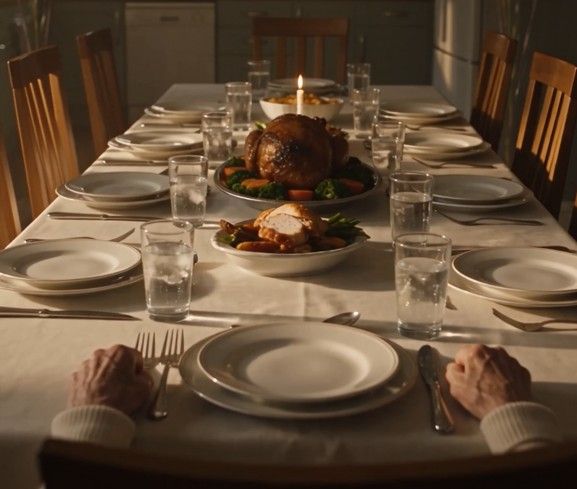
“I want the money back,” I said. “And I want you to stop accessing my account.”
“Of course. I’ll pay it back.”
“Today, contact the bank and remove every device you use. I’ll confirm it with them. After that, we can talk about repayment.”
He sounded offended. “You think I stole from you?”
“I think you transferred money without asking me. You can choose the word you want to use.”
He did not answer. I ended the call before I could soften the boundary into a suggestion.
I wrote to Marcus and Patrice separately. I told them I was reviewing my accounts, that I would no longer send money without a written request and a clear repayment or gift agreement, and that the birthday dinner had been canceled. I did not accuse either of them of taking money. I wanted the facts before I decided what the pattern meant.
Marcus called within minutes. “Mom, I thought the dinner was next weekend.”
“I told you it was April eighteenth. You confirmed.”
“I must have put it in wrong.”
“You could have checked.”
“I know. I’m sorry.”
His apology sounded immediate, but he also asked whether I could still help with his mother-in-law’s travel expenses. The question came so quickly that we both went quiet.
“Not now,” I said.
He said he understood, then asked if I was sure. I told him I was. I did not need him to feel ashamed forever. I needed him to hear that a request had no claim on my savings simply because he was my son.
Patrice’s response came by text: I am so sorry. I should have come. Can I call you tonight? She called after her children were asleep. She admitted she had written the date on her calendar but had not bought a ticket. She had assumed she could fly in later in the week, then let work and school schedules overtake the plan. She did not ask for money. She cried and said she had kept telling herself she would make it up to me next year.
“Next year isn’t the point,” I said. “I needed you here this year because I asked you to come.”
“I know.”
We stayed on the phone for a while. I did not tell her I forgave her. I said I loved her and that I needed time to decide what I wanted from our relationship now that I could see how often we had confused money with closeness.
By the end of the week, Daniel had repaid the $8,400. The bank removed his device and confirmed that only my current phone and computer could access the account. Robert helped me separate my savings from the account I used for household expenses. I changed every password and set up alerts for transfers. The safeguards did not repair my trust, but they gave me control of the next decision.
I asked each child to send a written list of what I had given them in the past year, including whether they considered each amount a gift or a loan. I sent my own records too. Daniel acknowledged that the $20,000 for the house and $8,400 transfer were separate. He agreed the second was not authorized. Marcus listed the $15,000 as a gift, as I had told myself at the time. Patrice itemized the smaller expenses she had mentioned and the help I had offered. Reading the list made the total real: $49,760.
I did not demand that all of it be returned. Some gifts had helped with genuine needs. I had chosen to give them. But I told the children that there would be no more vague requests, no more silence I was expected to fill, and no more access to my accounts. If I offered help in the future, it would be because I wanted to give it, not because someone had arranged the conversation so refusal felt like betrayal.
The hardest part was deciding what to do about the birthday itself. I had imagined that the dinner would prove we were still a family. Instead, I learned that the proof could not be purchased by feeding everyone, keeping the guest rooms ready, or giving money whenever someone hesitated to ask. I had been using my work as a teacher to explain why I noticed patterns, but I had also used it to excuse my children: they were busy, they had deadlines, they had young kids. I had turned understanding into permission for them to keep disappointing me.
I took down the tablecloth and washed it by hand. Then I packed the uneaten food into containers and gave the roast to Ellen, who lived three blocks away. She came by with a bottle of sparkling cider and sat with me at the kitchen counter. We ate lemon cake from the pan with forks. It was not a birthday party. It was the first time that week I had not prepared the room for people who were absent.
A few days later, a package arrived from Patrice. Inside was a framed photograph of Thomas planting seedlings in the garage. It was an old picture I had never seen, taken by one of the children when they were young. Thomas was kneeling beside a tray, laughing at something outside the frame. On the back, Patrice had written: I found this while cleaning Mom and Dad’s old photo box. He told me those tomatoes were for your birthday dinner. He wanted to surprise you with the first ones.
I sat down. The image brought back the garage, the little green stems, and the library book waiting near his chair. I had thought those seedlings were just another unfinished plan. Now I understood that Thomas had meant to bring the garden into the birthday we would share.
I called the children together on video that Sunday. I did not ask them to travel. I told them the truth about the empty table, the transfers, and the unauthorized payment. I said I was not asking them to make the past disappear. I was asking them to show up in ways that did not begin with what I could give them.
Daniel apologized for using the account. He did not blame the contractor or claim I had promised. He said he had crossed a line because he assumed I would always cover the gap. Marcus admitted he had made his illness story into a request before asking what I could afford. Patrice said she had allowed money to replace a visit because it was easier to send a text than to sit with my loneliness.
I listened. Then I told them that I loved each of them, but love did not mean the account was open. I would not be their emergency fund. I would not keep a date on the calendar for them while they kept it optional. If they wanted to visit, they could choose a date and make the arrangements. I would be glad to see them, but I would not build a celebration around promises that had not become plans.
For several weeks, our calls were awkward. Daniel called on Sunday and did not mention money. Marcus sent photographs of his children, then asked whether I wanted to talk with them. Patrice called on her lunch break and stayed on the phone even when there was nothing dramatic to report. These were small things. I did not treat them as a restored family. I treated them as the beginning of a different habit.
