“It will be flagged and referred for investigation. I cannot settle everything on this call.”
That was a smaller promise than I wanted, but it was real. I wrote her name, the time, and the case number beneath the application reference.
Downstairs, chairs scraped. Guests began leaving. I could hear the bright, strained voices people use when they want to escape a room without admitting why.
I called my bank next. We discussed the unfamiliar loan payment and the accounts from which it had been drawn. I requested restrictions on access I had previously granted and asked which changes required additional documents.
Not every safeguard happened immediately. I followed the instructions, noted what remained pending, and refused to confuse a request with a completed action.
Then I called my friend Ruth.
“Can you stay on the phone with me?”
She did not ask why before saying yes.
I told her about the bowl and the documents. She offered to come over. I asked her to wait nearby while I determined whether Brian and Melissa would leave me alone.
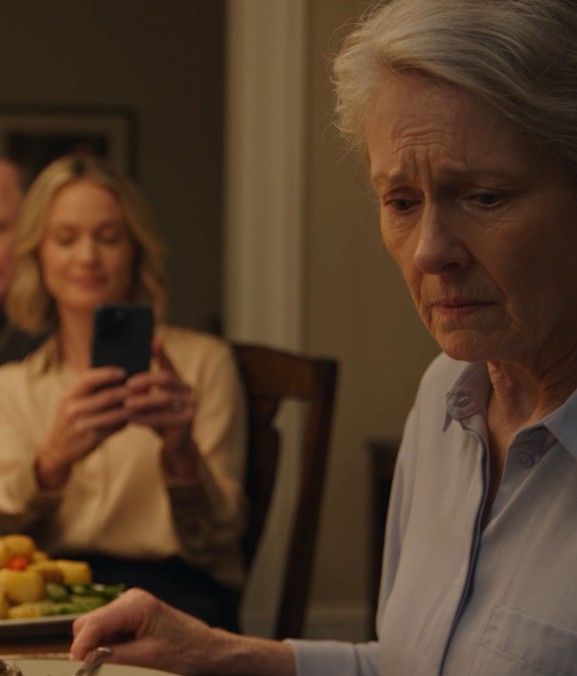
When I opened the bedroom door, they stood halfway down the hall. Melissa had put her phone away. Brian looked angry in a way that tried to resemble concern.
“You’ve locked the cards,” he said.
“I have restricted access to my money.”
“We need to talk.”
“Not tonight.”
He pointed toward my laptop. “You don’t understand the accounts anymore. That’s why I handle things.”
I felt the sentence land exactly where it was meant to. For a second, I wanted to prove myself by explaining every figure. Then I remembered that competence was not a performance I owed him on demand.
“Who signed the power of attorney?”
Melissa went still.
Brian lowered his arm.
“What power of attorney?”
“The one submitted with the application for two hundred twenty thousand dollars.”
His face changed before he managed another word. That reaction was not proof, and I knew better than to treat it as a confession. It was enough to tell me not to argue in this hallway.
“I am obtaining independent advice,” I said. “Do not enter my room, use my devices, or submit anything further in my name.”
He said I was being dramatic. Melissa said documents could be misunderstood. I closed the door without answering either of them.
Ruth arrived and rang the bell. I went downstairs with my phone in my hand. Brian followed but did not try to stop me. The remaining guests had gone, leaving plates and the empty anniversary bottle on the table.
I asked Ruth to stay in the spare room. She agreed. Brian complained that there was no need for an outsider to interfere.
“She is my guest,” I said.
The house was mine, but I understood that Brian and Melissa had lived there long enough for removal to require lawful steps. I did not drag their belongings onto the street or pretend a birthday insult ended every right created by four years of occupancy.
I wanted them gone. I would do it correctly.
In the morning, Ruth drove me to an attorney recommended by my former accountant colleague. I brought a folder organized by date: the loan records, the purported power of attorney, the home-equity application, and the transfers I had made to Brian.
The attorney, Ms. Cole, read the documents before asking about the dinner.
She said we needed to separate several issues. The attempted borrowing, the existing loan, Brian’s debts to me, and the living arrangements each required their own evidence and process.
I had spent forty years separating figures that other people preferred to blend together. Hearing someone apply the same care to my life steadied me.
We checked the property records. There was no recorded lien from the pending home-equity application. Ms. Cole contacted the lender with my written authorization and requested confirmation that nothing would proceed on the disputed authority.
I also reported the suspected identity theft to the police. An officer took my statement and accepted copies of the documents. He asked who had access to my signature and personal details. I answered without embellishment.
Brian had helped with online accounts at my request in the past. He knew where I stored old paperwork. Melissa sometimes used the printer in my study. Those were facts. Which person had created the documents remained to be established.
I did not know enough to accuse either of every act. I knew enough to refuse their reassurance.
That afternoon, Ms. Cole sent formal notices concerning the disputed authority and instructed both of them to preserve relevant records. She helped begin the process for ending their occupancy under the rules that applied where we lived.
The notice did not make them disappear. It gave the coming weeks a boundary and a date.
Brian knocked on the kitchen door while I was washing cups.
