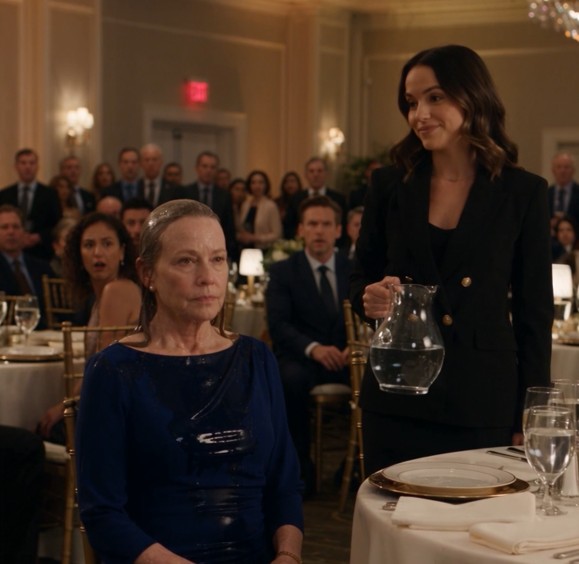
Some were embarrassing.
One former technician reminded everyone that I once shut down a line for three hours because I found a washer on the floor and refused to restart until we knew where it came from.
“It came from my lunchbox,” he admitted.
The room roared.
I laughed until I cried.
That was the memory I wanted.
Not applause.
Not Kendra.
A stupid washer and a room full of people who understood why I had cared.
The days after the dinner were less simple.
A video of the water incident existed on several phones. I asked people not to post it. Most respected that. One short clip still reached social media before disappearing, but I refused interview requests and did not make public statements.
Kendra called twice.
I did not answer.
Grant called on the third day.
“She’s ashamed,” he said.
“Good.”
The word sounded harsher than I intended.
Grant did not object.
“She’s also angry that she’s ashamed.”
“That sounds like work for her.”
He sighed.
“Yes.”
I learned then that Grant had spent years managing Kendra’s resentment the same way everyone else had managed smaller versions of it: warning people, redirecting conversations, avoiding topics, asking others to be understanding. He had known about the scholarship because Travis had told him privately, hoping he could make sure Kendra behaved during the surprise.
“That was unfair to you,” I said.
Grant gave a humorless laugh. “I volunteered for the job a long time ago.”
“Then unvolunteer.”
He was silent.
A month later, Kendra wrote me a letter.
Not a text.
Not an email.
Four pages by hand.
She did not begin with an apology.
She began with the sentence: I have been jealous of you for longer than I knew how to admit.
I read slowly.
She wrote about growing up around my competence and translating it into judgment even when I had not judged her. She wrote about making different choices, then resenting me for being praised for mine. She admitted that I could be overbearing. She gave specific examples.
Some were fair.
That mattered too.
Then she wrote about the pitcher.
There was no excuse.
I wanted to humiliate you because I wanted everyone to see you the way I had decided to see you.
I stopped reading for a while after that.
When I continued, the final page contained the apology.
I am sorry for what I did. I understand if being sorry does not restore access to you.
That was the first thing she had said that made me believe change might be possible.
I did not invite her to lunch.
I did not call immediately.
I wrote back two weeks later.
Thank you for telling the truth. I am not ready to pretend the dinner did not happen. I am willing to talk when we can both do it without an audience.
We met in a quiet coffee shop in March.
Kendra arrived early.
She looked smaller without the ballroom around her.
“I’m in therapy,” she said before we ordered.
“Okay.”
“I’m not saying that so you’ll forgive me.”
“Good.”
She nodded.
We talked for almost two hours.
I apologized for the times my advice had arrived before listening. She apologized for turning those failures into permission to punish me publicly. We did not equalize them.
That was important.
Understanding why someone hurts you is not the same as agreeing the hurt was fair.
