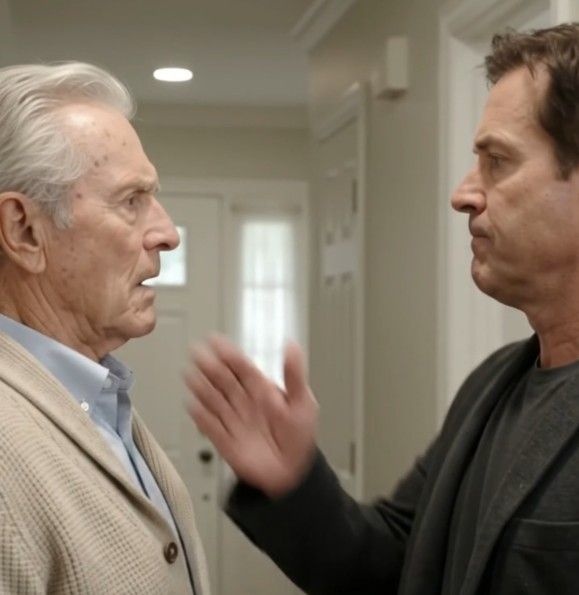
On the first anniversary of the night in the hallway, I stood under the camera and looked at the spot where Mia had thrown herself against the wall. The paint had been repaired. The house smelled of roast chicken, and I could hear my children setting plates in the dining room. Nothing about the walls announced what had happened there.
Daniel came into the hall and stopped beside me. “Do you want me to take it down?” he asked, looking up at the black dome.
I considered the question. “Not yet,” I said. “But I don’t need to stare at it every day anymore.”
He nodded, and we walked into the dining room together. My daughter had placed Margaret’s photograph beside a bowl of roses from the garden. There were no speeches. No demands for forgiveness. Only three plates, the soft clink of glasses, and the smell of a meal made in a house that had become peaceful again.
After dinner Daniel washed the dishes while my daughter and I sat by the window. Outside, wind moved through the last leaves. I thought of the missing watches, the locked drawer, the recording, and the long path between learning the truth and feeling safe. None of it had been erased. None of it needed to be erased for me to live well.
Before bed I opened Margaret’s wooden box and touched the velvet case holding her earrings. Once I had believed their disappearance meant the last part of her I could hold had been taken from me. I knew better now. She was present in the letter, in the roses, in the stubborn insistence that our home should be a place where truth mattered.
I put the box back on the shelf and turned off the lamp. The hallway lay quiet beyond the door. The camera’s small indicator glowed overhead, but it was no longer the most important thing protecting me. I had learned to believe what I saw, to seek help, and to love my children without abandoning myself. For the first time in a very long while, I went to sleep without needing anyone else’s permission to feel at home.
