“Did you cause the leak?” Caleb asked.
“No.”
“Did you hide it?”
“No.”
“Then learn the part that belongs to you and do not steal the part that belongs to somebody else.”
Ellis finally looked up.
It was advice Caleb had been trying to give himself too.
Over the next several months, the incident changed practical things. Maintenance stock numbers were relabeled so similar components could not be confused. Emergency substitutions required a second physical verification. Security teams were told to record not only that a room was clear but what systems were running at the time of inspection. Working-dog handlers received explicit authority to pause a route for a focused change in behavior without being disciplined for delaying a schedule. Hazardous-material technicians were positioned closer to high-profile sweeps instead of being treated as a resource to summon only after something went wrong.
None of those changes fit neatly on a ceremony plaque. Caleb liked them for that reason. They were useful.
There was no grand public announcement. The visiting delegation never learned how close the schedule had come to overruling an animal’s warning. The unit issued a brief internal commendation to Caleb and Ranger. Caleb read his once, folded it, and put it in a drawer.
Ranger received a steak approved by the kennel staff.
“This is the better award,” Caleb told Ford.
Ford watched the dog inhale half of it. “At least he knows what to do with recognition.”
Caleb smiled, then grew quiet.
“I pulled on him,” he said.
Ford knew what he meant. “You were trying to do your job.”
“So was he.”
“And you listened before it mattered too late.”
Caleb looked through the kennel gate. Ranger had finished eating and was checking the empty bowl as if human incompetence might have concealed a second steak beneath the first.
“I want to be faster next time,” Caleb said.
Ford nodded. “So do I.”
That became the real consequence of the day. Not permanent shame. Not a heroic myth. A sharper habit of noticing the moment pride began competing with evidence.
A week after the board closed its review, Caleb walked the original route with Ranger again. No delegation waited at the end. No senior officer checked a watch. It was only a training repetition under ordinary afternoon light.
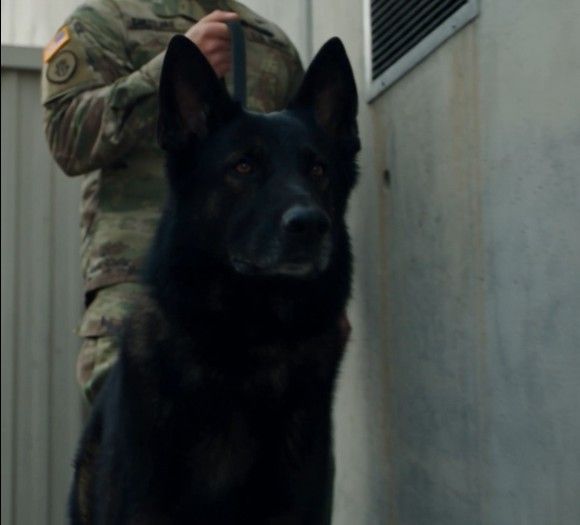
When they reached the maintenance building, Ranger slowed long enough to sniff the concrete where technicians had worked. Caleb felt his hand tighten reflexively on the leash, then deliberately loosened it.
Ranger looked at the door, looked back at Caleb, and kept walking.
Caleb let out a breath he had not realized he was holding.
Ford, walking several paces behind, noticed. “Anything?”
“Nothing.”
“Good.”
That simple pass mattered more to Caleb than he expected. It separated memory from present evidence. The building was no longer a symbol of danger, and Ranger was not a machine programmed to repeat yesterday’s answer. Conditions changed. The work was to notice what existed now.
