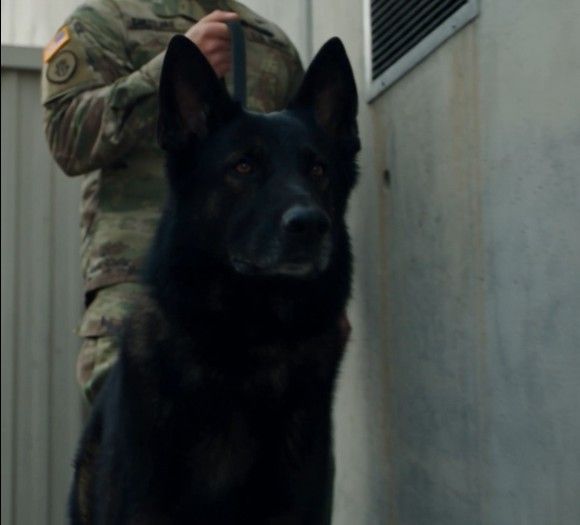
At the end of the route, Caleb knelt and rubbed the dog’s chest.
“Good call,” he murmured.
Ranger yawned in his face.
Ford laughed. “Moving speech.”
Caleb stood. “He has heard better.”
The embarrassment Caleb had felt at the beginning of the incident no longer seemed important. What stayed with him was the moment after it—the choice to stop defending the schedule and start paying attention.
Two years later, Ranger began showing signs that age was catching up with him. His pace slowed. Recovery took longer. The veterinary team recommended retirement.
Caleb knew the day would come. He still felt betrayed by time.
At Ranger’s final evaluation, the dog performed well but tired early. Caleb watched him drink water and remembered the maintenance building, the concrete under his paws, the sharp bark that turned every head.
“You do not have to prove anything,” Caleb said.
It was a strange sentence to say to a dog, but it was also a sentence Caleb had learned because of him.
The unit approved Caleb to adopt Ranger after retirement. The first night at home, Ranger walked through every room, sniffed the couch, inspected the kitchen, and finally lay across the bedroom doorway.
Caleb stepped over him twice before giving up.
“You know you are off duty, right?”
Ranger thumped his tail once.
Life became smaller in the best way. Morning walks. A fenced yard. Children in the neighborhood learning to ask before petting him. No security routes. No visiting delegation. No schedule anyone could make more important than a strange smell.
One afternoon, a delivery driver left a package near the garage. Ranger stopped on the porch and stared at it. Caleb felt the old alertness rise.
Then Ranger sneezed, walked over, and urinated on a bush.
Caleb laughed so hard he had to sit down.
Trust did not mean turning every pause into a warning. It meant knowing the partner well enough to tell the difference.
On the wall inside the house, Caleb kept a photograph from Ranger’s retirement ceremony. In it, the dog was not barking or searching. He was looking away from the camera because someone off-frame held a tennis ball.
Caleb loved that picture more than the official ones.
People remembered Ranger as the dog who refused to obey and prevented an exposure. Caleb remembered the fuller truth. Ranger had not betrayed obedience. He had done his job so completely that obedience became the wrong measure for a moment.
Years later, when Caleb trained new handlers, he ended one lesson with the story. He never told them to trust a dog more than a person or instinct more than procedure. He told them something harder.
“Your partner can give you information that disrupts your plan. Do not punish the information because you dislike the timing.”
Then he went home to Ranger, who slept through most of the evening and woke only when Caleb opened the refrigerator.
No alarms. No detector. No commands.
Caleb set a bowl of water beside him and sat on the floor. Ranger rested his head on Caleb’s boot, the same place he had pressed himself years earlier while people backed away from the maintenance building.
This time, there was nothing to fear.
Caleb left his foot exactly where it was.
