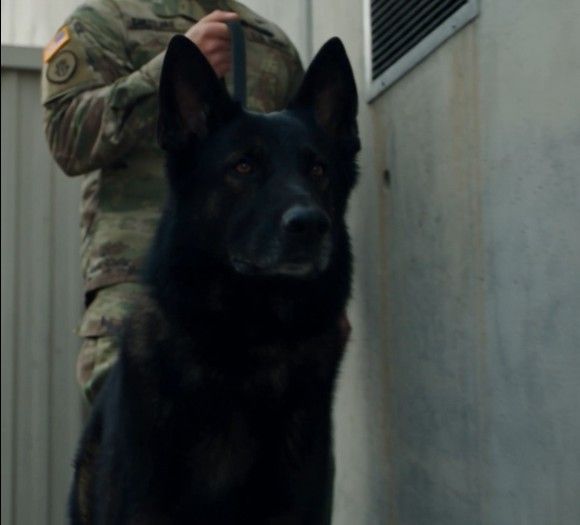
Then Ford became serious. “I was wrong that day. I let the schedule make me dismiss information because it was inconvenient.”
Caleb nodded. “I let being embarrassed do the same thing.”
“Good partnership. We can both be wrong at once.”
“Apparently.”
Ford scratched Ranger behind the ears. The dog accepted the apology in the practical way dogs accept most human drama: by leaning into the hand for two seconds and then looking for something more interesting.
The inquiry did not end with the room. Investigators traced the maintenance logs backward and found that the ventilation unit had been serviced twice in the previous month. On the second visit, a replacement valve had been installed under an emergency work order because the correct part was unavailable. The substitute met pressure specifications, but its labeling was nearly identical to a component used in a different system. No one had intentionally falsified the entry. A tired technician had selected the wrong stock number, and a supervisor had signed the work order without comparing the serial number to the actual part.
That small mistake mattered because the system’s automatic cycle changed shortly after the first security team completed its sweep. The building had been safe when they walked through. Minutes later, the ventilation sequence started, pressure shifted, and vapor from a damaged container in a storage cabinet was drawn toward the grille.
Caleb listened to the explanation in the conference room and felt some of the tension leave his shoulders. He had spent two days imagining someone had deliberately created a danger after the building was cleared. The truth was less dramatic and, in another way, more unsettling. No villain had needed to defeat their procedures. Ordinary people had each assumed that someone else had checked the part that seemed too small to matter.
Ford sat across from him with the maintenance records open.
“So the first team really did clear it,” he said.
The investigator nodded. “Based on the conditions at the time, yes. Their report was accurate. The environment changed after they left.”
Ford rubbed a hand over his face. “And I kept saying it had already been searched.”
Caleb looked at him. “So did I, in my head.”
“You were the one who stopped.”
“Eventually.”
Neither man tried to make himself look better than he had been. That helped.
The review board interviewed Caleb about Ranger’s behavior in detail. They wanted to know the sequence: refusal, focused interest at the door, alert, then retreat and distress. Caleb explained that a working dog’s behavior was not a magic answer. Ranger could not identify a chemical formula or explain a ventilation fault. He had given changing information through trained behavior, and the handler’s responsibility was to read it without forcing it to fit the expected script.
One board member asked, “If the same thing happened tomorrow, would you immediately evacuate every building your dog hesitated near?”
“No, ma’am.”
“Why not?”
“Because hesitation is not the same as an alert. And an alert is not the same as a diagnosis. I would stop, assess, create distance if the behavior warranted it, and bring in the right equipment.”
The member nodded. “So the lesson is not that the dog is always right.”
“No, ma’am. The lesson is that inconvenient information is still information.”
That sentence eventually appeared in the unit’s training notes, stripped of Caleb’s name. He preferred it that way.
The maintenance supervisor, Ellis, requested to speak with Caleb before returning to work. He arrived carrying a cardboard folder and looked exhausted.
“I should have known the door was locked,” Ellis said.
“You knew it was unusual. You said so.”
“After your dog made us stop.”
Caleb understood the need behind the confession. “You also told us nothing should have been running. That mattered.”
Ellis nodded without looking convinced.
