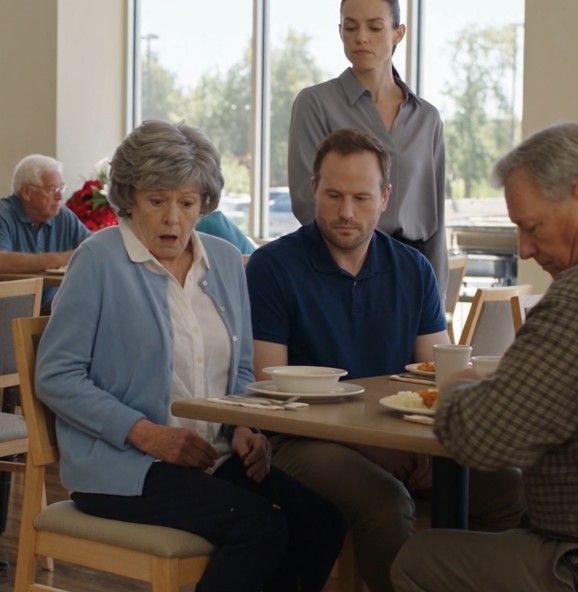
He sounded tired. “Mom, I wasn’t trying to embarrass you.”
“You left out the forged signature.”
“I didn’t want to discuss legal details with everyone.”
“Then say nothing. But do not make the truth smaller so you feel more comfortable inside it.”
He was quiet for a long time.
“All right.”
That conversation became another dividing line. I realized people can take control of your story even after they fail to take control of your choices. I stopped explaining myself to anyone who arrived with conclusions already prepared. When someone asked why I was “so angry about Rosewood,” I said the same thing every time: I was not angry that my family discussed care. I was angry that they used my name without permission and tried to begin a house sale behind me.
Specific facts ended most arguments quickly.
The clarity helped me too.
For a few weeks, I woke at three in the morning wondering whether I was overreacting. Maybe Daniel truly had been terrified about my safety. Maybe I should have appreciated that he cared enough to make plans. Then I would remember the false power of attorney sitting in my email.
Concern could explain a conversation.
It could not explain a forged signature.
I began writing those distinctions in a notebook: help versus control, advice versus authority, worry versus permission. The exercise sounded almost childish, but it kept me from getting lost in words other people used loosely.
My attorney later asked whether I wanted to pursue every possible civil claim connected to the attempted sale process. I did not.
I wanted enough legal action to protect my property, establish the false documents, and stop anyone from using them again. I did not want the next five years of my life organized around Melissa.
That choice surprised Daniel when we eventually spoke.
“I thought you’d want to destroy her,” he said.
“No,” I answered. “I want her unable to do this again. Those are different things.”
The distinction seemed to reach him.
He had spent months thinking conflict required a winner with everything and a loser with nothing. That was how he and Melissa had approached me too: either I accepted their plan or I was irrational. There had been no room for a safer stove, another railing, part-time help, or simply more time.
The alternatives had always existed.
They had just required asking me.
Daniel and I did not speak for four months.
During that time, I did something neither of them expected.
I hired my own aging-life specialist.
Not because I had suddenly decided they were right.
Because I wanted an honest assessment of the risks in my home from someone whose job was not to move me anywhere.
We walked every room.
The stairs were fine but needed a second rail. The bathroom floor was slippery. The smoke detector near the kitchen was old. The porch light did not illuminate the bottom step well enough.
I fixed all of it.
I also bought an automatic stove shutoff.
When Daniel later learned about the changes, he looked almost offended.
“You did all that?”
“Yes.”
“Why wouldn’t you do it when we asked?”
“Because you did not ask. You presented your solution as the only proof I was reasonable.”
He had no reply.
That difference became the center of our eventual counseling.
Daniel admitted he had been scared since my fall. Melissa was more decisive than he was, and he allowed her certainty to become the plan. Each time I resisted, they treated resistance as proof I could not evaluate my own needs.
“It was easier to believe you were stubborn than to admit we were controlling,” he said.
I appreciated the sentence.
I did not reward it with immediate forgiveness.
Melissa never reached that point.
Her version remained that the outcome would have been good for me, therefore the method should matter less.
The legal consequences made clear that method mattered.
The forged Rosewood application and the false power-of-attorney document were preserved. The realtor’s compliance records showed exactly what had been sent and when. Melissa faced consequences for creating and using documents in my name. Daniel also had to answer for knowingly forwarding false authority in connection with the proposed sale.
The resolutions were not theatrical. There were legal findings, financial penalties, and conditions that remained part of their records. The realtor closed the file permanently. Rosewood marked the application invalid and blocked any future admission request made without direct confirmation from me.
Daniel and Melissa separated during the process.
I did not consider that my victory.
My victory was opening my own front door every morning without wondering whether someone else had made an appointment to remove me from it.
