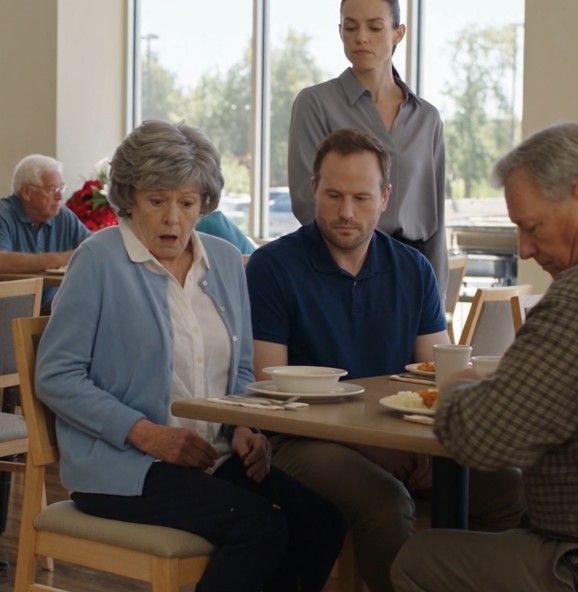
His face went pale.
“Did you know about this?”
“Melissa said it was temporary.”
The words hit harder than a denial would have.
“You knew.”
“I didn’t sign your name.”
“You knew.”
He looked down.
“Yes.”
I gripped the doorframe.
Daniel rushed to explain that Melissa had found a template online. They believed they needed something to let the realtor begin evaluating options. They were not going to complete a sale without telling me.
I stared at him.
“You forged authority so you could begin without telling me.”
“I didn’t forge it.”
“You used it.”
That stopped him.
There are moments when a relationship changes because one sentence removes all the soft language around a choice.
That was ours.
Daniel had not written my name.
He had accepted the benefit of someone else doing it.
I told him to leave.
Then I changed the locks.
The next weeks became an education in how much control can hide inside paperwork.
My attorney notified the realtor in writing that no one had authority to act for me. We recorded a notice with the appropriate property records so any future attempt to sell or encumber the house would require additional scrutiny. I froze my credit. I changed online passwords. I removed Daniel from accounts where I had once listed him as a convenience contact.
I also filed a report about the forged documents.
I did not enjoy any of it.
I felt ridiculous describing my own life in terms like unauthorized signature and false instrument. I had known Daniel for forty-eight years. I had known Melissa for twelve. It seemed impossible that strangers behind desks now needed to help define what my family had done.
Then I remembered the dining room floor at Rosewood.
Melissa had not been confused about my refusal.
She simply believed refusal was an obstacle.
The digital trail was straightforward.
Melissa created the Rosewood application from her laptop. She created the power-of-attorney file from the same device. A scan of my real signature had been copied from a tax document Daniel emailed her months earlier when they were helping me organize insurance paperwork after my fall.
Daniel knew she was preparing documents.
He exchanged messages with Rebecca Sloan about pricing, square footage, and how quickly a property like mine could sell before winter.
When Rebecca asked for proof of authority, Daniel forwarded the false power of attorney.
That was the point at which he could no longer say he had merely been worried.
He had participated.
The house had not been sold.
No money had moved.
That fact mattered enormously to me.
It also did not excuse the attempt to create a process I would have to fight after it began.
Melissa continued insisting she had acted for my safety.
Through her attorney, she argued that my fall and stove incident justified urgency. She said everyone knew I would resist any plan involving Rosewood.
My attorney asked a simple question in response.
If the plan was truly for my safety, why was my signature needed without my knowledge?
There was never a good answer.
The hardest part was not the paperwork. It was the way familiar people reacted when they heard a softened version of what happened.
Daniel told two relatives that Melissa and I had “disagreed about planning.” By the time the story reached my cousin, it sounded as though I had become offended because my children suggested a retirement community.
I called Daniel immediately.
“Do not reduce this to a disagreement.”
