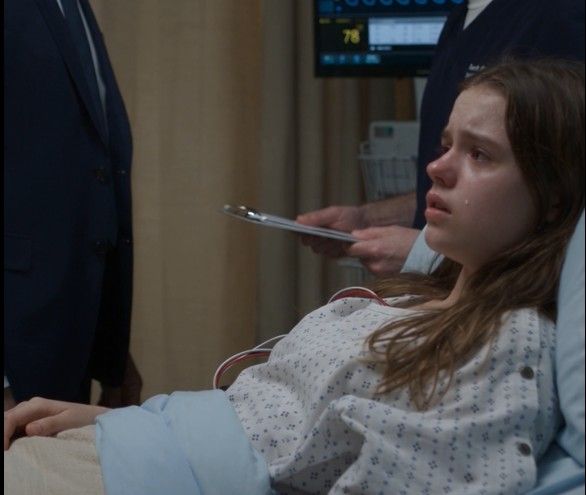
The next step was deliberately small. Emma focused on what could be verified, what could be repaired, and what still required time. No one was allowed to turn a confession into instant forgiveness or a good intention into proof of change. The people in the room had to live with the consequences already set in motion. For once, progress did not depend on the loudest person winning. It depended on whether tomorrow’s behavior matched today’s words, and whether the person who had been hurt was finally free to decide what happened next.
The hospital reported the incident to the appropriate child-protection authorities. A judge issued temporary restrictions on Mark’s medical decision-making while the records were reviewed. Rebecca did not celebrate. Emma did not want revenge. She wanted the terrifying simplicity of knowing that no one could again trade her safety for a family image.
The consequence became visible soon afterward, the weight of child-protection authorities a judge issued temporary restrictions on mark’s medical stayed in the room. Mark did not try to make the moment cleaner than it was. There were practical questions to answer, but there was also damage that could not be handled like paperwork. Dr. Bell listened, watched, and responded to what was actually happening rather than the version everyone had relied on before. That distinction mattered because trust could no longer be requested as a favor; it had to be rebuilt through visible choices.
The next step was deliberately small. Mark focused on what could be verified, what could be repaired, and what still required time. No one was allowed to turn a confession into instant forgiveness or a good intention into proof of change. The people in the room had to live with the consequences already set in motion. For once, progress did not depend on the loudest person winning. It depended on whether tomorrow’s behavior matched today’s words, and whether the person who had been hurt was finally free to decide what happened next.
Mark requested a supervised meeting weeks later. He arrived without the navy suit, carrying a folder of his own. He tried first to explain that he had feared hospitals after Claire’s illness. Emma listened until he called his choices protection. Then she stopped him and said protection that required her ignorance had nearly killed her.
Even then, the weight of arrived without the navy suit carrying a folder of his stayed in the room. Dr. Bell did not try to make the moment cleaner than it was. There were practical questions to answer, but there was also damage that could not be handled like paperwork. Rebecca listened, watched, and responded to what was actually happening rather than the version everyone had relied on before. That distinction mattered because trust could no longer be requested as a favor; it had to be rebuilt through visible choices.
The next step was deliberately small. Dr. Bell focused on what could be verified, what could be repaired, and what still required time. No one was allowed to turn a confession into instant forgiveness or a good intention into proof of change. The people in the room had to live with the consequences already set in motion. For once, progress did not depend on the loudest person winning. It depended on whether tomorrow’s behavior matched today’s words, and whether the person who had been hurt was finally free to decide what happened next.
Mark’s face folded. He admitted that Claire had threatened to leave him because of his control. After her death, he had rewritten that conflict in his mind until he believed he had been the reasonable parent. Each canceled appointment made the next lie easier. By the emergency-room night, preserving the lie had become instinct.
Later, in a quieter room, the weight of threatened to leave him because of his control after her stayed in the room. Rebecca did not try to make the moment cleaner than it was. There were practical questions to answer, but there was also damage that could not be handled like paperwork. Emma listened, watched, and responded to what was actually happening rather than the version everyone had relied on before. That distinction mattered because trust could no longer be requested as a favor; it had to be rebuilt through visible choices.
The next step was deliberately small. Rebecca focused on what could be verified, what could be repaired, and what still required time. No one was allowed to turn a confession into instant forgiveness or a good intention into proof of change. The people in the room had to live with the consequences already set in motion. For once, progress did not depend on the loudest person winning. It depended on whether tomorrow’s behavior matched today’s words, and whether the person who had been hurt was finally free to decide what happened next.
Emma did not forgive him on command. She established conditions: therapy, full access to her medical records, no interference with treatment, and no private contact until professionals agreed it was safe. Mark accepted because the alternative was losing even the possibility of rebuilding a relationship.
No one could undo what had already happened, the weight of established conditions therapy full access to her medical records no stayed in the room. Emma did not try to make the moment cleaner than it was. There were practical questions to answer, but there was also damage that could not be handled like paperwork. Mark listened, watched, and responded to what was actually happening rather than the version everyone had relied on before. That distinction mattered because trust could no longer be requested as a favor; it had to be rebuilt through visible choices.
The next step was deliberately small. Emma focused on what could be verified, what could be repaired, and what still required time. No one was allowed to turn a confession into instant forgiveness or a good intention into proof of change. The people in the room had to live with the consequences already set in motion. For once, progress did not depend on the loudest person winning. It depended on whether tomorrow’s behavior matched today’s words, and whether the person who had been hurt was finally free to decide what happened next.
Recovery gave Emma new routines. She returned to school gradually, attended cardiac rehabilitation, and learned that strength did not have to mean pushing through warning signs. Her coach kept the volleyball jersey she had worn the night she collapsed and later framed it only after Emma said she wanted the memory reclaimed rather than hidden.
The change was measured in ordinary details, the weight of school gradually attended cardiac rehabilitation and learned that strength did stayed in the room. Mark did not try to make the moment cleaner than it was. There were practical questions to answer, but there was also damage that could not be handled like paperwork. Dr. Bell listened, watched, and responded to what was actually happening rather than the version everyone had relied on before. That distinction mattered because trust could no longer be requested as a favor; it had to be rebuilt through visible choices.
The next step was deliberately small. Mark focused on what could be verified, what could be repaired, and what still required time. No one was allowed to turn a confession into instant forgiveness or a good intention into proof of change. The people in the room had to live with the consequences already set in motion. For once, progress did not depend on the loudest person winning. It depended on whether tomorrow’s behavior matched today’s words, and whether the person who had been hurt was finally free to decide what happened next.
Rebecca became part of ordinary life in ways that felt stranger and kinder than any dramatic reunion. She brought terrible takeout, told stories about Claire burning pancakes, and showed Emma photographs Mark had never displayed. Claire became a person again instead of a silence arranged around the house.
By then, the weight of that felt stranger and kinder than any dramatic reunion she stayed in the room. Dr. Bell did not try to make the moment cleaner than it was. There were practical questions to answer, but there was also damage that could not be handled like paperwork. Rebecca listened, watched, and responded to what was actually happening rather than the version everyone had relied on before. That distinction mattered because trust could no longer be requested as a favor; it had to be rebuilt through visible choices.
The next step was deliberately small. Dr. Bell focused on what could be verified, what could be repaired, and what still required time. No one was allowed to turn a confession into instant forgiveness or a good intention into proof of change. The people in the room had to live with the consequences already set in motion. For once, progress did not depend on the loudest person winning. It depended on whether tomorrow’s behavior matched today’s words, and whether the person who had been hurt was finally free to decide what happened next.
The final surprise was inside a sealed envelope Claire had left with Rebecca. It was not another accusation. It was a birthday letter intended for Emma at sixteen. Claire wrote about Emma’s stubborn laugh as a baby and asked her to choose people who made room for her voice, especially when they claimed to know what was best.
Weeks later, the weight of claire had left with rebecca it was not another accusation stayed in the room. Rebecca did not try to make the moment cleaner than it was. There were practical questions to answer, but there was also damage that could not be handled like paperwork. Emma listened, watched, and responded to what was actually happening rather than the version everyone had relied on before. That distinction mattered because trust could no longer be requested as a favor; it had to be rebuilt through visible choices.
The next step was deliberately small. Rebecca focused on what could be verified, what could be repaired, and what still required time. No one was allowed to turn a confession into instant forgiveness or a good intention into proof of change. The people in the room had to live with the consequences already set in motion. For once, progress did not depend on the loudest person winning. It depended on whether tomorrow’s behavior matched today’s words, and whether the person who had been hurt was finally free to decide what happened next.
Emma read the letter on the gym bleachers months after she was cleared for light practice. She cried, but the tears did not feel like fear. Rebecca sat several seats away, giving her privacy without leaving. That small distance was the opposite of Mark’s control, and Emma noticed the difference.
As the season changed, the weight of months after she was cleared for light practice she cried stayed in the room. Emma did not try to make the moment cleaner than it was. There were practical questions to answer, but there was also damage that could not be handled like paperwork. Mark listened, watched, and responded to what was actually happening rather than the version everyone had relied on before. That distinction mattered because trust could no longer be requested as a favor; it had to be rebuilt through visible choices.
The next step was deliberately small. Emma focused on what could be verified, what could be repaired, and what still required time. No one was allowed to turn a confession into instant forgiveness or a good intention into proof of change. The people in the room had to live with the consequences already set in motion. For once, progress did not depend on the loudest person winning. It depended on whether tomorrow’s behavior matched today’s words, and whether the person who had been hurt was finally free to decide what happened next.
Mark’s legal restrictions remained until he completed the required steps. Eventually he was allowed supervised visits without medical authority. He learned to ask questions instead of issue instructions. Some meetings ended awkwardly. A few ended early. Emma discovered that reconciliation could be measured in boundaries respected, not promises spoken.
Eventually, the weight of required steps eventually he was allowed supervised visits without medical stayed in the room. Mark did not try to make the moment cleaner than it was. There were practical questions to answer, but there was also damage that could not be handled like paperwork. Dr. Bell listened, watched, and responded to what was actually happening rather than the version everyone had relied on before. That distinction mattered because trust could no longer be requested as a favor; it had to be rebuilt through visible choices.
The next step was deliberately small. Mark focused on what could be verified, what could be repaired, and what still required time. No one was allowed to turn a confession into instant forgiveness or a good intention into proof of change. The people in the room had to live with the consequences already set in motion. For once, progress did not depend on the loudest person winning. It depended on whether tomorrow’s behavior matched today’s words, and whether the person who had been hurt was finally free to decide what happened next.
On the anniversary of the collapse, Emma walked onto the volleyball court before an empty practice. She bounced the ball once, listened to the steady beat in her chest, and served gently across the net. Dr. Bell had told her healing was not a return to the person she had been. It was becoming someone safer.
Near the end of that difficult stretch, the weight of onto the volleyball court before an empty practice she bounced stayed in the room. Dr. Bell did not try to make the moment cleaner than it was. There were practical questions to answer, but there was also damage that could not be handled like paperwork. Rebecca listened, watched, and responded to what was actually happening rather than the version everyone had relied on before. That distinction mattered because trust could no longer be requested as a favor; it had to be rebuilt through visible choices.
