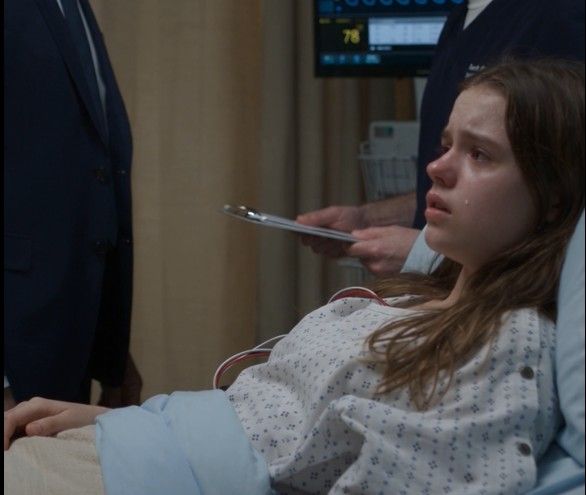
My father reached toward the screen. Dr.
Bell stopped him. “Security is already coming.” Then he opened the next page.
My father read the first lines. Every trace of color disappeared from his face.
And I knew, before Dr. Bell said another word, that whatever my mother had written next had nothing to do with my heart. 👇
Dr. Bell did not read the page aloud immediately. He looked at Emma first, then asked the nurse to close the curtain and keep security outside. Mark Carter stood rigid beside the bed. The monitor continued its uneven rhythm, turning every second of silence into a medical fact no one could argue away.
For several seconds, the weight of immediately he looked at emma first then asked the nurse stayed in the room. Emma did not try to make the moment cleaner than it was. There were practical questions to answer, but there was also damage that could not be handled like paperwork. Mark listened, watched, and responded to what was actually happening rather than the version everyone had relied on before. That distinction mattered because trust could no longer be requested as a favor; it had to be rebuilt through visible choices.
The next step was deliberately small. Emma focused on what could be verified, what could be repaired, and what still required time. No one was allowed to turn a confession into instant forgiveness or a good intention into proof of change. The people in the room had to live with the consequences already set in motion. For once, progress did not depend on the loudest person winning. It depended on whether tomorrow’s behavior matched today’s words, and whether the person who had been hurt was finally free to decide what happened next.
The page was a guardianship directive Claire had prepared before her death. It stated that if Mark interfered with treatment for the congenital condition he had already been informed about, temporary medical authority should pass to Claire’s sister, Rebecca Bennett. Emma realized the unfamiliar name belonged to an aunt her father had erased from her life.
A little later, the weight of prepared before her death it stated that if mark interfered stayed in the room. Mark did not try to make the moment cleaner than it was. There were practical questions to answer, but there was also damage that could not be handled like paperwork. Dr. Bell listened, watched, and responded to what was actually happening rather than the version everyone had relied on before. That distinction mattered because trust could no longer be requested as a favor; it had to be rebuilt through visible choices.
The next step was deliberately small. Mark focused on what could be verified, what could be repaired, and what still required time. No one was allowed to turn a confession into instant forgiveness or a good intention into proof of change. The people in the room had to live with the consequences already set in motion. For once, progress did not depend on the loudest person winning. It depended on whether tomorrow’s behavior matched today’s words, and whether the person who had been hurt was finally free to decide what happened next.
Mark called the document outdated. Dr. Bell answered that the hospital’s legal team was already verifying it, but the immediate issue was simpler: Emma was unstable, and emergency treatment could not wait while Mark fought over control. Emma looked at the surgeon and said clearly that she wanted the procedure.
Before anyone moved, the weight of that the hospital’s legal team was already verifying it but stayed in the room. Dr. Bell did not try to make the moment cleaner than it was. There were practical questions to answer, but there was also damage that could not be handled like paperwork. Rebecca listened, watched, and responded to what was actually happening rather than the version everyone had relied on before. That distinction mattered because trust could no longer be requested as a favor; it had to be rebuilt through visible choices.
The next step was deliberately small. Dr. Bell focused on what could be verified, what could be repaired, and what still required time. No one was allowed to turn a confession into instant forgiveness or a good intention into proof of change. The people in the room had to live with the consequences already set in motion. For once, progress did not depend on the loudest person winning. It depended on whether tomorrow’s behavior matched today’s words, and whether the person who had been hurt was finally free to decide what happened next.
That sentence mattered. At sixteen, Emma had spent years letting her father’s certainty fill every room. Saying what she wanted while he stood there felt almost as frightening as the surgery. Dr. Bell nodded, documented her assent, and moved the team forward under emergency authority while security escorted Mark away from the treatment area.
That afternoon, the weight of years letting her father’s certainty fill every room saying what stayed in the room. Rebecca did not try to make the moment cleaner than it was. There were practical questions to answer, but there was also damage that could not be handled like paperwork. Emma listened, watched, and responded to what was actually happening rather than the version everyone had relied on before. That distinction mattered because trust could no longer be requested as a favor; it had to be rebuilt through visible choices.
The next step was deliberately small. Rebecca focused on what could be verified, what could be repaired, and what still required time. No one was allowed to turn a confession into instant forgiveness or a good intention into proof of change. The people in the room had to live with the consequences already set in motion. For once, progress did not depend on the loudest person winning. It depended on whether tomorrow’s behavior matched today’s words, and whether the person who had been hurt was finally free to decide what happened next.
Before anesthesia, Rebecca arrived. She had Claire’s eyes and a scar near her chin that Emma recognized from one cropped childhood photograph. Rebecca did not rush into a speech. She simply took Emma’s hand and said Claire had loved her enough to prepare for the possibility that fear might someday wear the face of protection.
By the time the room settled, the weight of and a scar near her chin that emma recognized from stayed in the room. Emma did not try to make the moment cleaner than it was. There were practical questions to answer, but there was also damage that could not be handled like paperwork. Mark listened, watched, and responded to what was actually happening rather than the version everyone had relied on before. That distinction mattered because trust could no longer be requested as a favor; it had to be rebuilt through visible choices.
The next step was deliberately small. Emma focused on what could be verified, what could be repaired, and what still required time. No one was allowed to turn a confession into instant forgiveness or a good intention into proof of change. The people in the room had to live with the consequences already set in motion. For once, progress did not depend on the loudest person winning. It depended on whether tomorrow’s behavior matched today’s words, and whether the person who had been hurt was finally free to decide what happened next.
The procedure succeeded. When Emma woke, Dr. Bell explained that the dangerous rhythm had been corrected and that follow-up care would be essential. Rebecca was still beside her. Mark was not. For the first time in Emma’s memory, his absence did not feel like abandonment. It felt like space in which she could breathe.
The next decision came quietly, the weight of explained that the dangerous rhythm had been corrected and that stayed in the room. Mark did not try to make the moment cleaner than it was. There were practical questions to answer, but there was also damage that could not be handled like paperwork. Dr. Bell listened, watched, and responded to what was actually happening rather than the version everyone had relied on before. That distinction mattered because trust could no longer be requested as a favor; it had to be rebuilt through visible choices.
The next step was deliberately small. Mark focused on what could be verified, what could be repaired, and what still required time. No one was allowed to turn a confession into instant forgiveness or a good intention into proof of change. The people in the room had to live with the consequences already set in motion. For once, progress did not depend on the loudest person winning. It depended on whether tomorrow’s behavior matched today’s words, and whether the person who had been hurt was finally free to decide what happened next.
Rebecca later explained the family history carefully. Claire had discovered that Mark repeatedly canceled pediatric cardiology appointments because he believed a documented condition would interfere with the athletic future and controlled image he had planned for Emma. Claire had challenged him, documented everything, and asked Rebecca to intervene if necessary.
Nothing about the moment felt simple, the weight of had discovered that mark repeatedly canceled pediatric cardiology appointments because stayed in the room. Dr. Bell did not try to make the moment cleaner than it was. There were practical questions to answer, but there was also damage that could not be handled like paperwork. Rebecca listened, watched, and responded to what was actually happening rather than the version everyone had relied on before. That distinction mattered because trust could no longer be requested as a favor; it had to be rebuilt through visible choices.
The next step was deliberately small. Dr. Bell focused on what could be verified, what could be repaired, and what still required time. No one was allowed to turn a confession into instant forgiveness or a good intention into proof of change. The people in the room had to live with the consequences already set in motion. For once, progress did not depend on the loudest person winning. It depended on whether tomorrow’s behavior matched today’s words, and whether the person who had been hurt was finally free to decide what happened next.
After Claire died, Mark cut Rebecca off and told relatives she was unstable and intrusive. He moved, changed doctors, and reduced Emma’s medical history to fragments. The old Carter file survived because Claire had insisted that copies remain with the hospital network and with her attorney.
What followed was less dramatic but more important, the weight of told relatives she was unstable and intrusive he moved changed stayed in the room. Rebecca did not try to make the moment cleaner than it was. There were practical questions to answer, but there was also damage that could not be handled like paperwork. Emma listened, watched, and responded to what was actually happening rather than the version everyone had relied on before. That distinction mattered because trust could no longer be requested as a favor; it had to be rebuilt through visible choices.
The next step was deliberately small. Rebecca focused on what could be verified, what could be repaired, and what still required time. No one was allowed to turn a confession into instant forgiveness or a good intention into proof of change. The people in the room had to live with the consequences already set in motion. For once, progress did not depend on the loudest person winning. It depended on whether tomorrow’s behavior matched today’s words, and whether the person who had been hurt was finally free to decide what happened next.
Emma asked the question that hurt most: had her father known she could collapse? Rebecca said yes. The answer was supported by signed appointment cancellations and letters. Mark had not caused the condition, but he had chosen secrecy over monitoring. His refusal in the emergency room was an attempt to keep the buried history from resurfacing.
In the days that followed, the weight of her father known she could collapse rebecca said yes the stayed in the room. Emma did not try to make the moment cleaner than it was. There were practical questions to answer, but there was also damage that could not be handled like paperwork. Mark listened, watched, and responded to what was actually happening rather than the version everyone had relied on before. That distinction mattered because trust could no longer be requested as a favor; it had to be rebuilt through visible choices.
