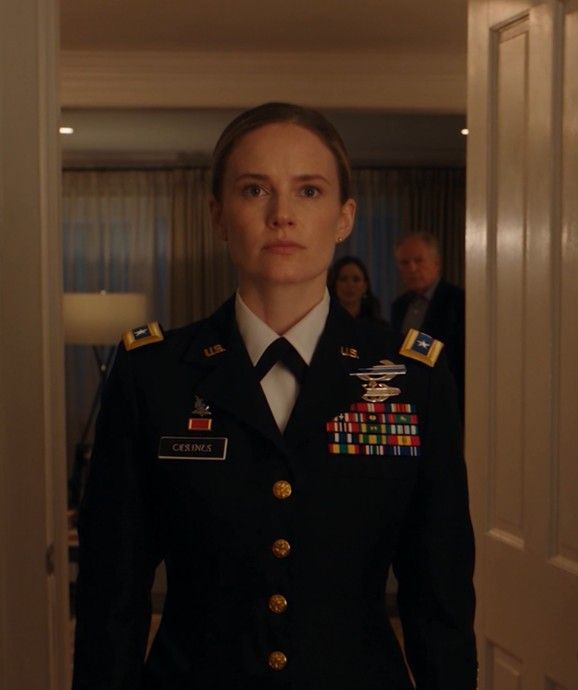
“You don’t look all right.”
I looked down at my hands.
“My father told me not to embarrass the family.”
The general nodded once. “Families can be slow to update their understanding of us.”
“That’s a diplomatic way to say it.”
“I’ve had practice.”
For the first time that night, I laughed.
The next morning, my estate attorney called at 7:12.
Her voice was sharper than usual.
“The transfer packet is not complete, and it has not been recorded. More importantly, the authority your father appears to be relying on does not give him the power he thinks it does. I’m sending formal notice to everyone involved that ownership is disputed and no transaction should proceed until the estate record is reviewed.”
I sat on the edge of the hotel bed, looking at Grandma’s silver-framed photograph on my phone—the one I had taken years ago before deployment.
“Can they still take it?”
“Not by signing around you. But we need to move carefully. I want certified copies of the estate documents, tax records, and any correspondence your family received.”
“Do it.”
By noon, the notary whose stamp appeared on the draft packet had called the attorney back and confirmed she had not witnessed my signature because there was no signature from me to witness. The county recorder’s office confirmed nothing had been filed. Daniel Kessler, the lawyer whose card I had photographed, responded that he had been told the family had authority to transfer the assets but had not yet received all supporting documents.
The story my parents told themselves began collapsing under ordinary questions.
Who owned what?
Who had authority?
Who had signed?
Who had not?
No dramatic raid followed. No one was dragged away in handcuffs. The truth did not need theater.
It needed daylight.
Three days later, I met my parents, Tiffany, our estate attorney, and Kessler in a conference room downtown. Brad did not come.
Tiffany sat with her arms crossed. Dad looked furious. Mother looked exhausted.
My attorney placed certified copies of Grandma’s estate plan on the table. The assets listed in the draft transfer were mine. Dad had been given temporary administrative responsibilities years earlier for limited maintenance while I was overseas, but not ownership and not the unrestricted authority to transfer them to Tiffany.
Kessler removed his glasses. “Mr. Ward, I asked whether Colonel Ward had agreed to this.”
Dad stared at him. “She was gone.”
“That was not my question.”
“She had no use for any of it.”
My attorney answered. “Use is not the legal standard for ownership.”
