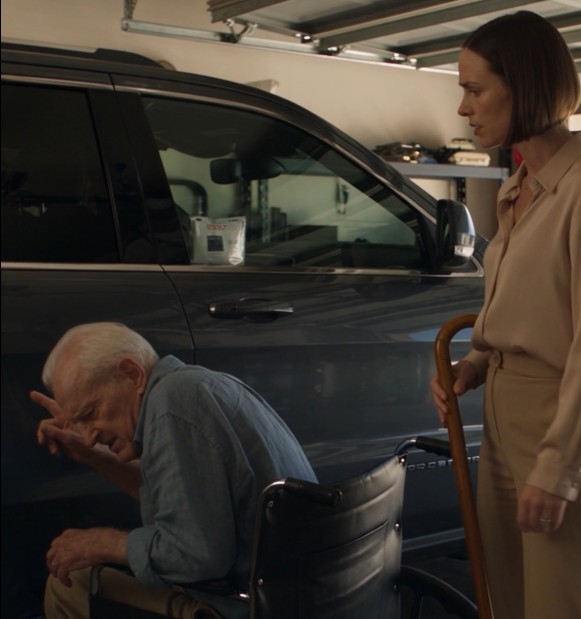
Inside was his cane.
The same one Lauren had thrown under the workbench.
The wood had been polished. The damaged rubber tip was replaced. A small brass collar reinforced the lower joint.
Henry ran his hand along the handle.
“You fixed it.”
“A repair shop fixed it.”
“You took it there.”
David smiled. “Yes.”
Henry stood and tested the cane against the floor.
Solid.
He no longer needed it every day, but that was not the point.
David watched him.
“I almost threw it away,” he admitted.
“Why?”
“Because I hated what it reminded me of.”
Henry looked at the restored cane.
“And now?”
“Now it reminds me I finally picked it up.”
Henry’s eyes filled.
He sat again.
“Sit down, son.”
David did.
They drank coffee on the balcony while late-afternoon sun moved across the railings.
Below them, someone walked a small dog through the courtyard. A delivery driver carried groceries toward the elevator. Ordinary life moved without anyone asking permission.
Months later, Henry attended David’s first birthday dinner after the divorce.
It was at a modest restaurant.
No luxury SUV outside.
No polished garage.
No performance of success.
David raised a glass of iced tea.
“To Dad.”
Henry groaned. “Do not make a speech.”
“I wasn’t going to.”
“Good.”
David smiled.
Then he said, “Thank you for not paying my debt.”
Henry stared at him.
A laugh escaped before he could stop it.
David laughed too.
The sentence sounded ridiculous.
It was also true.
If Henry had written a check, the immediate crisis would have disappeared and the structure underneath it might have survived.
Instead, the debt became visible.
The fear became visible.
The harm became visible.
Visibility had been expensive.
It had also been the beginning of safety.
When Henry returned home, he set the repaired cane beside his front door.
Not under a workbench.
Not out of reach.
