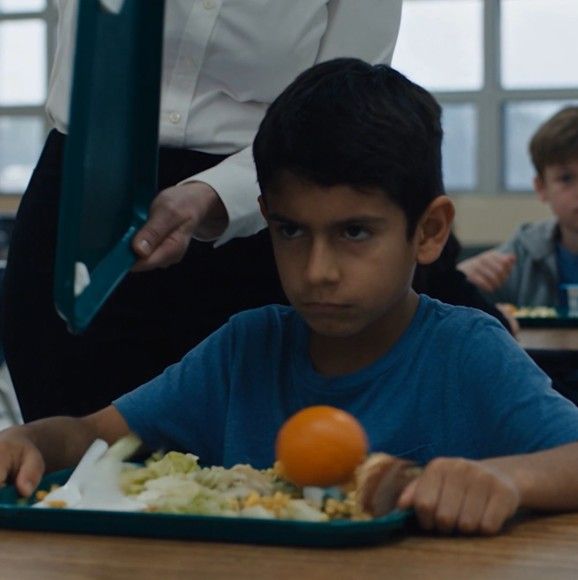
“For a while.”
He thought of Mr. Bell asking one simple question, of the secretary turning the delivery sheet around, of the other children appearing in the doorway. The truth had not arrived as one heroic moment. It had arrived because several people stopped accepting the first convenient explanation.
The principal did not describe that as victory when she met with the affected families.
She described it as accountability.
The school corrected every account and refunded any duplicate payments families had made after being told money was missing. More importantly, it changed the way meal problems were handled. No child would have a tray taken after receiving it. Account questions would be handled privately with adults. Students would never be asked to prove payment in the lunch line.
Mateo’s mother listened to the policy changes with her arms folded.
When the principal finished, she asked, “What happens when someone ignores the policy?”
The principal answered that complaints would no longer route through one cafeteria supervisor. Families would have a direct office contact and written record.
Mateo watched his mother’s shoulders loosen slightly.
She was not interested in promises that required perfect adults. She wanted a system that still worked when an adult failed.
Mr. Bell was invited to the meeting because he had been the first staff member to stop and ask Mateo where his lunch was.
He looked uncomfortable being thanked.
“I asked a question,” he said.
Mateo’s mother replied, “You believed the answer mattered.”
That silenced him.
Owen apologized too, though Mateo told him he had nothing to apologize for.
“I should’ve said something when she moved the yogurt,” Owen insisted.
“You tried.”
“I could’ve tried louder.”
Mateo thought about that.
“So could I.”
Owen shook his head. “You were the one sitting there.”
It was the kindest thing anyone his age said to him about that day.
The children who had been affected did not become a group of instant friends. Some barely knew one another. What they shared was more ordinary and more important: when they saw each other in the lunch line afterward, nobody had to pretend the incident had happened to only one person.
The girl with the empty envelope began sitting near Mateo and Owen twice a week. The fourth-grade boy waved when he passed their table. Once, when a register froze and a younger child began to panic, three students said almost at once, “It’s okay. They’ll fix it.”
The lunch staff did fix it.
Quietly.
No tray was taken.
Mateo noticed.
His mother stopped sending cash after the school added a payment option she could use from her phone. The first time she paid that way, she showed Mateo the confirmation screen.
