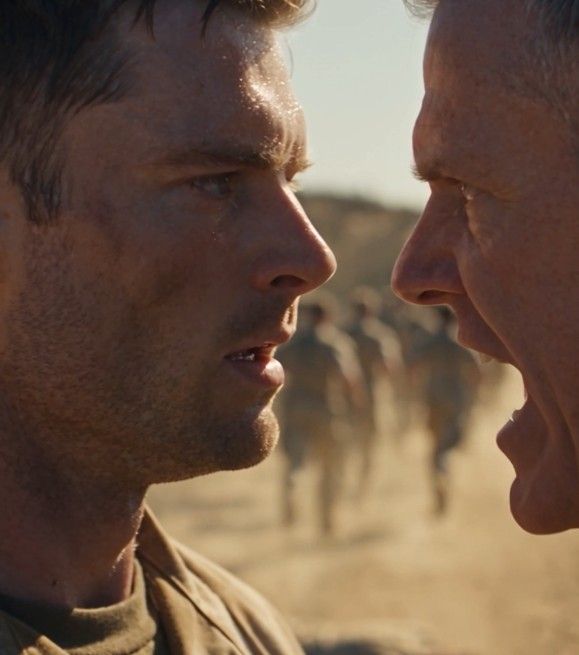
Shaw woke in the hospital embarrassed.
That was the first thing he told the medic.
“I quit on the trail.”
The medic corrected him. “Your body failed to regulate heat. That is not a character decision.”
When Liam was allowed to visit two days later, Shaw looked smaller in the hospital bed than he had in formation.
“You should have kept running,” Shaw said.
Liam stared at him. “Nice to see you too.”
“I mean it. You could get dropped because of me.”
“I did not stop because of you.”
Shaw frowned.
“I stopped because a person was unconscious on a trail and nobody was next to him. Your name was basically irrelevant.”
Shaw laughed weakly. “That is very comforting.”
“Good.”
Then Shaw became serious. “I knew something was wrong earlier.”
“Why did you keep going?”
“Same reason everybody does. I thought if I said heat injury, cadre would think I was trying to quit.”
That answer followed Liam back to training. Candidate culture had helped create the delay too. People believed asking for help could define them more permanently than collapsing.
The course leadership addressed the entire class without naming Shaw. The senior instructor explained that selection evaluated judgment under stress, not the ability to conceal a medical emergency. Candidates were still expected to push through ordinary fatigue, discomfort, and doubt. They were also expected to report symptoms that could indicate danger.
“You do not get points for becoming a preventable casualty,” he said.
The line became a joke for the rest of the course. It also changed behavior. Candidates started speaking more precisely. “My legs hurt” remained part of training. “I am confused and cannot see straight” triggered something different.
The review also uncovered a problem with how the cadre had been trained to interpret candidate behavior. Instructors were told to expect people to exaggerate discomfort when exhausted. That assumption had a purpose: selection was supposed to reveal who could continue when the mind wanted to stop. But somewhere along the way, skepticism had become the default response to nearly every complaint.
The medical officer showed the cadre a timeline of Shaw’s deterioration. Early signs looked exactly like ordinary exhaustion. Later signs did not. Repeated stumbling became altered gait. Slow answers became confusion. Flushed skin and heavy sweating changed to dangerously hot skin with reduced sweating. The point was not that every instructor should diagnose heat illness on sight. The point was that a threshold existed where continuing to test motivation was no longer appropriate.
“You do not need to know the diagnosis,” the medical officer said. “You need to know when the candidate needs a medic.”
That sentence changed the course’s evaluator brief. Future cadre would still apply pressure, but they would receive clearer medical red flags and direct authority to stop an event without turning the stop into an automatic character judgment.
The cadre also reviewed Liam’s behavior. One instructor argued that Liam had made the right medical call for the wrong procedural reason because he never clearly stated the signs he observed before leaving the formation. Liam believed Shaw was in danger, but he communicated only “candidate down” and “he’s not moving.” Under pressure, that might sound like ordinary course friction rather than a medical emergency.
Liam hated hearing that criticism because it was true.
During a counseling session, the senior instructor asked him to replay the moment verbally.
“What would you say now?”
Liam answered, “Candidate 41 is down, altered, hot, and not responding normally. I am stopping for medical until cadre physically assesses him.”
“Better. Why?”
