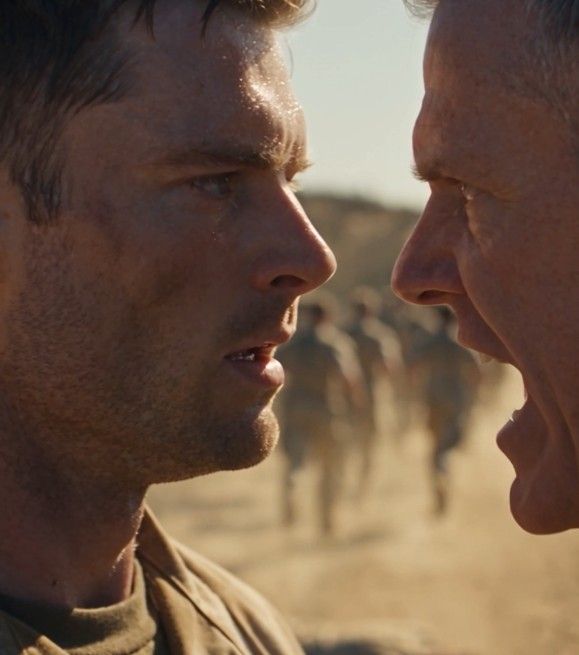
“Because it gives the reason, not just the action.”
The instructor nodded. “Disobedience without communication can look identical to panic from the outside. If you are going to challenge a decision, make people understand the fact that changed it.”
That lesson stayed with Liam long after the course. It prevented him from building a flattering story in which instinct alone was always noble. He had noticed something important. He also could have made the importance easier for others to see.
Shaw’s family sent a message through the medical team thanking the people who stopped to help. Liam asked that his name not be singled out. He felt awkward about receiving gratitude for doing something that had seemed obvious in the moment.
The senior instructor heard about the request. “Do not get precious about it, Carter.”
Liam frowned.
“You are not a hero for noticing a casualty. You are also not wrong because other people thank you. Learn to accept both without turning either into your identity.”
It was annoyingly good advice.
During the final week, another candidate developed a blister severe enough to affect his gait. Liam noticed and deliberately did nothing beyond asking whether the man had reported it. The candidate said yes and kept moving. Liam had to resist the urge to intervene. The moment taught him that awareness did not mean taking control of everyone else’s limits. The system could respond appropriately when information was communicated.
That trust was new. It was also part of judgment.
Liam completed the remaining days. He performed well in some events and badly in others. He got lost once. He solved a team problem quickly. He carried too much weight for another candidate and was corrected for trying to do everyone’s work. The selection board saw a whole person rather than turning the Shaw incident into proof that Liam was either heroic or undisciplined.
At the final board, the same face-down sheet sat on the table. This time there were many others beneath it.
The senior instructor asked, “What did you learn from Candidate 41?”
Liam answered, “That stopping can be the wrong choice. It can also be the only responsible choice. The hard part is not making either one into a rule.”
“And from disobeying your evaluator?”
“That if I believe an order no longer fits the situation, I need to state why clearly, accept the consequence, and be prepared to be wrong.”
“Were you wrong?”
Liam thought about Shaw’s medical report. “Not about him needing help. I could have communicated better.”
The senior instructor nodded.
Liam was selected.
The news did not feel like vindication. He called Shaw before he called anyone else.
“I made it,” Liam said.
There was a pause. “So I did not ruin your life.”
“You are remarkably committed to making my selection about you.”
Shaw laughed.
He was still recovering and would not return to the same selection cycle. His medical team eventually cleared him for normal duty after rehabilitation, but whether he would attempt selection again was his decision.
After selection, Liam entered a new training pipeline where nobody cared much about the story from the trail. That was healthy. His classmates knew him by how he prepared, how he performed, and how he treated people when he was tired. The dramatic moment did not exempt him from ordinary standards. He still had to be competent every day.
Once, during a classroom discussion about mission priorities, an instructor described a scenario involving a casualty and asked who would stop. Several students looked toward Liam because the old story had followed him after all. He refused the role they were offering.
“It depends,” he said.
Someone laughed. “That’s your answer?”
