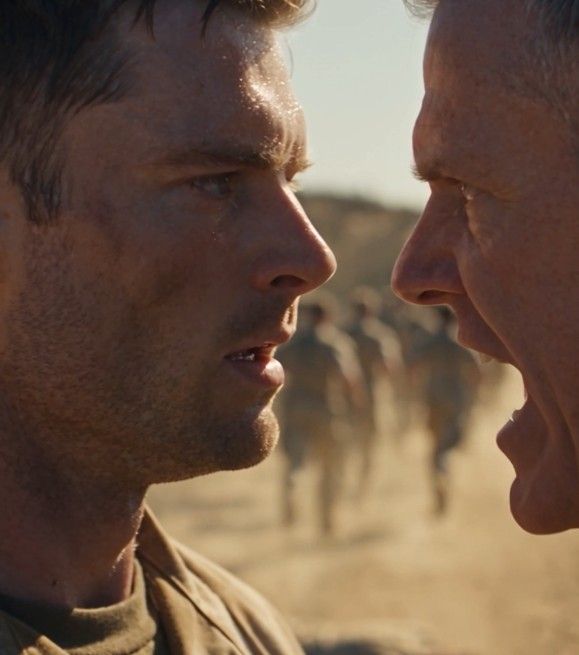
“Yes, sir.”
“Would you make the same decision again?”
Liam did not answer quickly. The room seemed designed to punish hesitation, but he had learned something on the trail about answering too fast.
“If I saw the same signs and no one was physically assessing him, yes. I would stop long enough to get medical help. I would communicate sooner and more clearly if I could.”
The senior instructor leaned back. “Not ‘yes, sir, absolutely’?”
“No, sir. Situations change.”
For the first time, the man almost smiled.
He turned over the evaluation sheet.
FAIL—EVENT NONCOMPLETION had been written across the top. Beneath it, in a different pen, someone had added HOLD FOR BOARD REVIEW.
Liam stared at the words.
“You are not being dropped tonight,” the senior instructor said. “Return to quarters. You will be told in the morning whether you continue. Do not discuss Shaw’s medical details with other candidates.”
Liam stood. “Yes, sir.”
Outside, the corridor felt strangely normal. A fluorescent light buzzed. Someone had left muddy boots against a wall. The selection course had trained them to treat every announcement as a verdict on identity. Liam suddenly felt too tired for that.
He slept badly.
At 0500, the remaining candidates formed up. Liam expected his number to be called for dismissal. Instead the senior instructor stepped forward.
“Candidate 17 remains in training. Candidate 41 is medically withdrawn. The event from yesterday is under review. You will not speculate about it. Today’s schedule proceeds.”
A few heads turned toward Liam. He looked straight ahead.
The next event was worse because he knew he was being watched. Every time another candidate stumbled, Liam’s attention snapped toward them. He nearly missed a navigation point because he was scanning people instead of terrain.
An instructor pulled him aside. “Carter, are you here to evaluate everyone else now?”
“No, sir.”
“Then do your job. Yesterday does not make you the course medic.”
Liam flushed.
The instructor lowered his voice. “Awareness is useful. Hypervigilance is not. Learn the difference.”
That correction mattered. The lesson was not that Liam should ignore orders whenever he felt concerned. It was that he had to notice relevant information, communicate it, and understand when circumstances changed the task.
Meanwhile, the cadre reviewed the incident. Radio logs showed that Shaw had stumbled repeatedly and that one instructor had noted he was “falling behind” without requesting a medical check. Liam’s evaluator admitted seeing Shaw on the ground before ordering Liam forward. He believed another cadre member was approaching from behind. No one had confirmed that.
The gap lasted less than two minutes.
In severe heat illness, two minutes can matter.
The training command did not treat the incident as a simple case of one bad instructor. The course culture rewarded candidates for continuing through discomfort and cadre for maintaining pressure. That culture had blurred the point where expected exhaustion became medical danger.
The evaluator who grabbed Liam’s shoulder and ordered him to continue received formal counseling and was removed from evaluator duties for the remainder of the cycle. The course also changed its medical triggers: certain combinations of altered behavior, repeated falls, and inability to continue would require immediate assessment rather than waiting for a candidate to request help.
No one wanted to make the course easy. They wanted to stop confusing preventable collapse with toughness.
