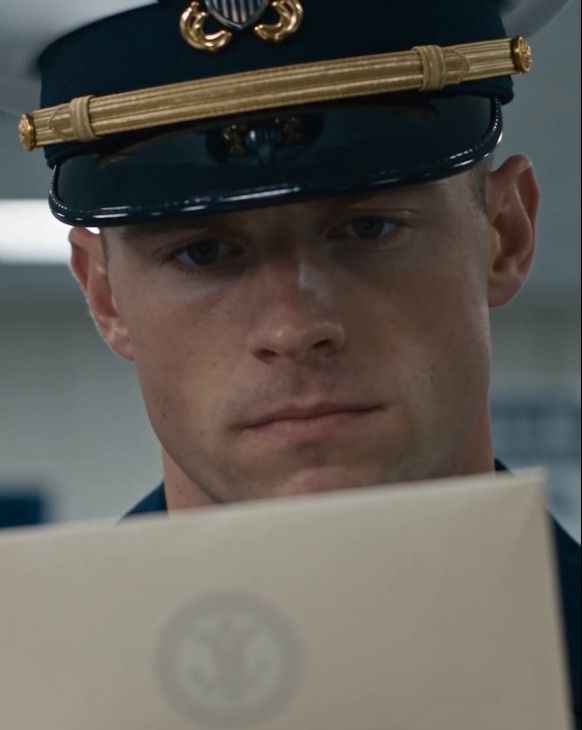
“I told myself I was following an order. That sounded professional in my head. But really I was relieved somebody had given me permission not to choose.”
Helen watched a child chase pigeons near the fountain.
“Most people want courage to feel clear,” she said. “My son told me it rarely does. Usually it feels like uncertainty with consequences attached.”
Daniel gave a small, embarrassed laugh. “That sounds about right.”
He asked whether Andrew had always been the kind of man described at the ceremony.
Helen smiled. “Absolutely not.”
She told him about the sixteen-year-old who had once watched a smaller boy get mocked at school and stayed quiet because the older boys were his friends. Andrew came home ashamed but defensive. Helen had not punished him. She had asked one question: if the same thing happened tomorrow, who did he want to be?
The next day Andrew sat beside the boy at lunch. It cost him three friendships. For months he complained about it. Years later, he admitted that losing those friends had taught him something useful about the price of belonging.
Daniel listened without interrupting.
“So he had to learn it too,” he said.
“Of course he did. That is the part ceremonies leave out. People are not born finished.”
Daniel looked relieved in a way Helen understood immediately. He had been treating his first failure to stand as evidence that he was not the kind of person Andrew had been. Helen wanted him to see the more demanding truth: character was not a category. It was repetition.
Before they parted, she told him not to make the cafeteria the worst thing he had ever done or the best thing he would ever do.
“Use it,” she said.
He promised he would.
Months passed.
Daniel Morales applied for an advanced leadership course. In his personal statement, he did not write about missions or scores. He wrote about a cafeteria floor, a torn invitation, and the first time he understood that obedience could become cowardice if a person used it to avoid a moral decision.
He was accepted.
Helen learned this because he mailed her a copy of the acceptance letter.
At the bottom, he had written, I stood up sooner this time.
She laughed when she read it.
The Carter Leadership Award became an annual part of the command ceremony. Helen attended only when she felt able. She refused special treatment and always asked to meet the recipient before the speeches.
The second year, the award went to a young logistics specialist who had stopped an unsafe evolution despite pressure from people senior to her. The third year, it went to a medic who reported hazing inside his own section even though the people involved were his friends.
Helen began to understand that Andrew’s name was not being frozen in the past. It was becoming a question handed forward.
Who is standing alone?
That was the part she had feared losing when he died.
On the fourth anniversary, she arrived early and walked through the cafeteria before the ceremony. The room had been renovated slightly. New chairs. Different tables. The brass RESERVED GUESTS sign was gone.
In its place, a small card sat near one table explaining that seats should remain available for visiting families and guests.
Daniel, now a first class petty officer, found her studying it.
“Better than the old sign?” he asked.
