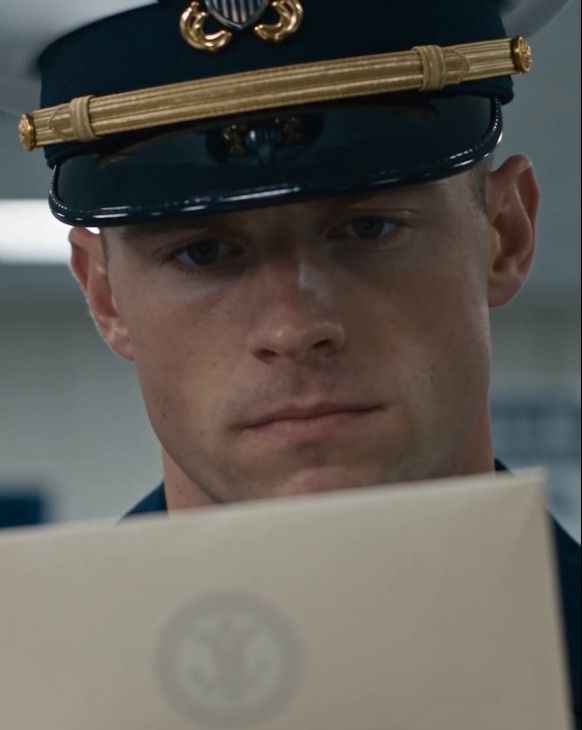
He looked down.
“For assuming you did not belong. For destroying the invitation. For the tray. For ordering Morales not to verify your identity.”
Helen waited.
“And for enjoying it,” he added.
That was the first sentence that sounded useful.
Helen folded her hands.
“Do you know what frightened me most that morning?”
Blake looked up.
“Not you.”
He seemed surprised.
“It was how quickly everyone learned what you wanted from them. A laugh. A lowered head. Silence. You did not need to order most of it. They watched you and adjusted.”
Blake’s face tightened.
“I thought they respected me.”
“Some probably did. People are complicated. But fear can imitate respect very well from a distance.”
He nodded slowly.
Helen reached into her bag and removed a photocopy of Andrew’s evaluation. She had folded it around the line about noticing who stood alone.
“My son was not gentle all the time,” she said. “He was impatient. Competitive. Stubborn. He could be exhausting. But he learned that leadership is not measured by how quickly a room obeys you.”
She slid the paper across the table.
Blake did not touch it at first.
“Why are you giving me this?”
“Because punishment tells you what you cannot keep doing. Somebody still has to decide what you do instead.”
He took the page.
Helen stood.
“I forgive you enough not to carry you with me,” she said. “What you become after this is your responsibility.”
That was all.
She did not hug him. She did not promise that everything was repaired. Some consequences were supposed to remain.
Two days after the meeting, Helen received a call from Daniel. He sounded uncomfortable asking whether she would speak with him, so she suggested the small public garden near her hotel instead of another military office.
He arrived in uniform and stood until she told him the bench was not reserved.
“I keep thinking about the first time I sat down,” he said.
Helen waited.
