“My organization is excellent.”
Adam almost smiled.
Peter did too, but only for a second.
Then he looked toward the parking lot. “I shouldn’t have said what I said when you came in.”
Adam did not rescue him from the apology.
“I understand why you said it.”
“That’s not the same as it being right.”
“No.”
Peter nodded once.
They parted without hugging. That mattered to Adam. A hug would have made the evening feel finished, and none of them were finished.
For the next several days, Adam felt worse before he felt better.
He had spent months believing confession would produce punishment or absolution. Instead it produced complexity. Peter’s anger no longer fit neatly around him, but the guilt did not disappear simply because Michael had written a generous paragraph.
Adam began meeting with a counselor he had avoided since returning. The first session irritated him. He wanted instructions. The counselor kept asking him to separate responsibility from outcome.
“I asked for the switch,” Adam said.
“Yes.”
“He died during the duty he took.”
“Yes.”
“Then how am I supposed to separate them?”
The counselor did not tell him the connection was imaginary. That helped. She asked what Adam believed Michael knew when he agreed. He knew there was ordinary risk, not the attack that would happen. What did Adam know? The same. What choice did Michael make? To help a friend make a call home.
Adam hated the exercise because it refused to simplify him into innocent or guilty.
Over time, that became why it worked.
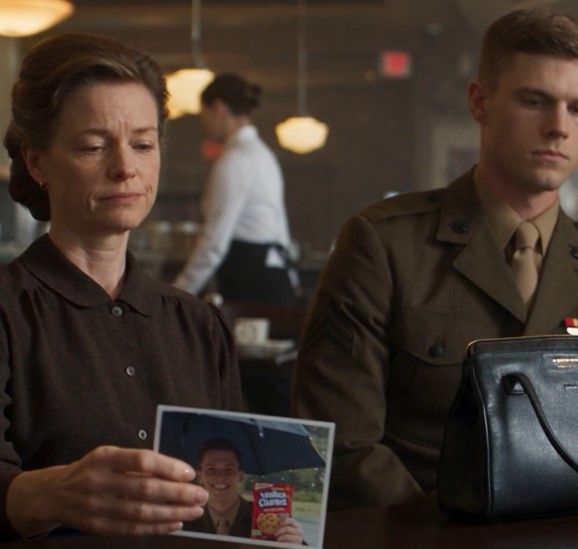
A week after the dinner, Mrs. Callahan texted him a photograph of the cookie packet picture now standing in a frame on their mantel.
Peter sent no message.
Two days later, Adam received a different text from an unknown number.
Garage. Saturday. 0900. Wear clothes you can ruin.
Adam stared at the screen until his younger brother asked whether something was wrong.
“No,” Adam said. Then corrected himself. “I don’t know yet.”
He went.
Peter’s garage was exactly as Michael had described: overorganized, overlit, and filled with labels that assumed every screwdriver had a moral obligation to return to its assigned hook.
Peter gave Adam sandpaper and pointed to an old workbench.
