One candidate asked the obvious question.
“If you hadn’t hidden it, would Vance be dead?”
The room went still.
I had asked myself the same thing every night.
“Maybe,” I said. “Or another candidate might have been on that ledge. Or the exercise might have stopped. Or the fugitives might never have reached the cabin. We don’t get to justify a bad decision using an emergency we couldn’t predict.”
That answer cost me something.
It also freed me from something.
I stopped using Vance’s survival as evidence that hiding the fracture had been secretly correct.
The course added that conversation to its medical integrity block. Not my name. Not the dramatic details. Just the principle: candidates do not earn trust by concealing conditions that affect judgment or performance.
A month later, Vance asked if he could attend one of the revised instructor sessions. Leadership allowed it as an observer. I heard about it from another candidate and assumed he had gone to defend himself.
He called afterward.
“I owe you one more apology,” he said.
“You’re collecting them.”
“I told myself I was applying pressure evenly. I wasn’t. I knew the comments about being a woman got under your skin, so I used them because they worked. That’s not assessment. That’s targeting a wound.”
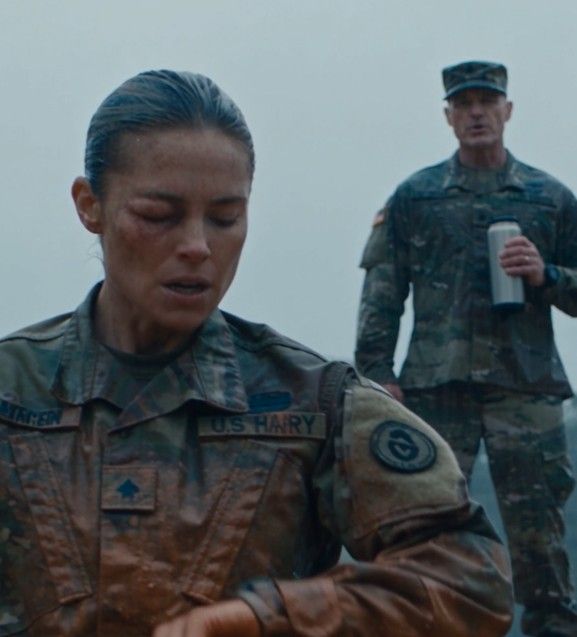
I sat on my apartment floor with an ice pack over my healing face.
“Why are you telling me this now?”
“Because if I only admit it privately, I get to feel better without changing anything. I said it in the instructor review too.”
That mattered more than his apology.
Consequences should not exist only between the people who were present when harm happened. If a system teaches the same mistake, the correction has to reach the system.
The program did not become gentle. The next classes still ran hungry, cold, exhausted, and under intense scrutiny. Instructors still challenged weak decisions and exposed fragile confidence. They simply stopped pretending that sexist humiliation was a professional tool.
Nothing about that made the course easier.
It made the difficulty honest.
I also wrote to the other five candidates from my class. I expected resentment because my medical removal had changed the final assessment schedule for everyone. Instead, four answered within a day. One admitted he had been hiding numbness in two fingers after a fall. Another had been taking twice the recommended amount of pain medicine to keep running.
None of us had thought of ourselves as dishonest. We thought we were committed.
That distinction became uncomfortable once we said it aloud. Commitment without judgment was exactly the kind of thing the course was supposed to expose.
The fifth candidate called a week later.
“I reported my knee,” she said.
“What happened?”
“They pulled me for two days. Then cleared me.”
She laughed. “Turns out telling the truth didn’t end my life.”
